2026 Guide to Private Label Electric Kettle Manufacturing: Scaling Your Appliance Brand
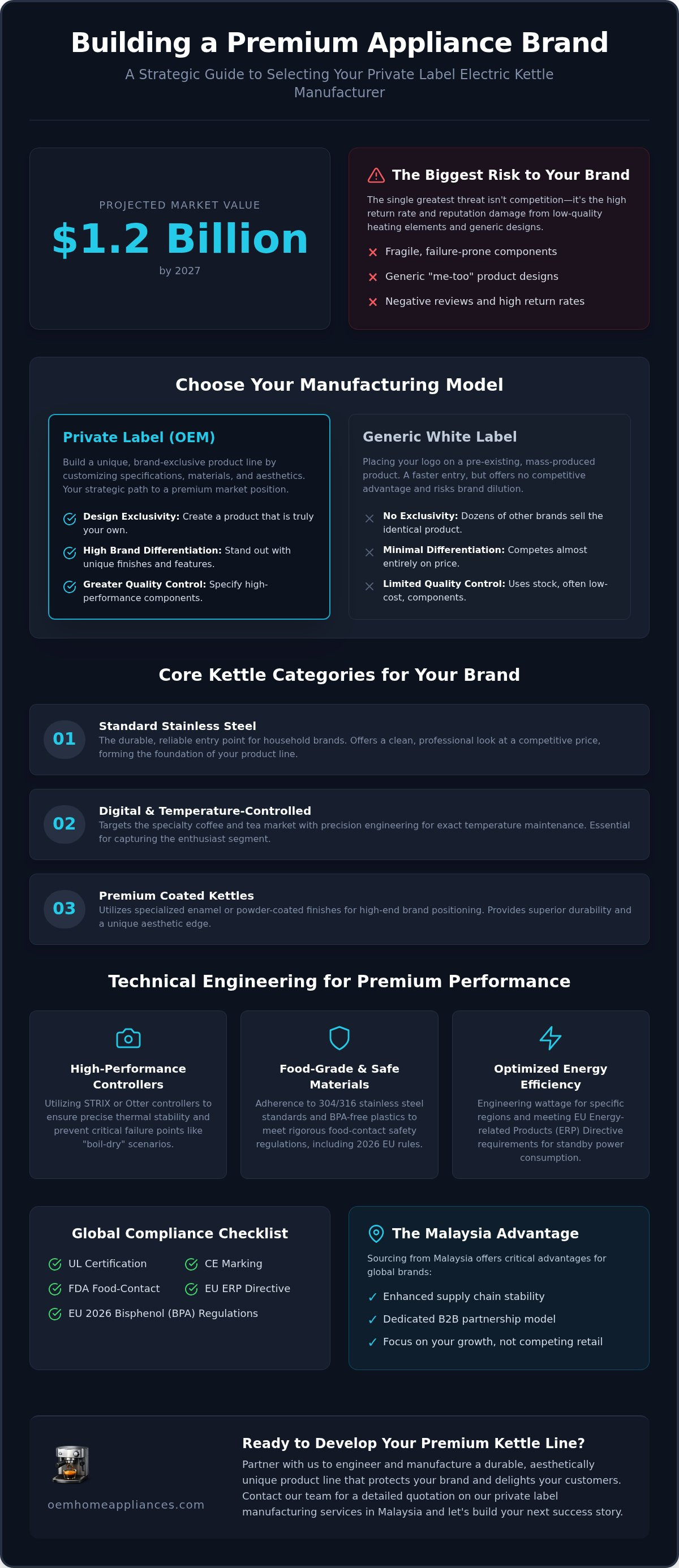
In a market projected to exceed $1.2 billion by 2027, the biggest risk to your appliance brand isn't competition; it's the high return rate of low-quality heating elements. Finding the right private label electric kettle manufacturer is no longer just about securing the lowest unit price. It's about protecting your reputation from the generic "me-too" designs and fragile components that dominate the low end of the industry.
You know that a basic plastic kettle won't sustain a premium brand in 2026. This guide shows you how to scale by selecting a technical manufacturing partner capable of building high-durability, aesthetically unique products. We'll explore why regional diversification in hubs like Malaysia provides critical supply chain stability, especially as global trade landscapes shift. You'll learn how to move beyond basic stainless steel into high-performance enamel and powder-coated hardware that offers true brand differentiation. We'll also cover the essential R&D standards and energy efficiency certifications required to win in a crowded market. By the end, you'll have a clear roadmap for developing a kettle line that balances industrial strength with modern design.
Table of Contents
What is a Private Label Electric Kettle Manufacturer?
A private label electric kettle manufacturer is a specialized production partner that develops, engineers, and builds appliances for other companies to sell under their own brand identity. This relationship allows your business to own a unique product line without the massive capital investment required to build and manage a factory. Instead of focusing on assembly lines, you focus on brand positioning and market share. The manufacturer acts as the technical backbone, providing the machinery, labor, and engineering expertise needed to turn a concept into a shelf-ready product.
The industry is currently moving away from generic "white label" products toward more sophisticated private labeling. While white labeling involves putting your logo on a stock item that dozens of other companies also sell, private labeling allows for customized specifications. This might include choosing specific materials, adjusting the heating element's power, or selecting a unique finish. Partnering with an Original Equipment Manufacturer (OEM) lets your brand leverage existing R&D while still offering a product that feels bespoke to your customers.
Outsourcing production is a strategic move for established brands looking to reduce capital expenditure on infrastructure. Beyond physical assembly, the manufacturer manages the complex world of global electrical compliance. They ensure every unit meets rigorous safety standards such as CE, UL, and FDA food-contact regulations. This removes the legal and technical burden from your internal teams, allowing you to scale faster.
The B2B Partnership Advantage
Choosing a dedicated B2B manufacturer is safer for your brand than partnering with a factory that also sells its own retail line. When a manufacturer competes in your retail space, they're your rival. A silent partner like oemhomeappliances focuses entirely on your growth. This setup lets you prioritize marketing and distribution while your partner handles the supply chain. It's essential to follow a strategic guide to private label manufacturing when vetting partners to ensure they understand your specific market requirements. You can explore our full range of production capabilities on our services page.
Core Kettle Categories for Private Labeling
Selecting the right private label electric kettle manufacturer depends on which market segment you intend to capture. Most successful brands diversify their line across these three core categories:
Standard Stainless Steel: These are the durable entry points for household brands. They offer reliable performance and a clean, professional look at a competitive price point.
Digital & Temperature-Controlled: These models target the specialty tea and coffee market. They require precision engineering to maintain exact temperatures for different brewing needs.
Premium Coated Kettles: By using specialized enamel or powder finishes, these kettles offer high-end brand positioning. They stand out on the shelf and provide superior durability compared to basic plastic models.
Technical Engineering and R&D for Premium Kettles
Performance in the small appliance sector starts with the controller. A top-tier private label electric kettle manufacturer prioritizes components like STRIX or Otter controllers to ensure precise thermal stability. These high-quality heating elements are essential for preventing "boil-dry" scenarios and unexpected steam releases, which are common failure points in cheaper models. Beyond safety, material science plays a pivotal role in product longevity. We balance aesthetic appeal with food-grade safety, ensuring all internal components meet 304 or 316 stainless steel standards and that plastic elements are BPA-free to comply with the 2026 EU bisphenol regulations.
Engineering for energy efficiency is no longer optional. We optimize wattage for specific global regions, ensuring your kettle line meets the EU Energy-related Products (ERP) Directive requirements for standby power consumption. This technical precision allows for rapid boiling times while maintaining the energy efficiency index (EEI) thresholds required for modern market entry. Integrating modern user interfaces, such as digital temperature displays and variable heat settings, provides the differentiation needed to compete in the specialty tea and coffee segments.
The R&D and Prototyping Lifecycle
The development process begins with detailed 3D CAD modeling. This stage allows engineers to visualize internal component placement and airflow before any physical material is cut. Functional prototypes then undergo rigorous thermal testing to verify heat distribution and electrical safety. Iterative design cycles refine the pour-spout precision to prevent splashing and ensure handle ergonomics remain comfortable during heavy use. You can explore our appliance R&D services to see how we transform concepts into market-ready hardware through methodical testing and refinement.
Balancing Aesthetics and Industrial Function
Premium kettles must harmonize with a broader product line. For instance, designing a kettle that fits into a modern custom roaster oven product ecosystem creates a cohesive brand experience for the consumer. Industrial function cannot be sacrificed for style; internal components must withstand thousands of heating cycles to maintain long-term reliability. Advanced manufacturing in Malaysia provides the technical infrastructure necessary to execute these complex engineering requirements at scale. R&D is the foundation of long-term brand equity in appliances. If you're ready to discuss your specific technical requirements, you can request a technical consultation with our engineering team to begin your project.
OEM vs. ODM: Choosing the Right Manufacturing Model
The decision between Original Equipment Manufacturing (OEM) and Original Design Manufacturing (ODM) determines your brand’s speed to market and capital investment levels. OEM allows you to select from a factory's pre-tested designs, simply adding your branding and customized finishes. This model is ideal for brands that need a fast launch without the high costs of creating new injection molds. Conversely, ODM involves developing a proprietary kettle design from the ground up. This offers total exclusivity but requires a longer development timeline and higher upfront R&D costs.
A high-quality private label electric kettle manufacturer helps you navigate this choice by evaluating your market positioning. If your goal is to compete on unique technical features, ODM is the correct path. However, many established brands find that OEM models, when customized correctly, offer the best return on investment. The key lies in selecting specialized finishes and high-end components to differentiate your product from competitors using the same base hardware.
Leveraging Enamel and Powder Coating
Specialized finishing is the most effective way to make an OEM model feel like a bespoke ODM creation. While most competitors stick to basic stainless steel or glass, using an industrial enamel coating provides a premium, glass-like finish that is virtually scratch-resistant and heat-stable. This finish elevates a standard kettle into a luxury kitchen centerpiece. Powder coating offers another layer of flexibility, providing a wide array of color options and durable textures that align with your brand’s visual identity. By focusing on metal component finishing, you can achieve a high-end look without the expense of custom engineering.
Scaling with Contract Manufacturing
Scaling your appliance brand often requires moving from a single product to a comprehensive kitchen appliance manufacturing solution. As your volume grows, managing Minimum Order Quantities (MOQs) becomes a strategic exercise in inventory and cash flow. A reliable private label electric kettle manufacturer acts as a silent partner, managing high-volume production runs while you focus on distribution. Our Malaysia-based facility is designed to handle this transition, offering the scalability needed to support global growth while maintaining strict end-of-line quality control. This partnership approach ensures that as you add new SKUs or custom colorways, your supply chain remains stable and cost-effective.
Quality Standards and Global Supply Chain Compliance
Compliance serves as the primary barrier to entry in the global appliance market. Your private label electric kettle manufacturer must navigate a complex environment of certifications, including UL 1082 for North America and CE/RoHS for Europe. Beyond electrical safety, FDA and LFGB food-contact compliance ensures that every material in contact with water is safe for consumers. We conduct rigorous factory audits to maintain these standards, focusing on end-of-line quality control where every unit is tested for electrical continuity and thermal cut-off functionality.
Managing return rates is critical for long-term profitability. We perform lifecycle testing on heating elements and switches to ensure they withstand thousands of activations without failure. This proactive engineering prevents the burn hazards and steam release issues that lead to damaging product recalls, such as the CPSC warning issued for Sekaer kettles in June 2026. Diversifying your manufacturing base to hubs like Malaysia provides essential supply chain resilience. Malaysia offers a stable environment for appliance production, providing a strategic alternative to traditional manufacturing hubs that may face fluctuating trade barriers or labor shortages.
Durability Testing for Long-Term Trust
A kettle's exterior finish must be as resilient as its internal components. We test all enamel and powder finishes for corrosion, heat, and impact resistance to ensure they don't chip or degrade under daily stress. Ensuring powder coated metal components maintain their aesthetic integrity over years of use is vital for your brand's reputation. High-quality finishes lead to better consumer reviews and lower warranty costs, directly impacting your bottom line.
Logistics and Scalability in Bulk Production
Consistency at scale is the ultimate test of a manufacturing partner. When scaling your brand with bulk production, maintaining the same quality on the 10,000th unit as the first is a non-negotiable requirement. Industry standard lead times for global distribution typically fall between 40 and 60 days, and a reliable partner manages these schedules with meticulous precision. Our Malaysia-based operations streamline this logistics chain, offering efficient shipping routes to major international markets. If you require a partner that prioritizes regulatory compliance and logistical reliability, contact our team for a production quotation today.
Strategic Sourcing: Partnering with a Malaysia-Based Manufacturer
Malaysia's manufacturing sector has seen significant growth, with sales value reaching RM1.03 trillion in the first half of 2026. This 7.4% increase reflects the region's rising status as a preferred hub for high-end appliance production. For brands seeking a private label electric kettle manufacturer, Malaysia offers a stable regulatory environment and a highly skilled technical workforce. This regional diversification is a critical strategy for global brands looking to mitigate supply chain risks while maintaining high production standards and avoiding the volatility of other traditional manufacturing centers.
One of the most significant advantages of partnering with a dedicated B2B manufacturer is the absence of retail competition. Many factories in other regions operate their own consumer brands, which means they're effectively competing with their clients for market share on the same digital shelves. Our model is strictly B2B. We act as a silent partner, providing the industrial strength you need without ever entering your retail channels. This focus ensures that our R&D and production priorities are always aligned with your brand's success rather than our own retail goals.
Direct access to specialized technical solutions like enamel and powder coating further distinguishes Malaysian manufacturing. These finishes provide a tactile, premium quality that basic plastic or untreated stainless steel cannot match. Our facility manages the entire project lifecycle with professional project management, ensuring frictionless communication and adherence to strict global timelines. This methodical approach allows global brands to scale with confidence, knowing their partner understands both the technical and logistical requirements of international trade.
The oemhomeappliances Advantage
We provide a comprehensive suite of engineering services tailored to the small appliance market. Our expertise extends across several core categories to support your brand's expansion:
Technical Engineering: Specialized focus on the heat management and durability of roaster ovens, rice cookers, and electric kettles.
Advanced Finishing: Proprietary enamel and powder coating processes that add tangible value and durability to your metal components.
Bespoke Development: Full support for ODM projects, from initial CAD modeling to final safety certification and bulk production.
We're a flexible, reliable backbone for your product line, allowing you to focus on marketing and distribution while we handle the complexities of the factory floor and quality assurance.
Get a Quotation for Your 2026 Project
Starting the consultation process is straightforward. We begin by defining your specific technical requirements and the safety standards of your target market. Whether you're interested in private label services for an existing design or a full ODM development cycle, our engineering team is ready to assist. Contact our team in Malaysia today to discuss your 2026 product roadmap. We provide detailed pricing and lead time estimates to help you plan your next successful launch. Reach out to us to request a quotation for our manufacturing services in Malaysia and secure your production slot for the upcoming year.
Scaling Your Appliance Brand in 2026
Building a resilient appliance brand requires more than just a logo on a generic product. Success in the 2026 market depends on technical differentiation through specialized finishes like enamel and powder coating. These materials provide the durability and aesthetic appeal necessary to command premium pricing and reduce return rates. By choosing a private label electric kettle manufacturer that operates on a dedicated B2B model, you ensure your partner is an ally rather than a retail competitor.
Our Malaysia-based facility offers the technical R&D and supply chain stability your business needs to scale globally. We provide the engineering expertise and industrial capacity to turn your product roadmap into a market reality. Whether you're refining an existing OEM design or developing a proprietary ODM solution, we act as the silent backbone for your growth. This partnership ensures your focus remains on market expansion while we manage the complexities of high-durability manufacturing.
Take the next step in your production strategy. Request a quotation for your private label electric kettle project in Malaysia to begin your technical consultation. We look forward to helping you build a high-performance appliance line that stands out in a crowded global marketplace.
Frequently Asked Questions
What is the difference between OEM and ODM for electric kettles?
OEM involves using pre-existing factory designs that are customized with your branding and specific finishes. ODM is a more comprehensive process where we develop a proprietary kettle design unique to your brand. While OEM models offer a faster time-to-market, ODM projects allow for complete technical exclusivity and the integration of custom features that aren't available in standard production catalogs.
What are the typical MOQs for private label electric kettles?
Minimum Order Quantities (MOQs) typically start at 1,000 to 2,000 units for standard models. Specialized projects involving custom enamel or powder coating may require higher volumes to justify the technical setup for the production line. We work with you to balance production scale with your inventory requirements, ensuring a sustainable path to market for your private label electric kettle manufacturer project.
Can I customize the color and finish of a private label kettle?
We provide extensive customization for both the color and texture of your kettle's exterior. You can select from a wide range of powder coating options or choose premium enamel finishes to align with your brand's aesthetic. This flexibility allows you to transform a standard base model into a unique, high-end product that stands out on retail shelves and meets specific consumer preferences.
Do you offer enamel coating for electric kettle bodies?
We offer specialized enamel coating services for electric kettle bodies to provide a superior, glass-like finish. This process involves fusing powdered glass to the metal substrate at high temperatures, resulting in a surface that is exceptionally durable and heat-resistant. Enamel coating is an ideal solution for brands that want to position their products in the premium kitchenware segment.
How do you ensure the safety and certification of electric kettles?
Safety is managed through rigorous adherence to global standards such as CE, UL, and RoHS. Every unit undergoes end-of-line testing for electrical continuity and thermal cut-off functionality to prevent overheating. We also ensure all components meet FDA or LFGB food-contact requirements, guaranteeing that your kettle line is safe for consumers and fully compliant with international trade regulations.
What is the benefit of sourcing from a manufacturer in Malaysia?
Sourcing from a private label electric kettle manufacturer in Malaysia offers critical supply chain stability and avoids common trade barriers found in other regions. Malaysia provides a robust manufacturing infrastructure and a professional workforce that understands global quality standards. This strategic location ensures reliable lead times and high-quality production for international appliance brands looking for a long-term, dependable partnership.
How long does the prototyping process take for a new kettle design?
The prototyping lifecycle typically takes 4 to 8 weeks depending on the complexity of the design. This period includes 3D CAD modeling, material selection, and initial thermal testing to verify performance. More complex ODM projects involving custom molds or advanced electronics may require additional time for refinement and safety validation before we move into full-scale bulk production.
Do you sell directly to retailers or only to brand owners?
We sell exclusively to brand owners and original equipment manufacturers. Our business model is strictly B2B, which means we don't compete with you in the retail market. This approach protects your brand's interests and ensures that our engineering and production teams are focused solely on delivering high-quality hardware for your specific distribution channels and market requirements.


Comments