2026 OEM Guide: Powder Coating for Small Appliances
A high-performance finish is no longer a luxury for small appliances; it's a critical engineering requirement that determines whether a product survives the first year of heavy kitchen use. Procurement officers and brand owners understand that a single batch of peeling air fryers or corroded roaster ovens can decimate a brand's reputation overnight. You've likely dealt with the frustration of inconsistent finish quality across bulk orders or supply chain bottlenecks that stall your market entry. Mastering the powder coating process for small appliances is the most effective way to eliminate these risks while enhancing your brand's market value.
You'll learn how to navigate the technical and strategic nuances of industrial coating to ensure your products meet the highest standards of durability and aesthetic consistency. We'll examine how to establish rigorous quality benchmarks, optimize production costs through better finishing choices, and select a reliable OEM partner. This guide provides the roadmap to scale your production with confidence and precision.
Table of Contents
The Strategic Role of Powder Coating in Small Appliance Manufacturing
Industrial manufacturing is shifting toward finishes that offer more than just color. The powder coating process for small appliances is an electrostatic method where dry resin particles are applied to metal components and then cured under heat. This creates a hard, continuous skin that outperforms traditional liquid finishes in every measurable B2B metric. For brand managers, this isn't just about aesthetics. It's a strategic decision to ensure products like roaster ovens and air fryers maintain their integrity in high-heat environments. A superior finish signals internal quality to the consumer, allowing for premium market positioning and higher perceived value.
Environmental compliance is another factor driving this shift. Powder coating is a solvent-free process that produces zero volatile organic compounds (VOCs). Modern brands use this as a core sustainability selling point. By eliminating hazardous air pollutants, manufacturers can align with strict ESG goals while providing a safer workspace. This cleaner production method doesn't sacrifice performance; instead, it provides a more robust shield against the daily rigors of a modern kitchen.
Powder Coating vs. Liquid Paint: A B2B Comparison
Comparing these two methods reveals why high-volume OEMs prioritize powder for their manufacturing services. Efficiency and consistency are the primary drivers here. Consider these three key advantages:
Cost-efficiency: Powder allows for high reclamation rates. Overspray can be collected and reused, significantly reducing material waste in bulk production runs.
Consistency: Automated lines ensure the same texture and hue across 10,000 units. This eliminates the batch-to-batch variance often seen with liquid paints.
Superior Edge Coverage: The electrostatic charge pulls powder into tight corners and complex geometries. This is essential for intricate components like blender bases or kettle housings.
Impact on Appliance Lifecycle and Warranty Claims
Warranty claims often stem from cosmetic failure or early-stage corrosion. Powder coating provides a formidable barrier against impact during shipping and resistance to harsh kitchen degreasers. It's about protecting the brand as much as the metal. In the context of 2026 appliance standards, durability is defined as the ability of a coating to maintain its adhesion and protective properties under repeated thermal cycling and chemical exposure without degradation. By using a more resilient finish, brands can confidently offer longer warranties and reduce the high costs associated with product returns and replacements.
The 6-Step Industrial Powder Coating Workflow for High-Volume Production
High-volume manufacturing demands a synchronized workflow where finishing acts as a core phase of production rather than an afterthought. The powder coating process for small appliances operates as a continuous, automated loop. It ensures every component, from air fryer baskets to roaster oven lids, receives an identical, high-performance finish. Integrating this workflow into the broader OEM manufacturing timeline allows brands to maintain aggressive delivery schedules while ensuring finish reliability. Precision at each stage is the only way to avoid the inconsistent results that plague lower-tier production facilities. By automating the application, we eliminate human error and maximize material utilization.
Step 1-3: Pretreatment, Masking, and Priming
Reliability begins long before the powder reaches the metal surface. Pretreatment is the most critical phase for achieving long-term adhesion. Components undergo chemical degreasing to remove manufacturing oils, followed by a phosphate coating process. This creates a microscopic texture that "locks" the powder in place. This foundational step prevents peeling in high-heat appliances. Next, precision masking is applied to electrical contact points and sensor ports. This ensures that the coating doesn't interfere with the appliance's functionality or safety sensors. In humid climates, we often recommend specialized primers to provide an extra layer of corrosion resistance. This protects the metal substrate throughout the global shipping cycle and long-term storage in varied environments.
Step 4-6: Application, Curing, and Cooling
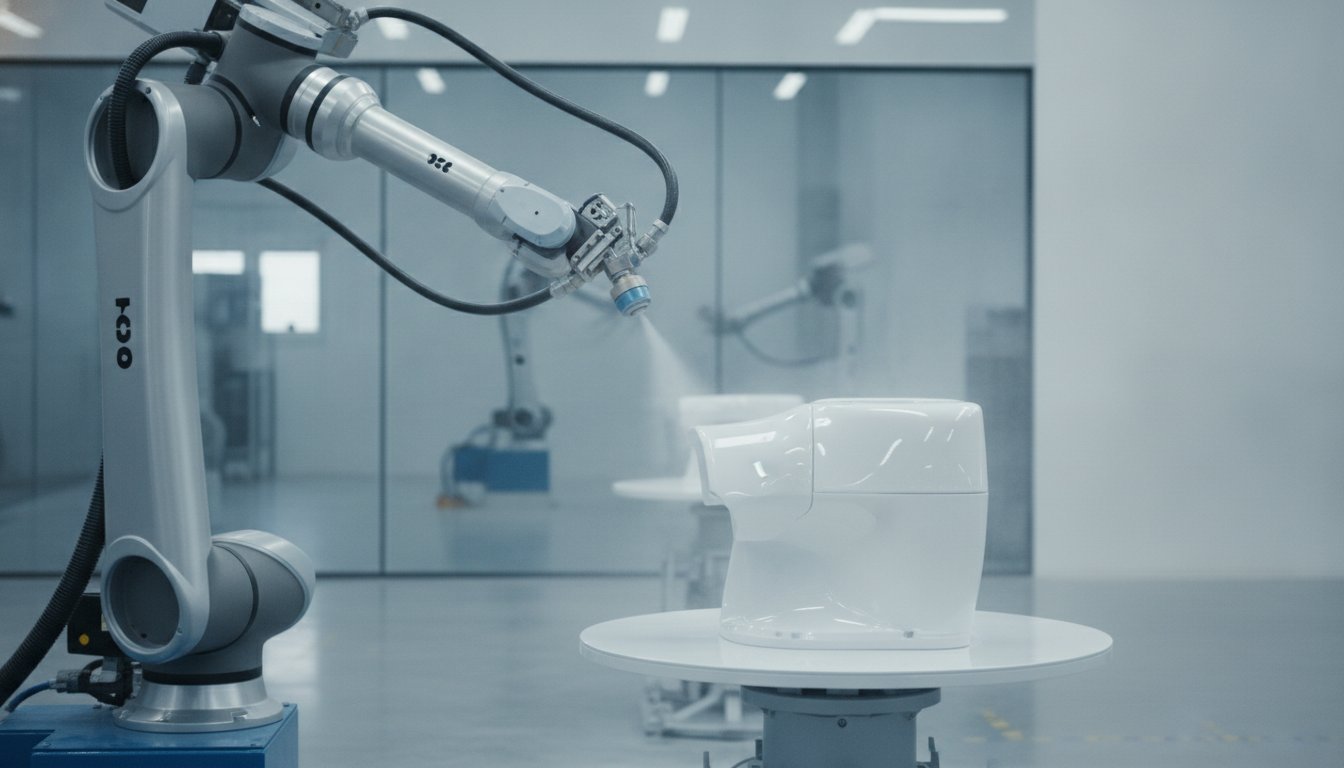
The application phase utilizes Electrostatic Spray Deposition (ESD). By giving the powder particles a negative charge and the component a ground, we achieve a natural wrap-around effect. This ensures uniform thickness even on complex shapes or recessed areas. Once coated, parts enter the curing oven. This stage is non-negotiable for roaster oven housings; temperature precision must be maintained to trigger the cross-linking chemistry of the resin. If the temperature fluctuates, the finish may under-cure or become brittle, leading to premature failure. Finally, controlled cooling brings the components back to ambient temperatures slowly. This prevents surface embrittlement and ensures the finish remains flexible enough to withstand thermal expansion during daily kitchen use. If you are looking to refine your production standards, you can request a technical consultation to discuss your specific component requirements.
Material Compatibility: Optimizing Finishes for Roasters and Air Fryers
Selecting the right resin is a critical engineering decision. The thermal profile of an appliance dictates the chemistry of the coating. For instance, the powder coating process for small appliances like blenders focuses on impact resistance and chemical stability. Conversely, cooking appliances require resins that withstand prolonged heat exposure without degrading. Cold-rolled steel remains the industry standard for structural components due to its cost-efficiency and excellent adhesion properties. Aluminum components offer weight advantages but require specific pretreatment to prevent oxidation under the coating. Beyond durability, aesthetic versatility allows for matte, gloss, and textured finishes. These choices aren't just for looks; textured finishes are excellent for hiding minor casting imperfections in metal components.
While powder coating is ideal for many exterior housings, some internal components or extreme-heat zones may require different technologies. You should review our guide on the Industrial Enamel Coating Process for Roaster Ovens to understand when to transition from powder to enamel. Matching the coating technology to the specific heat zone of the appliance ensures the product remains safe and visually appealing over years of use.
High-Heat Applications: Roaster Ovens and BBQ Grills
High-temperature resistant (HTR) powders are essential for external housings that reach elevated temperatures. These powders typically use silicone-modified resins to maintain color stability and adhesion. A common challenge is balancing thermal expansion. As the metal substrate heats up, the coating must remain flexible enough to expand and contract without cracking or delaminating. In our experience with roaster oven production, ensuring the finish remains color-fast at peak temperatures is a primary benchmark for quality. This prevents the "yellowing" or "browning" effect often seen in lower-quality coatings after only a few uses. Maintaining this integrity is what separates a mid-market appliance from a premium, long-lasting product.
Aesthetic Components: Kettles, Blenders, and Coffee Machines
For high-touch appliances, the finish defines the user's perception of the brand. Achieving a "premium feel" is possible through soft-touch or metallic powder finishes. These options provide a tactile advantage that differentiates a product on a retail shelf. Scratch resistance is vital for blender bases and coffee machines that face frequent contact with utensils and cleaning agents. We provide custom color matching to ensure private label brand consistency across an entire product line. This precision allows you to maintain a unified aesthetic from your kettles to your portable cooking equipment. By using high-durability polyester resins, we ensure that the "showroom look" of the appliance lasts throughout its entire lifecycle.
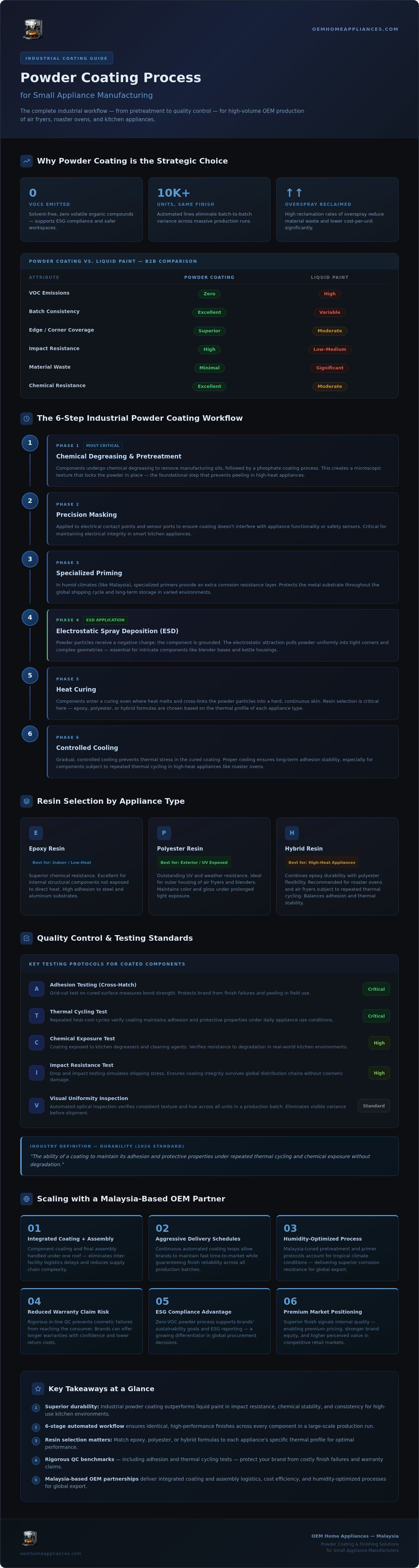
Ensuring Durability: Quality Control and Testing Standards for Coated Components
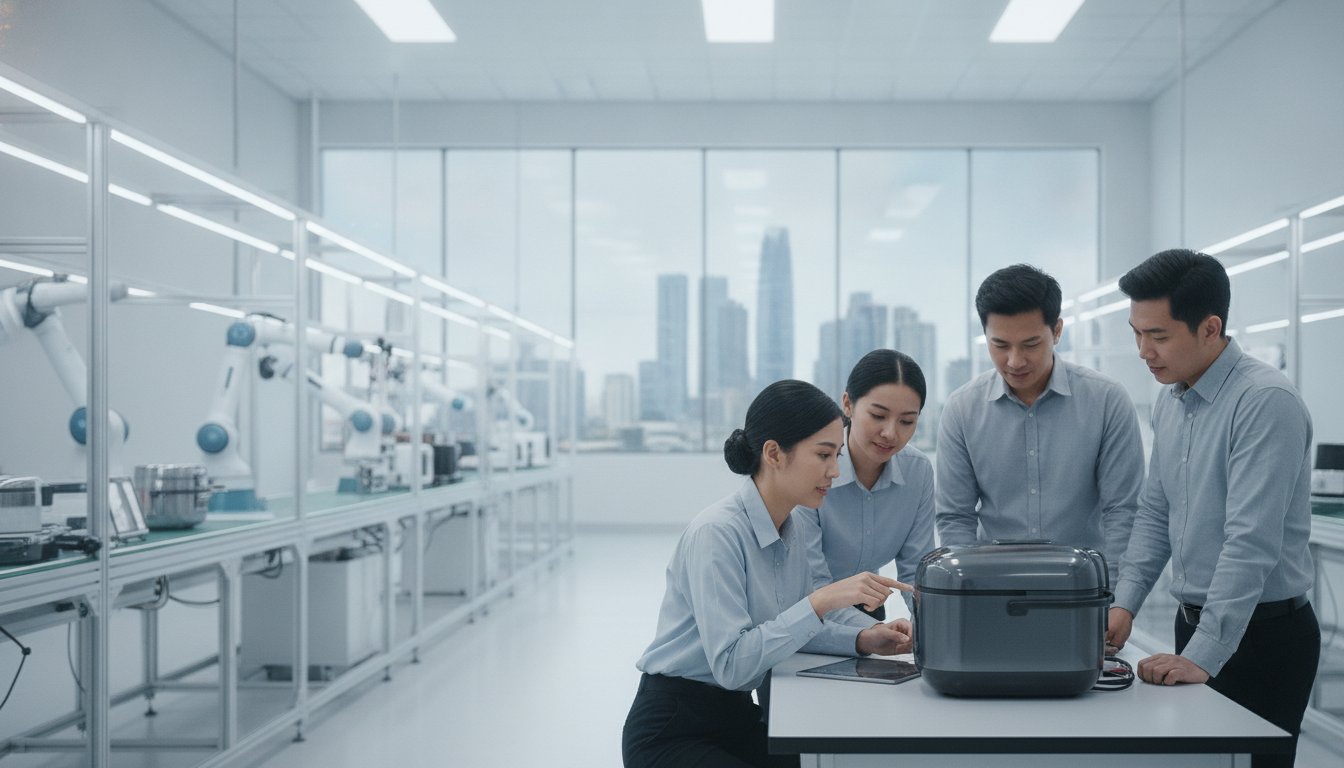
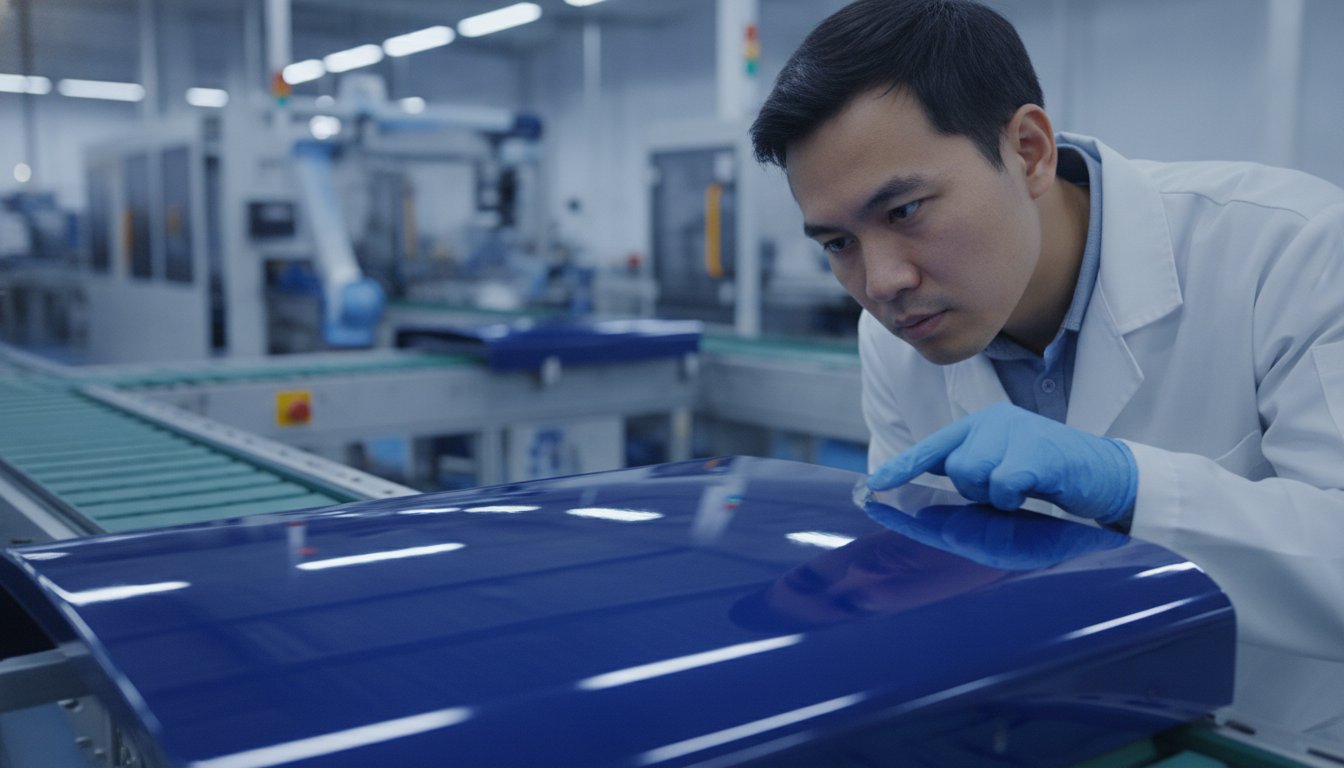
A professional OEM factory must move beyond simple visual inspections to guarantee long-term performance. The powder coating process for small appliances is incomplete without empirical validation at every stage of the line. Adhesion is the most fundamental metric we track. We utilize the cross-hatch tape test, where a precise lattice pattern is cut into the finish and pressure-sensitive tape is applied and removed to check for delamination. This ensures the bond between the resin and the metal substrate is absolute. Thickness measurement is equally vital. Using non-destructive ultrasonic gauges, we verify that the coating meets specific micron requirements across every contoured surface. For 2026 appliance durability benchmarks, ISO 9227:2022 remains the definitive standard for neutral salt spray testing to confirm long-term corrosion resistance in varied climates.
Mechanical and Chemical Resistance Testing
Mechanical integrity determines how well an appliance handles the rigors of global shipping and daily kitchen use. Impact resistance testing involves dropping a weighted object onto a test panel to ensure the coating doesn't chip or crack under sudden stress. This is particularly important for high-touch items like air fryers and blenders. Chemical spot testing is also conducted by exposing the finish to common household oils, acids, and detergents for set durations to prevent staining or softening. Pencil hardness testing, using calibrated leads, verifies that the surface can resist scratches from metal utensils or abrasive cleaning tools. These protocols are essential for maintaining the high quality standards in global roaster oven production that premium brands demand.
Thermal Stability and Color Retention
Thermal stability is a critical requirement for any cooking appliance. We monitor gloss retention after repeated heat cycles to ensure the finish doesn't dull or become chalky during high-temperature operation. Accelerated weathering tests simulate long-term exposure to sunlight and humidity. This matters for products like kettles or coffee machines that often sit in bright kitchen environments for years. Consistency in color retention ensures that a brand's signature aesthetic remains vibrant throughout the product's entire lifecycle. If you need to verify specific durability benchmarks for your next product line, you can request our full testing specifications to see how we validate every production batch in Malaysia.
Scaling Production with a Malaysia-Based OEM Partner
Malaysia has solidified its position as a primary manufacturing hub for the global kitchen appliance market. In 2026, the region offers a unique combination of industrial maturity and logistical efficiency. By integrating the powder coating process for small appliances directly into the assembly line, OEMs eliminate the delays and quality risks associated with third-party finishing shops. This "under one roof" approach ensures that coated metal components move seamlessly from the curing oven to final product integration. It reduces handling damage and keeps the supply chain lean. For brands looking to scale, this centralized model provides the stability needed to meet global demand without sacrificing precision. We act as the silent engine behind your brand, providing the industrial strength required for rapid market expansion.
Navigating global logistics requires a partner that understands the nuances of international shipping. Exporting powder-coated components from Malaysia is streamlined by world-class port facilities and established trade routes. This geographic advantage allows brands to maintain lower inventory levels while ensuring a steady flow of finished goods to their target markets. Our facility supports brand R&D through custom coating solutions that are tested for durability before they ever hit the production line. This ensures that your strategic nuances are preserved at scale.
The Malaysia Advantage: Efficiency and Expertise
The region's industrial ecosystem is built on a foundation of skilled technical labor and advanced manufacturing infrastructure. This makes Malaysia a cost-effective choice for mid-to-high volume private label orders. Brands benefit from a strategic proximity to key raw material and component suppliers, which significantly shortens lead times. This infrastructure isn't just about speed; it's about the reliability of the output. High-volume production requires a methodical approach that only an experienced regional partner can provide. We focus on the practicalities of production so you can focus on market growth.
Partnering for Private Label Success
Transitioning from a product concept to a market-ready appliance requires a methodical partner. Our workflow supports every stage of growth, from initial prototyping to full-scale mass production. We specialize in customizing metal components for a wide range of products, including air fryers, rice cookers, and portable cooking equipment. By leveraging our OEM/ODM manufacturing services, brands can access bespoke coating solutions that align with their specific aesthetic and functional requirements. This collaborative R&D approach ensures that your final product isn't just another unit on the shelf; it's a high-performance tool backed by industrial expertise.
Establishing a reliable supply chain is the foundation of long-term brand value. If you're ready to optimize your production and enhance your product durability through professional finishing, our team in Malaysia is prepared to assist. We provide comprehensive manufacturing solutions tailored to the needs of premium appliance brands. Contact us today to discuss your project requirements or to request a detailed quotation for our Malaysia-based services. You can reach our experts directly at oemhomeappliances.com/contact-us to begin your partnership.
Optimizing Your Appliance Supply Chain for 2026
Precision in the finishing stage is the difference between a market leader and a high-return product. A methodical powder coating process for small appliances ensures that components for air fryers and roaster ovens withstand extreme thermal stress while maintaining aesthetic consistency. By integrating automated coating workflows with rigorous ISO testing standards, you protect your brand's reputation and long-term profitability. It's about building stability into every unit you ship.
Scaling your production requires a partner that combines technical expertise with regional logistical advantages. We leverage our expertise in powder-coated metal components to support global brands. Our specialized roaster oven and air fryer production lines in Malaysia offer comprehensive OEM/ODM services that prioritize your brand's engineering needs. We're ready to help you streamline your manufacturing operations with precision and scale.
Take the next step in securing a stable and efficient manufacturing partner. We invite you to request a quotation for your Malaysia-based appliance manufacturing needs. Let's build a durable future for your product line together.
Frequently Asked Questions
What is the best powder coating for high-heat appliances like roaster ovens?
Silicone-modified resins are the industry standard for high-heat applications. These High-Temperature Resistant (HTR) powders maintain color stability and adhesion at elevated temperatures where standard polyesters would yellow or peel. They're specifically engineered for roaster ovens and BBQ grills to provide a stable finish that won't degrade under repeated thermal cycling. This ensures your product retains its premium appearance even after heavy kitchen use.
How does powder coating thickness affect the cost of small appliance manufacturing?
Coating thickness directly correlates with material consumption and line speed. Applying a thicker layer requires more powder and potentially longer curing times; this increases the per-unit cost. However, maintaining a consistent micron level is essential to meet durability standards. We use ultrasonic gauges to optimize thickness, ensuring you don't overspend on excess material while still achieving full protection for your appliance components.
Can powder coating be applied to plastic components of small appliances?
Traditional powder coating isn't suitable for most plastic components because the curing process requires high temperatures that'd melt the substrate. The powder coating process for small appliances is primarily designed for metal parts like steel or aluminum. For plastic housings, manufacturers typically use liquid spray painting or in-mold decoration. If your appliance requires a unified look, we can match the powder finish on metal parts to your plastic components.
What are the main causes of powder coating failure in kitchen environments?
Poor surface pretreatment is the leading cause of finish failure in a professional setting. If manufacturing oils or oxidation aren't removed before application, the powder won't adhere properly, which leads to peeling. Incorrect curing temperatures also result in brittle finishes that chip easily. In kitchen environments, frequent exposure to harsh degreasers can also degrade low-quality resins. Rigorous QC protocols are necessary to prevent these common durability issues.
Is powder coating FDA approved for surfaces that come into contact with food?
Specific powder formulations are compliant with FDA regulations for food contact surfaces. These powders are typically used for the internal components of appliances where food may touch the finish. It's important to specify food-grade requirements during the design phase to ensure the resin chemistry meets all safety standards. We verify all material certifications to ensure your private label products comply with global health and safety regulations.
How does the powder coating process differ between aluminum and steel appliance parts?
The primary difference lies in the pretreatment stage. Steel components require phosphate coating to prevent rust and enhance adhesion. Aluminum parts need a different chemical conversion coating to manage the natural oxide layer that forms on the metal surface. While the electrostatic application remains similar, the chemistry of the wash tanks is tailored to the specific metal substrate to ensure the longevity of the final finish.
What is the typical lead time for powder coating metal components in Malaysia?
Lead times for coated components in Malaysia typically range from four to six weeks, depending on order volume and customization requirements. Our integrated facility in Malaysia reduces delays by handling both manufacturing and finishing under one roof. This proximity to key regional suppliers allows us to maintain a fast-paced production rhythm. For high-volume private label orders, we'll establish a methodical schedule to ensure consistent delivery to your global distribution centers.
How can I ensure color consistency across different production batches?
Achieving color consistency across production batches requires automated application lines and rigorous gloss monitoring. We use spectrophotometers to measure color variance against a master sample for every run. The powder coating process for small appliances relies on maintaining stable environmental conditions and precise curing cycles. By controlling these variables, we ensure that your kettles, blenders, and air fryers maintain a unified brand aesthetic across thousands of units.
Comments