BBQ Grill Manufacturing Partner: The Ultimate 2026 Brand Manager’s Checklist
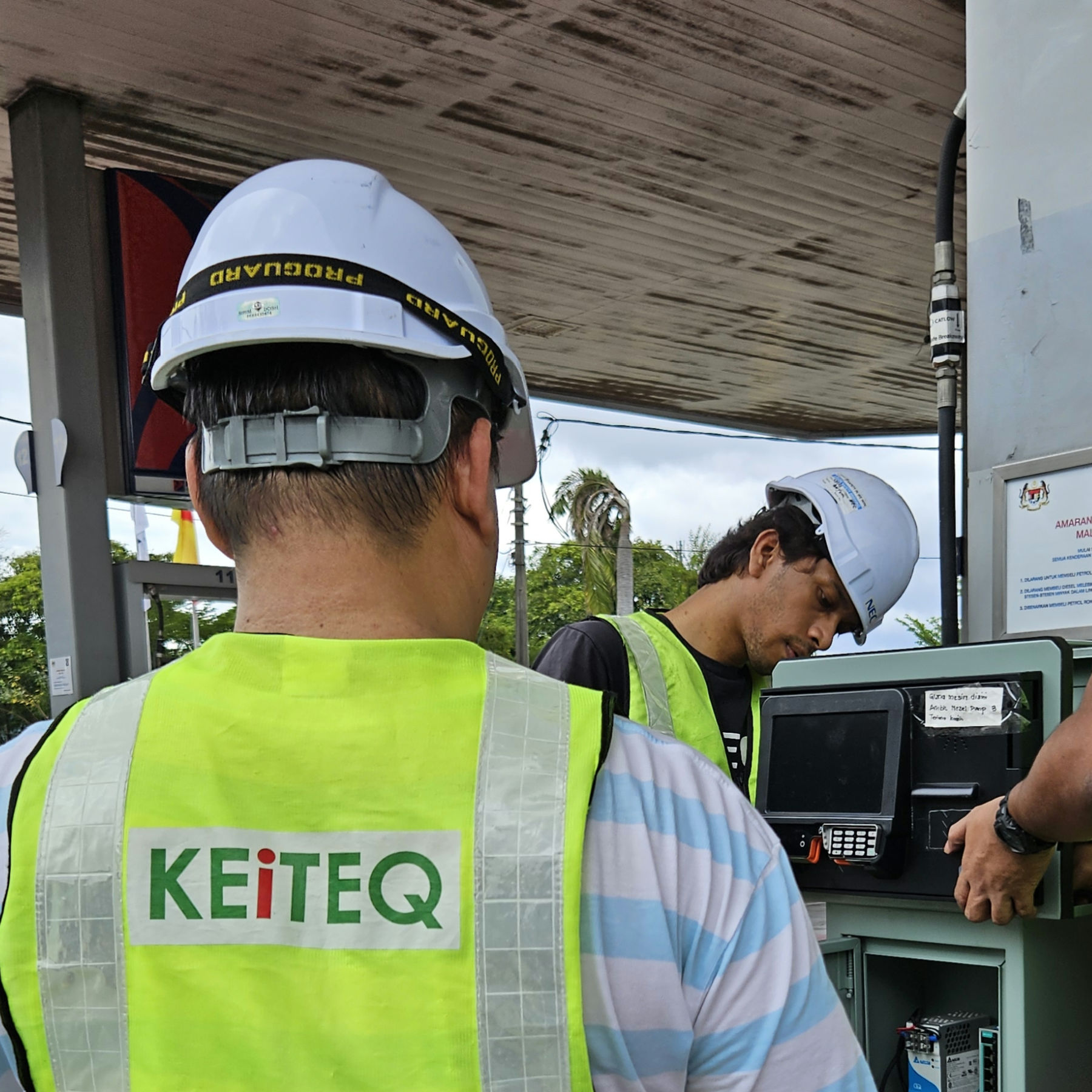

The global BBQ grill market is projected to reach $5.8 billion in 2026, but market growth means nothing if your inventory is stuck in port or rusting on a customer's patio. Choosing the wrong BBQ grill manufacturing partner does more than just delay your launch; it erodes the trust you've spent years building. You understand that in a competitive landscape, reliability is the only currency that matters. It's exhausting to manage partners who don't grasp the intersection of metal fabrication and electrical safety standards.
This article provides the critical technical and operational benchmarks you need to vet factories and scale your brand globally. You'll discover how to minimize product failure risks and ensure your production survives the latest 2026 regulatory shifts. We'll examine a clear framework for evaluating coating quality, supply chain resilience, and compliance with standards like ANSI Z21.58 to keep your brand at the forefront of the industry. By the end of this checklist, you'll have a roadmap for securing a manufacturing solution that grows with your ambitions.
Table of Contents
Defining the Ideal BBQ Grill Manufacturing Partner for 2026
A successful 2026 product launch depends on more than just a production line. The distinction between a transactional vendor and a strategic BBQ grill manufacturing partner defines your brand's long-term viability. Vendors fill orders; partners build infrastructure. In a market where a Barbecue grill is now viewed as a long-term investment rather than a disposable commodity, your manufacturing choice directly impacts your brand equity. A strategic partner acts as a dependable backbone, allowing you to scale without the constant fear of production failures.
OEM vs. ODM: Which Model Suits Your Brand?
Choosing the right engagement model is the first step toward a scalable product line. Each model offers different levels of control and speed to market.
Original Equipment Manufacturing (OEM): This is the preferred route for brands with fully realized designs and proprietary engineering. Your partner provides the industrial muscle to execute your specific vision with precision.
Original Design Manufacturing (ODM): Best for brands looking for turnkey solutions. You leverage the manufacturer’s pre-existing designs and technical expertise to bring products to market quickly.
Hybrid Models: Many successful brands use a hybrid approach. They take an existing platform and request custom modifications to the metal fabrication or electrical components. This balances speed with brand differentiation.
The Shift Toward Technical Facilitation
By 2026, simple assembly is no longer enough. The ideal BBQ grill manufacturing partner acts as a technical facilitator with an integrated R&D department. This support is the backbone of any successful grill line. It ensures that your designs aren't just aesthetically pleasing but also technically sound for mass production. You need a partner that understands the nuances of metal component engineering and specialized coatings from the start.
This technical depth mitigates global supply chain risks by identifying potential material failures before they reach the assembly stage. It’s about precision. A partner that manages the intersection of metal fabrication and electrical appliance safety reduces your risk profile. Crucially, a reliable partner avoids direct-to-retail competition. They focus on empowering your brand through private label manufacturing rather than competing for your shelf space.
Consistent output is the ultimate protector of brand equity. When your partner maintains rigorous quality control, it reduces the risk of product recalls and negative reviews. You need a partner that treats your quality benchmarks as their own operational standards. This reliability allows you to focus on global distribution while the technical complexities of production are managed by experts.
Evaluating Technical Expertise: Metal Fabrication and Specialized Coatings
Technical expertise is the dividing line between a product that lasts a season and one that builds a legacy. High-heat resistance isn't just a feature; it's the primary requirement for structural survival. When selecting a BBQ grill manufacturing partner, you must look beyond the surface level of assembly. You're looking for a partner that masters the molecular bond of specialized coatings and the structural integrity of precision metal fabrication. High heat destroys brands that cut corners on material science.
Enamel Coating: The Non-Negotiable Quality Benchmark
Industrial enamel coating remains the gold standard for high-performance BBQ components. Unlike standard paints, enamel is a glass-based finish fused to metal at extreme temperatures. This process creates a surface that's virtually impervious to corrosion and incredibly easy for consumers to clean. A partner with in-house enamel facilities can perform rigorous testing for thermal shock. This ensures that when a user moves a grill from a cold garage to a 500-degree sear, the finish won't crack or delaminate. These specialized processes are what significantly reduce long-term warranty claims and protect your bottom line.
Precision Metal Component Production
While enamel handles the heat, powder-coated metal components provide the exterior durability and aesthetic appeal customers expect. Powder coating offers superior impact resistance compared to liquid paint, making it essential for the cart, side shelves, and lid exteriors. Your partner's ability to execute advanced welding and stamping is equally critical. Structural integrity starts with the gauge of steel and the precision of the joints. If you're developing premium kitchenware or high-end grills, the finish must be flawless. Choosing a manufacturer that offers integrated product design and development services ensures that every metal component is engineered for both strength and visual impact.
Modern grill designs are also becoming increasingly complex with the integration of smart technology. In 2026, a BBQ grill manufacturing partner must understand how to house sensitive electrical components within a high-heat environment. This requires specialized shielding and heat-sink engineering. Proper vetting of these technical capabilities is essential for global distribution. Just as importers utilize Foreign Supplier Verification Programs to ensure safety in food supply chains, brand managers must apply a rigorous, risk-based approach to verifying their appliance manufacturers' technical claims. A partner that controls the entire process, from stamping to finishing, provides the transparency you need to scale safely.
Scalability and Global Production Capacity
Scaling from a functional prototype to a high-volume production run is the ultimate test for any BBQ grill manufacturing partner. It's the point where manual craftsmanship must transition into industrial precision. You need a partner that doesn't just build a sample; they must build a repeatable, automated process. This transition is critical for maintaining your brand's reputation as you expand into global distribution channels. Without a partner capable of this shift, your growth will be throttled by production bottlenecks and quality drift.
Raw material sourcing is another pillar of scalability that often goes overlooked. With 2026 metal markets facing modified tariff regimes for steel and aluminum, a partner with deep supply chain roots protects you from sudden price volatility. They manage the procurement of high-grade metals to ensure your margins remain intact. This strategic foresight allows you to maintain stable pricing for your retailers even when global trade conditions fluctuate. It's about securing your supply chain long before the first unit hits the assembly line.
High-Volume Manufacturing Workflows
Standardizing production is non-negotiable for large-scale success. Automation in grill assembly and component finishing, such as enamel application or powder coating, ensures every unit meets the same benchmark. This consistency is vital for managing seasonal BBQ market demands where you must ship thousands of units within a narrow window. Automated manufacturing workflows drive down unit costs by maximizing throughput and minimizing material waste while maintaining the exact technical specifications of your brand.
Logistics and Global Readiness
Global readiness requires more than just a warehouse; it requires a partner that understands the complexities of international shipping and export compliance. You need a manufacturer that navigates standards like ANSI Z21.58 for gas appliances or EN 1860 for charcoal units without hesitation. If your product line includes portable cooking equipment, your partner must ensure every unit is compliant with the safety regulations of your target markets. Established export experience and reseller support simplify your entry into new territories, reducing the friction of global expansion.
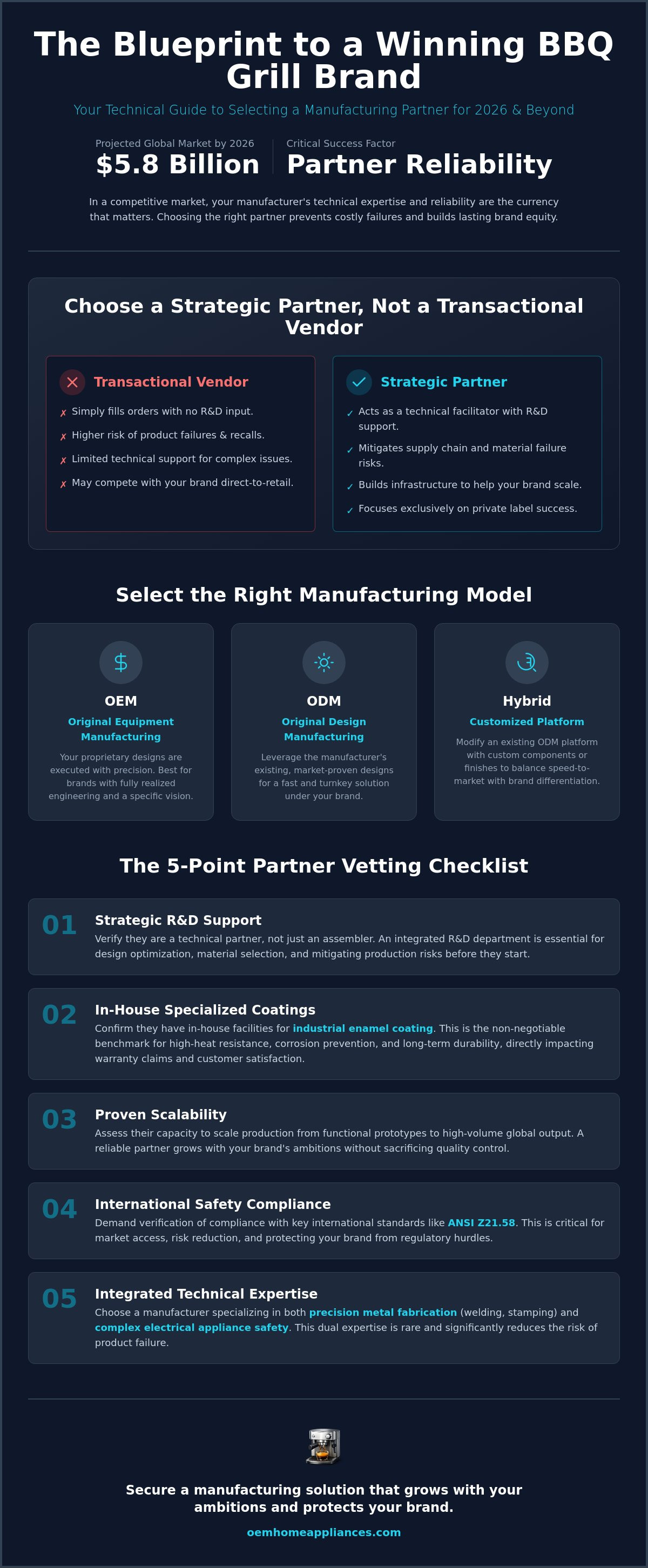
The 5-Point Vetting Checklist for BBQ Grill Partners
Selecting a BBQ grill manufacturing partner requires a methodical audit of their internal infrastructure. You aren't just buying production capacity; you're buying a repeatable process. A factory that fails even one of these five benchmarks will eventually fail your brand. Use this checklist to separate transactional vendors from strategic facilitators.
1. R&D and Prototyping: Can they interpret your CAD files and return a functional sample in weeks? A partner's ability to turn a concept into a working prototype is the first hurdle in any product lifecycle.
2. Specialized Finishing: Do they own the enamel and powder coating lines? In-house control is the only way to guarantee the corrosion resistance discussed in previous sections.
3. Quality Certifications: Verify ISO 9001, UL, CE, and NSF. These certifications are the entry tickets for global retail and ensure your products meet international safety standards.
4. Capacity and Scalability: Confirm their ability to manage 10,000+ unit runs. Peak season demand waits for no one, and your partner must handle high-volume pressure without sacrificing quality.
5. Conflict of Interest: Ensure the factory is a pure-play OEM/ODM provider. A partner that sells their own brand directly to retail chains is a competitor, not an ally.
Verifying R&D and Technical Solutions
Look at their broader appliance experience to gauge their engineering depth. Reviewing their history in custom roaster oven manufacturing provides insight into how they handle heat management and electrical safety in complex devices. Test the speed of their prototyping lifecycle. A nimble partner turns a concept into a physical sample fast, allowing you to iterate before committing to mass production. The depth of their technical appliance development team is your greatest insurance policy against design flaws.
Audit and Compliance Standards
On-site factory audits are essential. You must see the stamping machines, the coating baths, and the assembly lines yourself. Review their social compliance and ethical labor practices to protect your brand's reputation in an increasingly transparent market. Finally, ensure they have rigorous data and IP security protocols in place. Your designs are your most valuable assets. Protect them by choosing a partner that treats confidentiality as a core operational value. If you're ready to secure a partner that meets all five benchmarks, explore our private label manufacturing capabilities today.
Partnering with oemhomeappliances for Private Label Success
oemhomeappliances acts as a silent but powerful engine for your brand. We provide the technical infrastructure and industrial capacity required to scale globally. As your BBQ grill manufacturing partner, we focus on the practicalities of production so you can focus on market expansion. Our expertise in enamel-coated products and powder-coated metal components ensures that every unit leaving our facility meets the high-heat durability standards your customers demand. We treat your quality benchmarks as our own operational requirements.
We operate on a strict B2B-only model. This ensures zero retail conflict for our partners. We don't compete for shelf space with the brands we manufacture. Instead, we invest in our own manufacturing footprint to support your brand's growth. This alignment of interests creates a stable foundation for long-term partnership. You gain the advantage of a seasoned industry veteran without the risk of a manufacturer-distributor conflict. Our goal is to empower your brand, not overshadow it.
From Design to Mass Production
Utilizing our kitchen appliance R&D services is the most efficient way to launch your next BBQ line. We manage the entire lifecycle, from the initial sketch to the final assembly. Our teams are experts at managing the transition from bespoke prototypes to high-volume runs. Whether you're producing blenders or complex grill systems, we maintain brand standards across every unit. We also offer extensive customization options for portable cooking equipment, allowing you to differentiate your product in a crowded market. Our process is methodical and designed for efficiency during every phase of engagement.
The Keiteq Advantage
Our commitment to precision and technical authority is what sets us apart. We provide a comprehensive manufacturing solution that includes product design and development alongside mass production. Our established infrastructure supports global brand managers by providing the scalability needed for international distribution. We don't just manufacture appliances; we facilitate your success through industrial excellence and supply chain resilience. If you need a BBQ grill manufacturing partner that understands the nuances of private labeling and rebranding, we are ready to adapt to your specific needs.
Contact oemhomeappliances to discuss your BBQ grill manufacturing needs and secure a scalable solution for your global distribution.
Securing Your Brand's Industrial Future in 2026
Successful brand expansion in 2026 requires a shift from transactional sourcing to strategic technical facilitation. You've learned how specialized enamel coatings and precision metal fabrication form the backbone of a durable product line. By applying the 5-point vetting checklist, you can eliminate unreliable vendors and focus on partners capable of handling high-volume global demand. Reliability isn't a luxury; it's the core requirement for your brand's survival in a competitive market.
Choosing a BBQ grill manufacturing partner that prioritizes your growth without creating retail conflict is essential for long-term stability. Our dedicated B2B model ensures we never compete for your customers or shelf space. With specialized in-house enamel and powder coating facilities, we provide the technical authority needed for complex appliance development and mass production. We're ready to act as the dependable backbone for your next global launch.
Scale your brand with a trusted BBQ grill manufacturing partner and establish a resilient supply chain today. Your brand's global trajectory starts with the right industrial foundation.
Frequently Asked Questions
What is the difference between OEM and ODM in BBQ grill manufacturing?
OEM involves manufacturing products based on your specific designs; ODM uses the manufacturer's pre-existing designs. OEM provides maximum control over unique features, while ODM offers a faster path to market with proven platforms. Hybrid models allow you to customize existing platforms for better differentiation. This flexibility is vital for brand managers targeting specific market segments in 2026.
Why is enamel coating important for private label BBQ grills?
Enamel coating is critical because it offers superior high-heat resistance and corrosion protection compared to standard liquid paints. It creates a glass-fused surface that is exceptionally easy for consumers to clean; it also maintains its aesthetic finish under extreme thermal stress. This durability significantly reduces warranty claims and protects your brand equity. Choosing a partner with in-house enamel facilities ensures consistent quality across every production run.
How can I verify a manufacturer's production capacity for high-volume orders?
Verify production capacity through on-site audits and a detailed review of their automated assembly lines and stamping machinery. A capable BBQ grill manufacturing partner should demonstrate the ability to handle 10,000+ unit runs during peak seasonal windows. Requesting historical production data for similar appliance categories provides tangible proof of their scalability. This verification process ensures your supply chain remains resilient during periods of high market demand.
What certifications are required for selling BBQ grills in international markets?
International markets require certifications such as ANSI Z21.58 for gas appliances in North America and the EN 1860 series for charcoal units in Europe. You must also verify compliance with ISO 9001 for quality management and regional safety marks like UL, CE, or NSF. These certifications are essential for entering major retail channels and ensuring consumer safety. A knowledgeable partner navigates these regulatory requirements to facilitate global distribution.
Does oemhomeappliances offer custom design and R&D services for new grill lines?
We provide comprehensive product design and development services to transform your concepts into market-ready appliances. Our R&D team manages the entire lifecycle; this includes technical engineering and functional prototyping. This integrated approach ensures that your new grill line is optimized for mass production from the earliest design phase. We focus on creating functional, scalable designs that meet your brand's specific technical and aesthetic requirements.
How do manufacturing partners manage seasonal demand for outdoor cooking equipment?
Partners manage seasonal spikes by utilizing automated manufacturing workflows and strategic raw material stockpiling to protect against price volatility. Established manufacturers plan production schedules months in advance to ensure high-volume orders are fulfilled before the peak summer selling seasons. This proactive logistical planning prevents stockouts and maintains consistent unit costs. It's about ensuring your inventory is ready for global distribution exactly when the market demands it.
What are the benefits of choosing a partner that specializes in multiple kitchen appliances?
A versatile partner provides access to broader technical expertise in heat management, electrical safety, and specialized finishing. A manufacturer experienced in producing roaster ovens, air fryers, and blenders brings a deeper understanding of complex appliance engineering to your BBQ project. This cross-category knowledge leads to more innovative designs and more resilient product builds. It's a significant advantage for brands looking to expand their entire outdoor and indoor cooking lines.
How does oemhomeappliances ensure intellectual property protection during the prototyping phase?
Intellectual property is protected through rigorous internal security protocols and comprehensive non-disclosure agreements. As a B2B-only provider, we have no retail conflict of interest; your proprietary designs are never at risk of being repurposed for a competing house brand. Our operational focus as a BBQ grill manufacturing partner is entirely on empowering your brand through secure private label manufacturing. We treat your data as your most valuable asset.


Comments