Bulk Kitchen Appliance Sourcing Guide 2026: USA & Canada
The era of "good enough" sourcing ended on September 1, 2026, when the CPSC implemented mandatory energy efficiency and safety certifications for all North American appliance imports. You've likely felt the pressure of inconsistent batch quality or long lead times that disrupt your seasonal launches. Finding a reliable bulk kitchen appliance manufacturer USA/Canada requires more than just a price list; it demands a partner that understands the technical rigors of UL 1026 6th Edition updates and shifting regulations like Canada's Amendment 19.
We agree that managing these complex shifts while maintaining a competitive edge is a significant challenge for any procurement team. This guide teaches you how to secure your North American supply chain by partnering with high-capacity OEM manufacturers that prioritize technical precision and compliance. We'll examine the requirements for 2026, including ENERGY STAR v4.0 labeling and specialized enamel coating solutions. You'll also discover why sourcing from a specialized OEM in Malaysia provides the industrial strength and flexibility needed to scale your brand without the risks of traditional hubs.
Table of Contents
The Landscape of Bulk Kitchen Appliance Sourcing in USA & Canada (2026)
Compliance and Quality Standards: Navigating UL, CSA, and Amendment 19
Beyond Distribution: Why Direct OEM Partnerships Outperform Bulk Wholesale
Technical Excellence in Appliance Manufacturing: Enamel, Powder Coating, and R&D
Strategic Sourcing: Leveraging Malaysia-Based Production for North American Brands
The Landscape of Bulk Kitchen Appliance Sourcing in USA & Canada (2026)
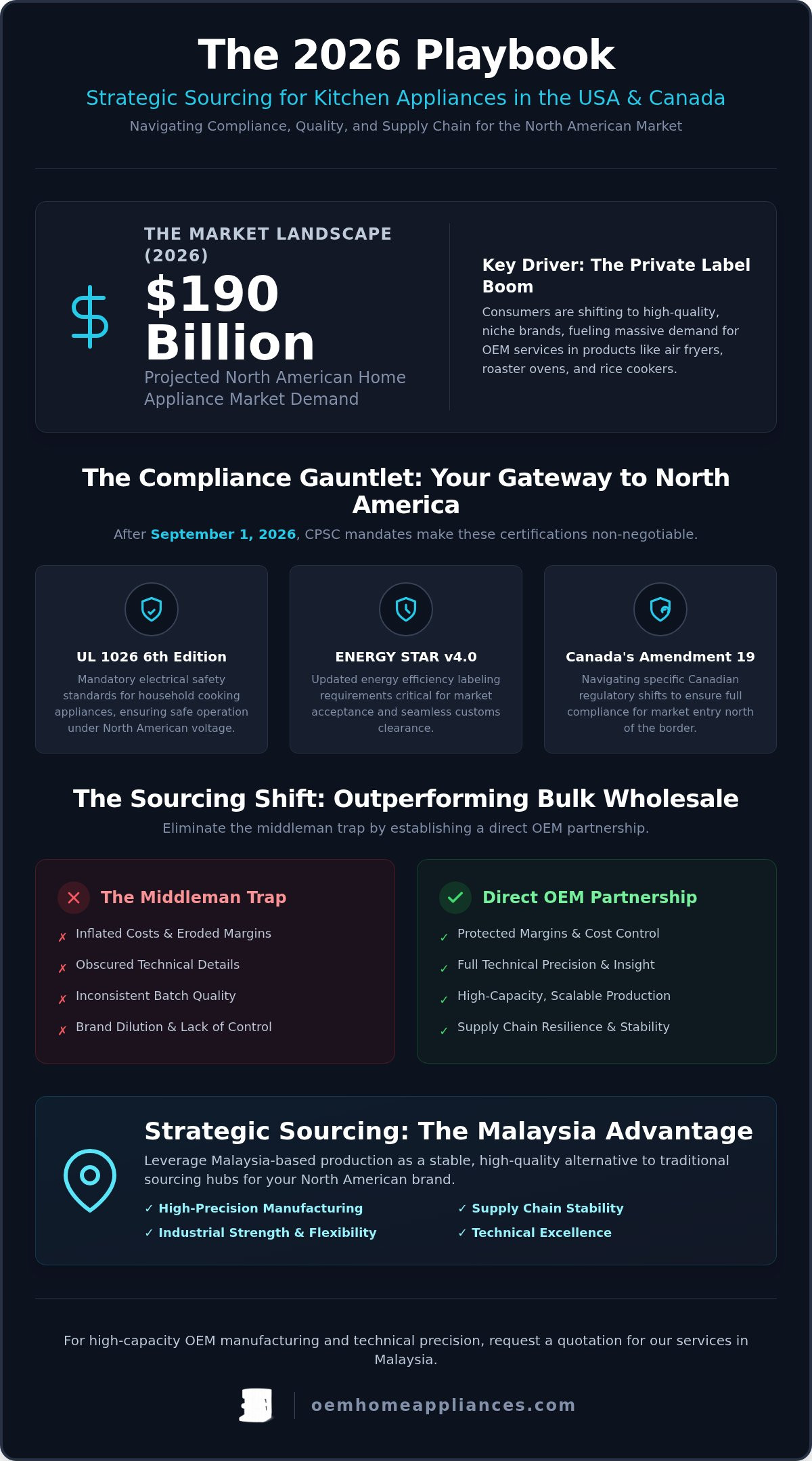
The North American home appliance market is projected to reach 190.03 billion USD in 2026. This growth represents a pivotal moment for brands looking to capture a 38.5% regional market share. Success in this environment requires more than just high volume. It demands a strategic partnership with a bulk kitchen appliance manufacturer USA/Canada that can handle technical customization and rapid scaling. Recent trends show a sharp rise in private label dominance within the small appliance sector. Products like air fryers, roaster ovens, and rice cookers are no longer generic commodities. They're brand-defining assets that must meet specific aesthetic and functional standards.
Market Projections and the Private Label Boom
Consumers are increasingly choosing niche, high-quality brands over legacy giants. This shift is fueling a massive demand for OEM services. In 2026, the "compact living" trend is a major driver for portable cooking equipment. Urban dwellers need high-performance tools that fit smaller spaces, making design and development a critical competitive advantage. Procurement officers are abandoning traditional wholesale models. Buying "off the shelf" often results in inconsistent quality and brand dilution. Instead, they're seeking direct factory access to ensure every unit meets North American safety and efficiency standards.
From Sourcing to Partnership: The New Procurement Model
Traditional distribution layers often obscure technical details and inflate costs. By working directly with a bulk kitchen appliance manufacturer USA/Canada, brands gain better margin control and deeper insights into the production process. This direct model is essential for navigating the complex regulatory environment of 2026. Supply chain resilience is the priority for procurement leaders in a post-2025 global economy. Relying on a single, unstable region is no longer viable. Malaysia has emerged as a high-precision manufacturing hub that offers stability and technical excellence without the overhead of domestic production.
To understand how to navigate these choices, consult our Strategic Guide to Selecting a Private Label Kitchen Appliance Manufacturer. This transition from simple sourcing to technical partnership is what separates market leaders from those struggling with inventory delays. Effective sourcing now involves:
Technical Precision: Ensuring components like powder-coated metal meet durability standards.
Compliance: Adhering to UL and ENERGY STAR v4.0 requirements from the start.
Scalability: Partnering with factories capable of high-capacity production runs.
R&D Integration: Working with partners that offer product design and development to stay ahead of consumer trends.
Brands that prioritize these elements will be better positioned to handle the projected market growth while maintaining the quality that North American consumers expect.
Compliance and Quality Standards: Navigating UL, CSA, and Amendment 19
Compliance is the backbone of any successful import strategy. On September 1, 2026, the U.S. Consumer Product Safety Commission (CPSC) mandated that all new import batches of household kitchen appliances must possess upgraded electrical safety certifications. For a bulk kitchen appliance manufacturer USA/Canada, this means strictly adhering to the UL 60335-2-XX series and the updated UL 1026 6th Edition. These aren't just bureaucratic hurdles. They're rigorous technical benchmarks that ensure your air fryers and roaster ovens operate safely under North American voltage standards.
Understanding Safety Certifications (UL and CSA)
At the factory level, safety testing for products like kettles and coffee machines involves dielectric voltage-withstand tests and leakage current checks. Importing non-certified bulk appliances into North America is a high-risk gamble that leads to customs seizures and significant legal liability. To maintain batch-to-batch consistency, your manufacturing partner must implement a quality management system that mirrors Harmonized U.S. and Canadian Standards. This alignment ensures that every unit, from the first prototype to the ten-thousandth production piece, meets identical safety criteria.
A manufacturer's R&D department is your first line of defense against non-compliance. They integrate safety requirements into the initial prototyping phase, preventing costly redesigns later in the production cycle. This proactive approach is essential as the U.S. Department of Energy (DOE) continues to propose stricter efficiency rules for cooking products. If you need a partner that understands these technical shifts, you can speak with our compliance experts to review your product specifications.
Energy Efficiency and Amendment 19
Energy efficiency is the primary differentiator for premium brands in 2026. For high-capacity rice cookers and roaster ovens, OEM partners are re-engineering heating elements to minimize standby power loss and maximize thermal transfer. Amendment 19 is the primary energy efficiency benchmark for Canadian appliance imports in 2026. Meeting this standard requires precision engineering in thermal insulation and electronic control boards.
Working with a bulk kitchen appliance manufacturer USA/Canada that offers specialized OEM/ODM services allows you to stay ahead of these regulatory shifts. By prioritizing technical excellence during the design stage, you ensure that your private label products aren't just compliant, but are also optimized for the energy-conscious consumer. This focus on precision reduces the risk of seasonal launch disruptions and builds long-term trust with your retail partners.
Beyond Distribution: Why Direct OEM Partnerships Outperform Bulk Wholesale
Many brands fall into the "Middleman Trap" by sourcing through third-party agents or wholesalers. While these entities offer convenience, they lack the technical depth required to innovate in a competitive market. When you partner with a bulk kitchen appliance manufacturer USA/Canada, you bypass the communication lag that often leads to production errors. Distributors focus on inventory turnover. In contrast, an OEM partner focuses on your brand's specific growth and product integrity. This is particularly crucial for complex products like coffee machines or air fryers where precision is non-negotiable.
The Margin Advantage of Direct Sourcing
Direct sourcing fundamentally changes your cost structure. By eliminating agent fees and hidden markups, you can reinvest those savings into higher-quality materials or marketing efforts. According to the Association of Home Appliance Manufacturers (AHAM), maintaining competitive pricing while meeting strict efficiency standards is a top priority for 2026. Direct factory access allows for transparent pricing on components like enamel-coated housings or specialized powder-coated metal components. If you're looking at Scaling Your Brand with Bulk Roaster Oven Orders, the direct model ensures your unit cost remains sustainable as you increase volume. You gain clear visibility into the raw material costs for steel, aluminum, and plastics, which are often obscured in wholesale models.
Technical Depth and Product Iteration
Technical expertise is often lost when there's an intermediary between the brand and the factory floor. A distributor can't explain why a specific powder coating isn't adhering to a metal component, but an OEM specialist can. This depth is vital when designing unique roaster ovens, BBQ grills, or air fryers that need to stand out in a crowded market. OEM partners own the design and development process, allowing for rapid prototyping and iteration. This level of control extends to your supply chain and lead times. You're not waiting for a middleman to check with a factory; you have a direct line to the production schedule. This ensures that seasonal launches for portable cooking equipment aren't disrupted by third-party delays.
This partnership model provides the flexibility to adapt to seasonal trends without the risk of inventory shortages. It ensures that your North American supply chain is built on a foundation of technical precision rather than just a transaction. By working with a Malaysia-based specialist, you avoid the retail competition that often comes with larger distributors who may sell their own brands alongside yours. This creates a stable environment for long-term growth and brand consistency.
Technical Excellence in Appliance Manufacturing: Enamel, Powder Coating, and R&D
Technical excellence is the foundation of a product that survives the competitive North American retail environment. A high-capacity bulk kitchen appliance manufacturer USA/Canada must offer more than just assembly. They must provide sophisticated material science and finishing techniques. Specialized finishes like industrial enamel and powder coating are not just cosmetic choices; they are essential for thermal efficiency and long-term durability in high-performance kitchenware. These technical details often determine the success of a premium private label launch.
Industrial Finishing: Enamel and Powder Coating
Industrial enamel is the gold standard for high-heat applications. The Industrial Enamel Coating Process for Roaster Ovens involves fusing a specialized glass-like layer to the metal substrate at temperatures exceeding 800 degrees Celsius. This creates a non-porous, scratch-resistant surface that withstands the intense heat cycles of commercial-grade cooking. For exteriors, powder coating offers a superior balance of aesthetics and industrial strength. Unlike traditional liquid paint, powder coating provides a thicker, more uniform layer that resists chipping and corrosion on BBQ grills and kettles. This durability is vital for maintaining a premium brand image over years of consumer use.
R&D and Prototyping for North American Brands
The lifecycle of a custom appliance project begins with precision CAD modeling. This stage allows engineers to simulate thermal transfer and airflow before a single metal component is cut. Specialized R&D services reduce time-to-market for new air fryer designs by identifying potential engineering bottlenecks during the digital prototyping phase. After CAD approval, the project moves to functional prototyping and rigorous testing to ensure heating elements meet the energy-efficient standards mandated by 2026 regulations. This methodical approach ensures that technical solutions for heating elements are optimized for performance before mass production begins.
Engineering for performance ensures that air fryers and rice cookers exceed standard lifespans. We focus on high-quality internal components, such as precision temperature sensors and heavy-duty switches, to prevent the common failure points found in generic bulk imports. This technical rigor transforms a generic appliance into a brand-specific flagship that builds consumer loyalty. If you are ready to develop a custom product line, you can request a technical consultation with our engineering team in Malaysia. Our facility integrates product design and development with mass production to maintain strict quality control throughout the entire manufacturing process. This integration ensures that every unit reflects the high standards of your brand identity.
Strategic Sourcing: Leveraging Malaysia-Based Production for North American Brands
Malaysia has evolved into a premier powerhouse for high-precision appliance manufacturing. It offers a unique balance of technical quality and cost efficiency that other Asian hubs struggle to match in 2026. For brands seeking a reliable bulk kitchen appliance manufacturer USA/Canada, the region provides a stable political climate and a mature industrial infrastructure. Logistics are streamlined, with well-established shipping routes connecting Malaysian ports like Port Klang to major North American hubs such as Los Angeles, Vancouver, and New York. This connectivity ensures that your seasonal inventory arrives on schedule, avoiding the bottlenecks common in more congested trade lanes.
The Malaysia Advantage in 2026
Malaysia's workforce is highly skilled in appliance R&D, which allows for the seamless integration of the CAD and prototyping phases discussed earlier. The regulatory environment remains predictable, providing a secure landscape for long-term supply chain planning. Importers benefit from favorable trade considerations that often result in more competitive landed costs compared to traditional sourcing routes. For instance, scaling rice cooker production in our Malaysia-based facility allows brands to maintain high volume while meeting the technical precision required for ENERGY STAR v4.0 compliance. This stability is a critical asset when you need to navigate the price volatility of raw materials like steel and aluminum.
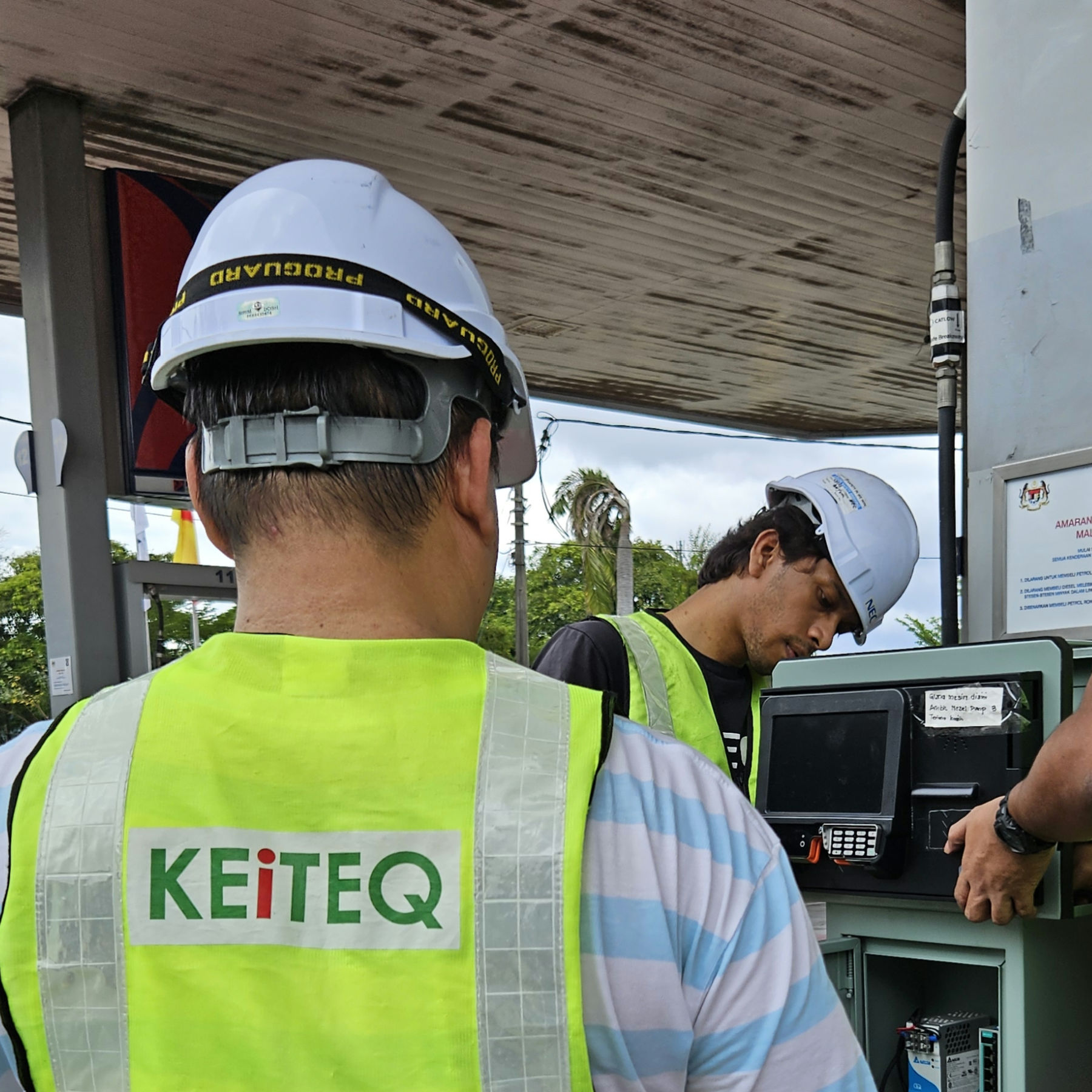
Partnering with Keiteq for Long-Term Growth
Keiteq, operating under the oemhomeappliances brand, facilitates a frictionless entry into the North American market. We maintain a strict B2B-only focus. We never compete with our clients in the retail space, ensuring your brand remains the sole priority. Our comprehensive OEM/ODM services range from initial product design to specialized enamel and powder-coated metal finishing. This all-in-one approach minimizes the risks associated with multi-vendor supply chains and ensures batch-to-batch consistency for every air fryer or roaster oven we produce.
As a dedicated bulk kitchen appliance manufacturer USA/Canada, we provide the industrial strength needed for mass production alongside the flexibility for bespoke customization. We understand the nuances of private labeling and rebranding, acting as the silent engine behind your brand's success. Our facility is equipped to handle the rigorous testing required for UL and CSA certifications, ensuring your products are market-ready upon arrival.
For detailed technical specifications, production capacities, or to request a quotation for your next project, please contact us today. We invite you to reach out for more information on how our specialized manufacturing services in Malaysia can secure your North American supply chain and drive your brand's growth in 2026.
Future-Proofing Your North American Supply Chain
Success in the 2026 appliance market depends on technical precision and regulatory readiness. You've seen how direct OEM partnerships eliminate the middleman trap and provide the R&D depth needed to meet updated UL and ENERGY STAR v4.0 standards. By prioritizing specialized finishes like industrial enamel and powder coating, your brand can offer the durability that North American consumers demand. These technical advantages are essential for maintaining a competitive edge in a shifting global economy.
Partnering with a dedicated bulk kitchen appliance manufacturer USA/Canada like Keiteq ensures your private label products are engineered for performance and compliance. Our expert OEM/ODM services based in Malaysia provide a stable, high-quality alternative to traditional sourcing hubs. We maintain a strict B2B focus to protect your brand identity while delivering specialized technical solutions for products like air fryers and roaster ovens. This approach provides the industrial strength and flexibility your business needs to scale effectively.
To take the next step in your production journey, Request a Quotation for Your Custom Appliance Project. We're ready to help you scale your brand with precision and reliability from our high-capacity facilities in Malaysia.
Frequently Asked Questions
How do I find a bulk kitchen appliance manufacturer for the USA and Canada?
Finding a reliable bulk kitchen appliance manufacturer USA/Canada requires evaluating a factory's technical capabilities and compliance history. You should verify that the manufacturer has deep experience with North American safety standards and energy efficiency benchmarks. It is also vital to assess their ability to handle specialized finishes like powder coating or enamel. A direct partnership ensures that your brand specifications are maintained throughout the production cycle, preventing the quality drift often seen with third-party agents.
What is the difference between OEM and ODM in appliance manufacturing?
OEM involves manufacturing products based on your specific designs and technical requirements. ODM allows you to select from a factory's existing product range and apply your own branding. Our facility in Malaysia provides both services, including comprehensive product design and development for items like air fryers and rice cookers. This flexibility helps brands scale quickly while maintaining control over the final product's quality and specialized finishing options without the overhead of domestic production.
Does Canada Amendment 19 affect small kitchen appliances like rice cookers?
Canada Amendment 19 specifically targets energy efficiency standards for various appliances. It directly impacts small kitchen appliances like high-capacity rice cookers and roaster ovens by mandating stricter power consumption limits. Importers must ensure their manufacturing partners have updated their engineering processes to meet these 2026 benchmarks. Failure to comply can result in refused entry at Canadian ports or mandatory product recalls across the North American market, disrupting your entire seasonal inventory strategy.
Can I get private label air fryers with custom enamel coatings?
You can absolutely secure private label air fryers with custom enamel coatings through a specialized manufacturer. We specialize in enamel-coated products and powder-coated metal components, which provide a high-end finish and superior durability. These industrial finishes are applied during the production phase in our Malaysia-based facility. This technical solution differentiates your brand from generic plastic alternatives and meets the growing consumer demand for premium, long-lasting kitchenware that withstands heavy use in North American homes.
What are the typical MOQs for bulk roaster oven orders?
Minimum Order Quantities (MOQs) for roaster ovens depend on several factors, including the level of customization and the specific materials required. High-capacity production runs generally have different requirements than smaller, bespoke projects. We recommend contacting our team directly to discuss your specific volume needs and project scope. This allows us to provide an accurate assessment based on our current production capacities and your brand's growth targets for the 2026 fiscal year.
How does a Malaysia-based manufacturer handle UL and CSA certifications?
A Malaysia-based manufacturer handles UL and CSA certifications by integrating safety testing into the prototyping and mass production stages. We work with accredited third-party laboratories to verify that every component, from heating elements to internal wiring, meets North American safety codes. This proactive approach ensures that bulk shipments of blenders or coffee machines are fully compliant before they leave our factory, providing a seamless entry into the USA and Canadian markets without regulatory delays.
What is the advantage of enamel coating for kitchen appliances?
Enamel coating provides a non-porous, glass-like surface that is exceptionally resistant to high heat and chemical corrosion. It is the ideal choice for roaster oven liners and BBQ grills because it doesn't peel or scratch easily. This finish also improves thermal efficiency and makes the appliance much easier for consumers to clean. Using enamel-coated components is a proven way to elevate your product's perceived value and industrial strength in the competitive North American marketplace.
How can I request a manufacturing quotation for my brand?
To request a manufacturing quotation, please provide your project's technical specifications and estimated order volumes. Our team provides comprehensive cost breakdowns for all services provided within Malaysia, including product design and specialized metal finishing. We encourage you to contact us for further details or specific pricing to see how our Malaysia-based facility can support your brand. This direct engagement ensures you receive a precise quote for high-capacity production tailored specifically to your North American requirements.


Comments