Choosing Outdoor Payment Terminals for Petrol Stations
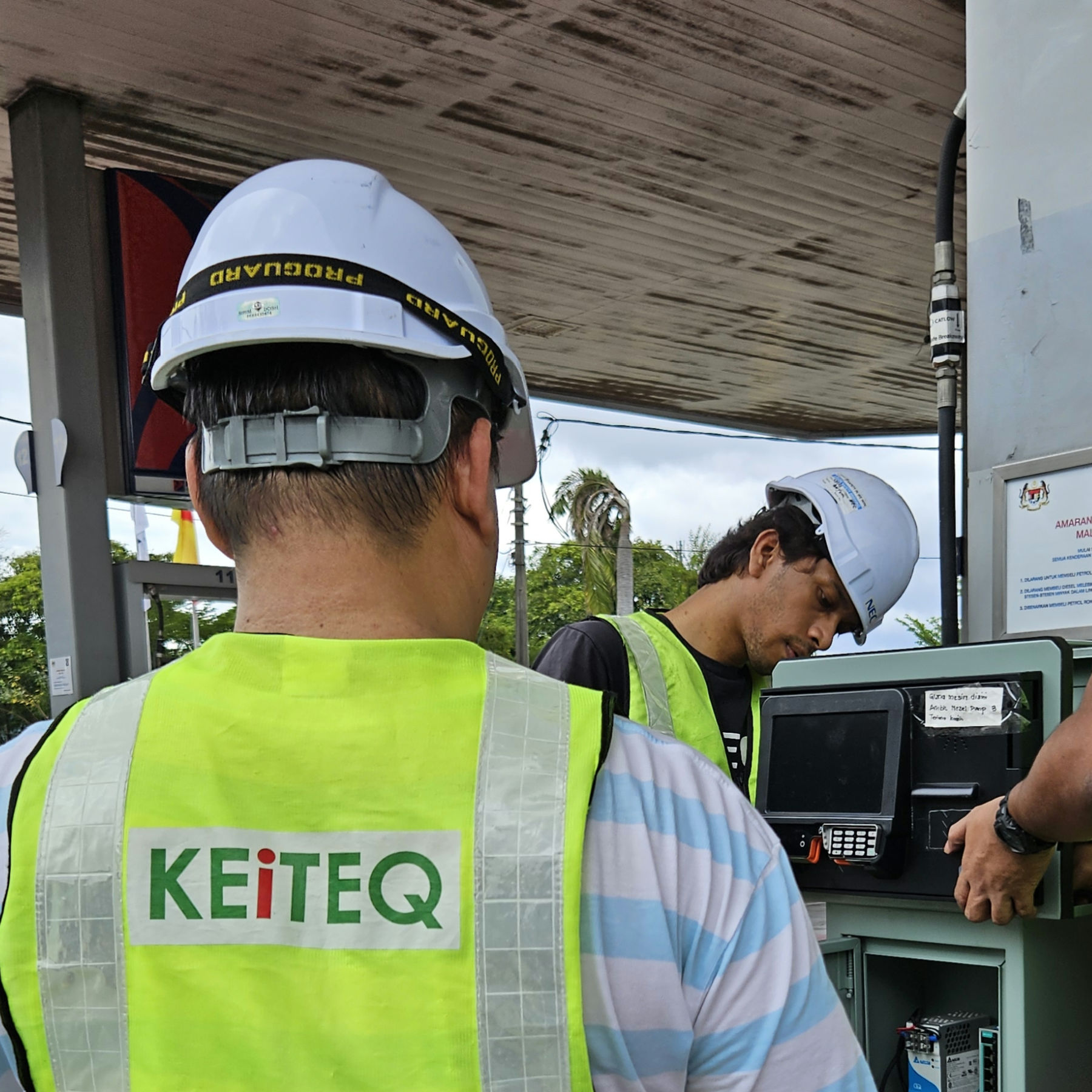
An outdoor payment terminal for an unmanned petrol station is either your most reliable employee or your most expensive liability. As the Malaysian fuel market shifts toward unattended operations to combat rising costs, the margin for hardware failure has vanished. You shouldn't have to choose between 24/7 service and high maintenance budgets. The reality is that standard enclosures often fail under intense UV exposure and tropical humidity, leading to costly security breaches or system downtime that erodes customer trust.
We understand that procurement managers need hardware that stands up to both the elements and the rigors of high-traffic forecourts. This guide explores the engineering standards and specialized manufacturing processes, such as precision powder coating and metal fabrication, that ensure your terminals remain durable and secure. You'll learn how to identify a manufacturing partner with the technical expertise to protect your ROI. We will also look at why a stable, Malaysian-based supply chain provides the industrial strength and scalability your brand requires to lead the market.
Table of Contents
Why Hardware Durability is the ROI Engine for Unmanned Petrol Stations
The shift toward 24/7 unattended fuel retail models is driven by a need to maximize asset utilization while minimizing labor costs. In a market like Malaysia, where the fuel station sector is expanding at a 5.5% CAGR, operational efficiency is the primary differentiator. An outdoor payment terminal for unmanned petrol station use is the heart of this model. It isn't just a convenience. It's the revenue gatekeeper. When this gatekeeper fails, the station effectively stops existing for the customer. Hardware survival is the only way to protect your margins.
The Evolution of Unattended Payment Hardware
Early iterations of automated fueling relied on basic card readers with limited durability. Modern systems have evolved into integrated multimedia kiosks that handle everything from fuel selection to loyalty programs. This advancement relies heavily on Pay at the pump technology. It has transitioned from a premium feature to a baseline requirement. These terminals allow operators to reduce on-site staff. This lowers operational overhead significantly. However, this increased reliance means the hardware must be engineered for industrial longevity. You can't rely on consumer-grade replacement cycles in a professional environment.
The True Cost of Hardware Attrition
Calculating the ROI of an outdoor payment terminal for unmanned petrol station requires looking beyond the initial purchase price. Hardware downtime in an unattended environment is expensive. Without on-site staff to troubleshoot, a single component failure can lead to days of lost transactions. Reliability is your most valuable asset.
Environmental factors in tropical climates accelerate the depreciation of internal components. High humidity and intense UV exposure are the primary culprits. Standard enclosures often succumb to corrosion or thermal stress. This leads to system crashes and hardware failure. Robust engineering is the only solution.
Investing in robust, industrial-grade metal housings is the first line of financial defense. Precision-engineered enclosures, often utilizing specialized powder-coated metal components, protect sensitive electronics. They prevent moisture ingress and resist vandalism. This durability ensures that the hardware survives harsh forecourt conditions. Long-term forecourt success depends on hardware that survives years of continuous outdoor exposure. Don't let poor hardware quality erode your profitability.
Core Engineering Standards for Outdoor Payment Terminals
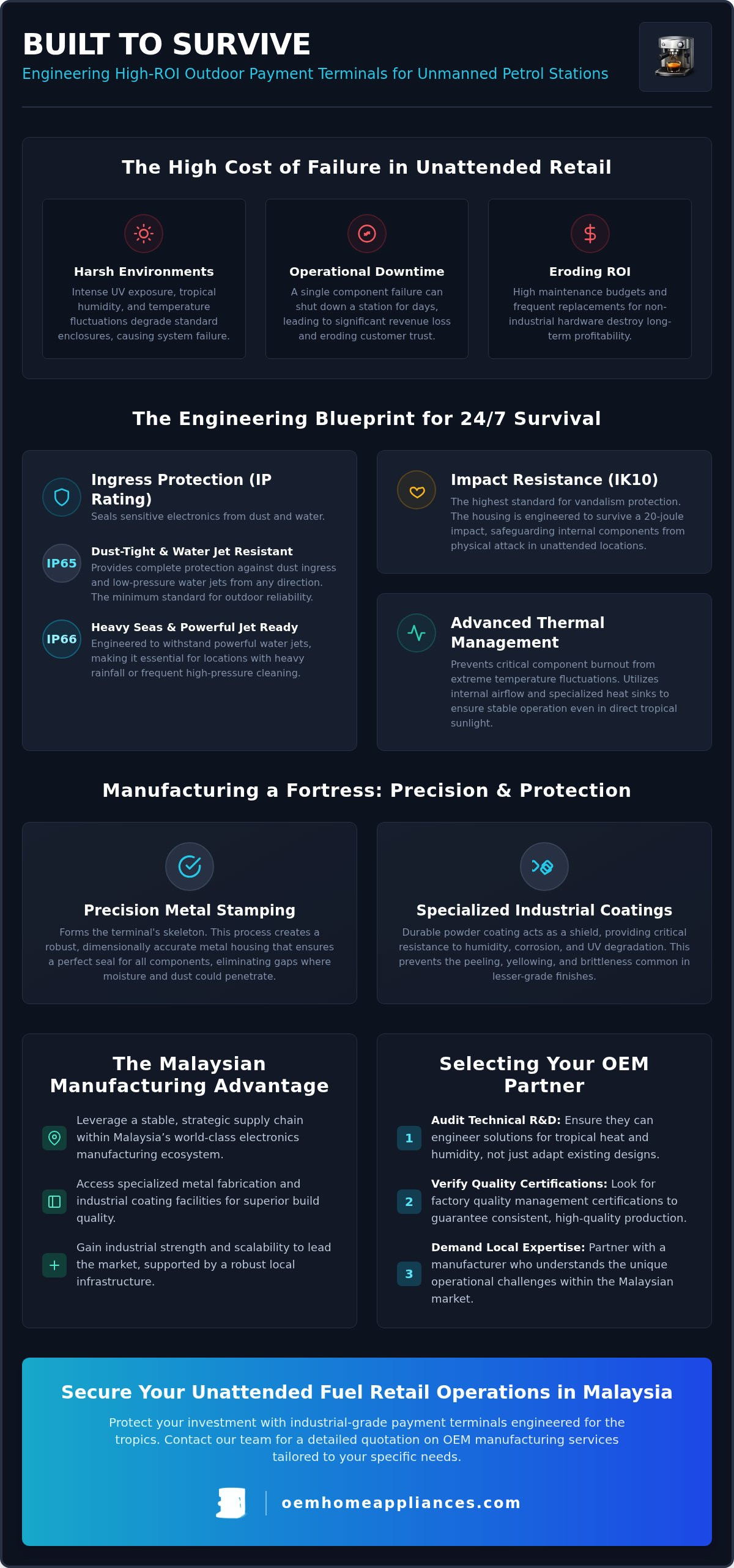
Engineering an outdoor payment terminal for unmanned petrol station deployment requires adherence to rigorous industrial benchmarks. These standards ensure the hardware survives the 24/7 exposure discussed in the previous section. Ingress Protection (IP) ratings are the primary metric for this survival. An IP65 rating signifies the unit is dust-tight and protected against low-pressure water jets. For more intense environments, IP66 provides protection against powerful water jets. These international standards often correlate with NEMA enclosure ratings, which define the cabinet's ability to resist environmental hazards like windblown dust and external ice formation.
Reliability also depends on thermal management. Unmanned terminals face extreme temperature fluctuations that can crash sensitive electronics. Effective heat dissipation through internal airflow or specialized heat sinks prevents processor throttling and component burnout. Physical security is equally vital. IK10 impact resistance is the recommended standard for these units. This rating ensures the housing survives a 20-joule impact, which is essential for vandalism protection in unattended locations. If you need a partner to develop these hardened specifications, you can reach out to our technical team for a consultation.
Weatherproofing and Environmental Sealing
Sealing technology is the difference between a five-year lifespan and a six-month failure. High-grade silicone or EPDM gaskets prevent moisture ingress at every seam and joint. UV resistance is another critical factor. Without specialized coatings, touchscreen displays and plastic bezels become brittle and yellow under direct sunlight. In high-humidity or coastal regions, corrosion resistance is mandatory. This often involves using stainless steel or powder-coated metal components that act as a barrier against salt air and oxidation.
Security and Compliance Requirements
Security engineering must be integrated into the physical design from the prototyping stage. PCI-PTS compliance is the baseline for secure payment processing, but the physical shell must support this standard. Anti-tamper switches trigger immediate system lockdowns if the enclosure is breached. Physical anti-skimming features, such as recessed card slots and specialized sensor mounts, prevent criminals from installing malicious hardware. Integrating these peripherals within a hardened shell requires precision manufacturing to ensure no gaps or weak points exist for exploitation.
Manufacturing the "Fortress": Metal Stamping and Industrial Coatings
Building an outdoor payment terminal for unmanned petrol station environments requires moving beyond basic assembly. The enclosure must function as a protective fortress for sensitive payment electronics. This starts with precision metal stamping. It provides the structural rigidity needed to meet the IK10 impact standards discussed earlier. High-speed stamping presses create uniform components that ensure every terminal in a mass production run meets exact specifications. This consistency is vital for maintaining the security of the internal payment peripherals.
Precision Metal Fabrication for Terminals
Achieving tight tolerances is critical for maintaining the IP65 or IP66 ratings your ROI depends on. Even a millimeter of misalignment creates a path for moisture or dust. We prioritize material selection based on the specific site environment. Stainless steel is the industry standard for coastal or high-corrosion areas. For standard urban forecourts, treated aluminum offers a balance of weight and durability. While we often discuss the Industrial Enamel Coating Process in the context of high-heat appliances, the same principles of chemical bonding apply to creating ultra-durable terminal housings that resist chemical cleaners and environmental pollutants.
Advanced Finishing and Coating Solutions
The final layer of defense is the coating. Utilizing high-grade powder coated metal components ensures the terminal resists UV degradation and surface scratches. The powder coating process involves electrostatic application followed by thermal curing. This creates a hard, continuous finish that liquid paints cannot match. It's the most effective way to prevent the oxidation that eventually compromises the structural integrity of the enclosure.
To verify this durability, we subject components to rigorous salt spray testing. This simulates years of exposure to humid, salt-laden air in a matter of weeks. For complex internal security components, such as card reader bezels or keypad housings, zinc diecasting is the preferred method. It allows for intricate designs that are physically difficult to compromise. This combination of heavy-duty fabrication and advanced finishing ensures the terminal remains aesthetically professional while providing industrial-strength protection. A well-finished terminal doesn't just look better; it protects your investment by preventing the structural decay that leads to hardware failure.
Strategic Advantages of Manufacturing in Malaysia
Sourcing an outdoor payment terminal for unmanned petrol station projects requires more than just finding a factory. It requires a strategic partner located within a mature industrial ecosystem. Malaysia has solidified its position as a global hub for Electronic Manufacturing Services (EMS), offering a unique blend of sophisticated electronics assembly and heavy-duty metal fabrication. This dual capability is essential for terminals that must integrate complex payment peripherals into hardened, weatherproof shells. By choosing a Malaysian partner, you gain access to a stable supply chain that isn't subject to the same volatile trade shifts seen in other regions.
When evaluating Malaysia vs China appliance manufacturing for industrial-grade hardware, the differences in stability and specialized focus become clear. While China excels in consumer volume, Malaysia's manufacturing sector is optimized for the high-precision requirements of the fuel retail industry. This includes direct access to high-quality raw materials and specialized coating facilities that can handle the industrial enamel and powder coating standards required for outdoor longevity. The 2026 enforcement of fuel subsidy regulations in Malaysia further highlights the need for locally compliant, high-security hardware that can manage complex transaction rules at the pump.
The Malaysian Industrial Ecosystem
The synergy between different manufacturing sectors in Malaysia provides a distinct advantage for R&D and prototyping. Our industrial zones are designed so that metal stamping plants sit adjacent to electronic assembly lines. This proximity reduces lead times and allows for tighter quality control during the integration phase. A highly skilled engineering workforce, trained in international standards, ensures that your product design moves seamlessly from initial concept to mass production. This ecosystem supports the long-term manufacturing partnerships necessary for maintaining a consistent product line across global markets.
Supply Chain Resilience and Global Reach
Logistics play a critical role in the distribution of heavy, high-value hardware like outdoor payment terminals. Malaysia’s strategic location along major shipping routes makes it an ideal jumping-off point for EMEA and APAC markets. By utilizing Malaysian-based production, brands can mitigate trade risks and avoid the heavy tariffs often associated with other manufacturing hubs. This resilience is a core component of our Kitchen Appliance Manufacturing Solutions, which we adapt for industrial hardware projects to ensure global readiness.
We invite you to leverage our industrial strength and strategic location to secure your supply chain. For detailed technical specifications or to request a project estimate, contact our Malaysia-based manufacturing team today to discuss your specific requirements.
Selecting an OEM Partner for Fuel Retail Hardware
Selecting a manufacturing partner for an outdoor payment terminal for unmanned petrol station project is a decision that dictates your long-term maintenance budget. You need a partner that doesn't just assemble parts but understands the industrial physics of the forecourt. Start by evaluating their technical R&D capabilities. A partner must demonstrate a clear path from a digital design to a physical prototype that meets the IP65 and IK10 standards discussed earlier. Auditing factory quality management is the next logical step. Look for ISO certifications and specific documentation of their quality control checkpoints during the metal stamping and coating processes.
Effective hardware for fuel retail requires seamless multi-material integration. Your partner must manage the precise tolerances between steel housings, plastic bezels, and sensitive electronic payment peripherals. Any gap in this integration compromises the environmental seal. Finally, review their scalability. A partner might build a perfect prototype, but they must also maintain that precision across a run of several thousand units. Mass production workflows must include automated testing and rigorous inspection to ensure consistency across the entire fleet.
From Prototyping to Mass Production
The transition from a design file to a production line is where most hardware projects fail. We apply a rigorous kitchen appliance prototyping workflow to industrial kiosk development. This methodical approach ensures that every component is tested for fit and function before mass tooling begins. Managing this transition requires a deep understanding of industrial scale. It involves refining the metal stamping dies and optimizing the powder coating cycle to ensure every unit provides the same level of "fortress" protection. This consistency is what protects your ROI over the hardware's lifecycle.
Building a Long-Term B2B Partnership
Reliability in the fuel sector is built on transparency. A trusted expert facilitator provides full visibility into their supply chain and material sourcing. This is especially important for compliance with PCI-PTS standards and regional fuel regulations. Collaborative engineering is the hallmark of a successful partnership. Your OEM should act as an extension of your own R&D team, suggesting bespoke hardware improvements that enhance durability or reduce assembly costs. Use this checklist when vetting a Malaysian manufacturing partner:
Does the facility offer in-house metal stamping and industrial coating?
Can they demonstrate successful multi-material integration in outdoor environments?
Do they provide a clear roadmap from prototyping to high-volume production?
Is their supply chain stable and located within a primary EMS hub like Malaysia?
We are ready to serve as the dependable backbone for your fuel retail expansion. If you are looking for high-quality manufacturing services within Malaysia, contact us today for a detailed quotation. Our team is available to discuss your specific technical requirements and provide a comprehensive project estimate.
Securing the Future of Unattended Fuel Retail
The decision to deploy an outdoor payment terminal for unmanned petrol station operations is a long-term investment in your brand’s operational stability. Success in the 2026 fuel retail market requires a shift from viewing hardware as a commodity to seeing it as a revenue-protecting fortress. By prioritizing industrial engineering standards like IP66 sealing and IK10 impact resistance, you eliminate the high maintenance costs that often plague unattended locations.
We specialize in high-durability powder-coated metal components and offer deep expertise in industrial enamel finishing to ensure your equipment survives tropical humidity and UV exposure. Our comprehensive OEM/ODM services are based in Malaysia, providing a stable supply chain and strategic logistical advantages for global distribution. If you are ready to identify a manufacturing partner that understands the nuances of durable metal housings and complex hardware integration, we are here to facilitate your growth.
Contact oemhomeappliances today for a custom manufacturing quotation in Malaysia to secure your next project. We look forward to building a reliable foundation for your fuel retail network together.
Frequently Asked Questions
What is the standard IP rating for an outdoor payment terminal?
IP65 or IP66 is the required standard for these environments. IP65 ensures the unit is dust-tight and resists low-pressure water jets. IP66 provides protection against powerful water jets. These ratings are essential for an outdoor payment terminal for unmanned petrol station use to prevent moisture ingress. High-quality gaskets and precision metal stamping ensure these seals stay intact over years of exposure to tropical storms and heavy rain.
How does powder coating protect petrol station terminals from corrosion?
Powder coating creates a hard, continuous barrier that chemically bonds to the metal substrate. This electrostatic application process is superior to liquid paint because it resists UV degradation and surface scratches. It prevents oxidation in salt-laden or high-humidity environments. By using high-grade powder-coated metal components, operators ensure the structural integrity of the enclosure remains uncompromised despite constant exposure to harsh forecourt chemicals and industrial pollutants.
Why is Malaysia a preferred location for manufacturing payment kiosks?
Malaysia offers a mature industrial ecosystem that combines electronics assembly with specialized metal fabrication. As a global hub for Electronic Manufacturing Services (EMS), the country provides a stable supply chain and a highly skilled engineering workforce. This proximity between different manufacturing sectors reduces lead times for complex projects. Additionally, Malaysian-based production helps global brands mitigate trade risks and access high-quality industrial coating facilities that are critical for hardware longevity.
Can an OEM partner handle both the metal housing and electronic integration?
Yes, a comprehensive OEM/ODM partner manages the entire lifecycle from metal stamping to electronic assembly. This integrated approach ensures that the physical shell and internal payment peripherals fit with exact tolerances. It eliminates the communication gaps that often occur when using multiple vendors. A dedicated partner focuses on multi-material integration, ensuring that plastic bezels, steel housings, and thermal management systems work together to protect the internal hardware.
What are the main security requirements for unattended payment hardware?
Unattended terminals must comply with PCI PTS standards and include physical anti-tamper engineering. Since an outdoor payment terminal for unmanned petrol station operates without on-site staff, hardware should include:
Anti-skimming sensors and recessed card slots
IK10 impact resistance to defend against vandalism
Remote monitoring capabilities for immediate breach alerts
These features protect the internal payment peripherals and ensure the system remains secure against both physical and digital threats.
How long does the prototyping phase typically take for a custom terminal?
Prototyping timelines vary based on the complexity of the design and the level of customization required. Some industry professionals report that moving from a digital concept to a functional physical prototype can take several weeks of iterative engineering. This phase includes refining metal stamping dies and testing environmental seals. We'd recommend consulting with your manufacturing partner early to establish a realistic schedule that aligns with your specific R&D and mass production goals.
What materials are best for anti-vandalism in unmanned petrol stations?
Stainless steel and treated aluminum are the preferred materials for high-security enclosures. These metals provide the structural rigidity needed to achieve IK10 impact resistance ratings. Zinc diecasting is often used for intricate internal components that require high physical strength. When combined with industrial-grade coatings, these materials resist both physical force and environmental decay. This ensures the terminal remains a secure fortress for payment electronics in unattended, remote locations.
How do outdoor terminals manage screen visibility in direct sunlight?
High-brightness displays with anti-reflective coatings are standard for outdoor visibility. These screens often feature 1,000 to 1,500 nits of brightness to remain readable under direct equatorial sun. Engineering doesn't stop at brightness; it includes UV-resistant bonding for touch layers to prevent yellowing. Effective thermal management is crucial here. It prevents the screen from overheating and dimming during peak daylight hours, ensuring a consistent user experience for every customer who visits your station.
We are ready to serve as your dedicated manufacturing partner within Malaysia. For detailed technical specifications or to request a project estimate, contact our Malaysia-based manufacturing team today to discuss your specific requirements.


Comments