Custom Appliance Engineering: 2026 Kitchen Brand Guide
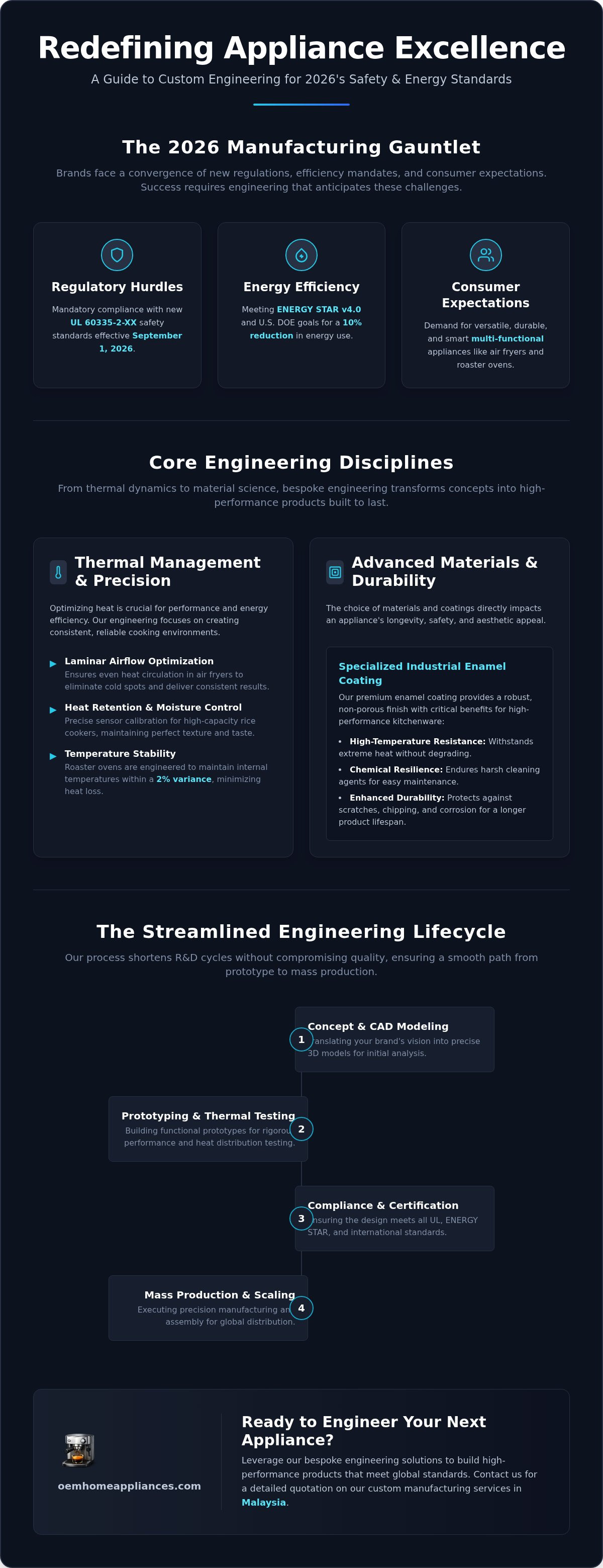
What if your next product launch didn't just meet safety standards but redefined them through superior material science? You likely know that a sleek design means very little if the internal components fail under thermal stress or get rejected at customs because of the new September 1, 2026, UL 60335-2-XX safety requirements. It's a common frustration for brands trying to scale while navigating complex international regulations and energy efficiency mandates like ENERGY STAR v4.0.
This guide demonstrates how expert custom appliance engineering transforms your concepts into high-performance products with a focus on durability and thermal efficiency. We'll show you how to solve the most difficult manufacturing challenges, from achieving perfect enamel coating to shortening R&D cycles without sacrificing quality. You'll learn exactly what to look for in a reliable manufacturing partner to ensure your roaster ovens, air fryers, and portable cooking equipment exceed durability standards. We will break down the technical workflows that turn complex engineering problems into scalable business successes.
Table of Contents
The Strategic Role of Custom Appliance Engineering in Product Development
Custom appliance engineering isn't just a manufacturing step. It's the technical bridge that connects a brand's creative vision to a high-performance physical product. By 2026, the global market has shifted away from generic, "white-label" models toward bespoke technical solutions that prioritize long-term brand equity. When engineering is handled with precision, it builds consumer trust through reliability and safety. This process integrates the principles of Industrial design with rigorous mechanical testing to ensure every roaster oven or air fryer performs exactly as promised. You can explore our full range of product development services to see how this technical integration works in practice.
Success in 2026 depends on three core pillars: regulatory safety, energy efficiency, and aesthetic durability. With new mandatory energy labeling under ENERGY STAR v4.0 and updated electrical safety certifications like the UL 60335-2-XX series effective as of September 1, 2026, brands can't afford engineering oversights. Custom appliance engineering ensures these standards aren't just met but are built into the product's DNA from the first CAD model. It's the difference between a product that enters the market smoothly and one that faces costly customs delays.
Engineering for Performance vs. Basic Manufacturing
Basic manufacturing often relies on "off-the-shelf" designs. These fail to differentiate your brand in a crowded retail environment. Custom engineering focuses on the internal components that determine appliance longevity. High-quality heating elements and precise thermal controls separate a premium air fryer from a budget version. We help you balance this high-level technical performance with cost-effective mass production strategies. It's about building a product that lasts without pricing it out of the market. Robust engineering ensures your brand is associated with quality, not early failure rates.
Market Trends Shaping Appliance R&D
The 2026 kitchen landscape demands versatility. Consumers want multi-functional equipment like roaster ovens that can handle various cooking styles while maintaining high energy efficiency. The U.S. Department of Energy (DOE) proposal from July 2, 2026, highlights a drive toward a 10% reduction in energy use over 30 years. Modern R&D must account for these tightening standards. We focus on integrating smart features, such as app-based controls or AI cooking sensors, without compromising the mechanical reliability of the core appliance. This methodical approach ensures your product remains a staple in the consumer's kitchen for years.
Core Engineering Disciplines: From Thermal Dynamics to Enamel Finishing
Successful custom appliance engineering integrates thermal precision with advanced material science to create market-ready products. While many manufacturers focus solely on basic assembly, true engineering excellence involves optimizing heat distribution and structural durability. This is especially critical for brands aiming to comply with the Appliance and Equipment Standards Program, which sets the baseline for energy efficiency in modern kitchens. Our engineering team focuses on the mechanical and electrical synergy that ensures your product performs under rigorous daily use.
Thermal Management in Portable Cooking Equipment
Consistent results in OEM air fryer production depend on laminar airflow optimization. Engineers must design internal chambers that circulate heat evenly to prevent cold spots. For high-capacity rice cookers, the focus shifts to heat retention and moisture control through precise sensor calibration. Under 2026 standards, thermal efficiency in roaster ovens is defined by the appliance's ability to maintain a consistent internal temperature within a 2% variance while minimizing external heat dissipation. This level of precision requires sophisticated CAD modeling and thermal testing before the first prototype is ever built.
Advanced Material Coatings and Finishes
Material selection determines how an appliance handles high temperatures and cleaning chemicals. We provide specialized industrial enamel coating services for premium kitchenware, which offers superior scratch resistance and thermal stability. While enamel is ideal for cooking surfaces, powder coating remains the industry standard for appliance exteriors due to its color versatility and impact resistance. We ensure all internal coatings meet strict food safety and chemical resistance standards to prevent leaching or degradation over time.
Engineering powder-coated metal components for industrial use requires high-precision stamping and finishing. Every component must be structurally sound to support the appliance's weight and vibration during operation. Electrical safety is equally paramount. Navigating complex wiring and heating element design is mandatory to meet the UL 60335-2-XX series requirements effective as of September 2026. If you need specific technical advice on material selection or thermal optimization, you can discuss your project requirements with us to ensure your design is both safe and durable.
Navigating the Engineering Lifecycle: Prototyping to Mass Production
Moving from a brand vision to a shelf-ready product requires a methodical engineering lifecycle. Custom appliance engineering ensures each phase, from the initial sketch to the final assembly line, minimizes technical debt and regulatory risk. Unlike general electronics, kitchen appliances face unique challenges like high thermal stress and food-contact safety requirements. A structured approach allows us to identify potential failures before they reach the consumer.
The process begins with Phase 1, which focuses on conceptual design and CAD modeling. This establishes the mechanical architecture and ensures the internal layout accommodates the necessary electronics. Phase 2 moves into prototyping and functional testing. Here, we test heating elements and controls to ensure they meet the 2026 EN IEC 60730-2-24 safety standards. Phase 3 transitions into tooling and mold development. Precision during this stage determines the success of high-volume production. Finally, Phase 4 covers regulatory certification and rigorous quality control audits. This ensures every batch complies with the latest energy efficiency labeling under ENERGY STAR v4.0.
The Critical Role of Kitchen Appliance Prototyping
Iterative testing reduces market risk. Validating technical appliance development before full-scale capital investment prevents expensive mid-production corrections. A common pitfall is rushing the transition from a hand-built prototype to a production line. If the assembly process isn't engineered alongside the product, defect rates will climb during mass production. We use prototypes to simulate real-world usage, ensuring the appliance handles the thermal cycles expected in a busy kitchen.
Quality Assurance in Global Manufacturing
Implementing AQL (Acceptable Quality Limit) standards is mandatory for bulk orders. This ensures consistency across thousands of units, especially in a high capacity rice cooker factory. Consistency is the backbone of brand trust. Third-party factory audits provide an extra layer of brand protection by verifying that safety certifications, like the UL 60335-2-XX series effective as of September 1, 2026, are consistently applied during every shift. We maintain strict oversight of the production line to ensure that the final product matches the engineered prototype in every technical specification.
Choosing a Strategic Manufacturing Partner in Malaysia
Malaysia's rise as a premier manufacturing hub stems from its robust industrial ecosystem and strategic geographic location. Brands seeking custom appliance engineering find a unique combination of technical expertise and supply chain resilience in this region. The local infrastructure supports complex production requirements, from high-precision metal stamping to advanced electronic integration. Partnering with a factory that offers comprehensive OEM/ODM services allows you to streamline the entire development cycle under one roof, reducing the friction often found when managing multiple vendors.
Malaysia vs. Traditional Manufacturing Hubs
Global logistics and favorable trade agreements make Malaysia a highly competitive alternative to traditional manufacturing centers. Many international brands now adopt a 'China Plus One' strategy to diversify risk and ensure long-term supply chain stability. The local labor force possesses deep expertise in electrical engineering and material science, which is critical for appliances that must meet 2026 safety standards. Malaysia's established industrial zones provide the technical backbone for high-end quality appliance manufacturing, ensuring your product meets international certifications without compromise.
A partner's ability to handle specialized coatings and precision metalwork is a major differentiator. Premium roaster ovens and rice cookers require advanced enamel or powder-coated finishes that resist high temperatures and chemical degradation. We maintain advanced facilities in Malaysia to handle these high-precision applications, providing the aesthetic and structural durability needed for premium kitchenware. This localized expertise ensures that your product maintains its integrity through thousands of cooking cycles.
Communication and Project Management Standards
Technical engineering projects often fail because of poor communication or lack of transparency. In Malaysia, English is the primary language for business and engineering, which eliminates language barriers and speeds up the R&D process. We prioritize transparent reporting and methodical milestone tracking to keep your procurement and design teams informed at every stage. Protecting your intellectual property is another core priority. We implement strict protocols when sharing custom engineering blueprints to ensure your brand's unique innovations remain secure and exclusive. This professional approach builds the stability required for a long-term manufacturing partnership.
If you're looking for a dedicated partner to scale your product line from our Malaysia-based facility, contact us for a technical consultation and quotation today.
Scaling Your Brand with oemhomeappliances: Bespoke Engineering Solutions
oemhomeappliances, a division of Keiteq, serves as the technical backbone for brands looking to expand their footprint in the kitchen appliance sector. We specialize in custom appliance engineering that prioritizes thermal precision and extreme material durability. Our team handles the complex mechanical challenges of roaster oven and air fryer development, allowing your brand to focus on market strategy. By integrating specialized enamel-coated surfaces and high-precision metal components, we ensure your products meet the highest performance standards required for the 2026 market.
Comprehensive OEM/ODM Capabilities
We manage the entire product lifecycle from initial sketches to global distribution. Our end-to-end workflow is designed for maximum efficiency and technical transparency. Beyond our core focus on heating appliances like rice cookers and air fryers, we offer extensive customization options for blenders, kettles, and coffee machines. We operate on a strict B2B excellence model. We don't compete with our clients through direct-to-retail sales or third-party distribution. This non-compete approach ensures our interests are fully aligned with your brand's success. You can review our OEM/ODM service capabilities to see how we support diverse product categories.
Advanced Technical Solutions for Brands
Our Malaysia-based facilities provide a strategic advantage for global supply chain resilience. We utilize advanced powder-coated finishes to give your appliances a premium brand feel that resists impact and heat. Our engineering team works directly with your procurement officers to ensure every technical specification is met before mass production begins. This methodical approach minimizes the risk of regulatory delays or safety failures during customs clearance, especially with the newer UL 60335-2-XX series standards.
Scaling your brand requires a manufacturing partner that understands the nuances of private label production. We provide the technical infrastructure and industrial strength needed to move from small-batch prototypes to high-volume global distribution. Our focus remains on precision, scalability, and long-term trust. We act as a silent but powerful partner in your brand's journey toward market leadership. Our commitment to quality ensures that every unit leaving our facility reflects your brand's promise of excellence.
If you're ready to initiate a custom engineering project or require a quotation for manufacturing services in Malaysia, please contact us for further details. Our team is available to discuss your technical requirements and provide the bespoke solutions your brand needs to thrive in 2026.
Building Market-Ready Kitchen Solutions
Success in the 2026 kitchen appliance market requires more than just a functional design. It demands a rigorous approach to custom appliance engineering that integrates thermal precision with regulatory compliance. By prioritizing specialized enamel coating expertise and structural durability, you ensure your products withstand intensive consumer use while meeting the latest ENERGY STAR v4.0 and UL safety mandates. These technical foundations are what separate market leaders from generic competitors.
Utilizing a Malaysia-based global supply hub provides your brand with the technical resilience needed to navigate shifting trade dynamics. As an expert private label manufacturing partner, we offer the infrastructure to scale your roaster ovens and air fryers with absolute confidence. We handle the mechanical complexities so you can focus on expanding your market share. We're ready to transform your concepts into high-performance reality through precision and scale.
Ready to elevate your brand with precision engineering? Contact oemhomeappliances today for a custom quotation on our Malaysia-based manufacturing services. We look forward to building a long-term partnership that drives your brand's success.
Frequently Asked Questions
What is the difference between OEM and ODM in appliance engineering?
OEM (Original Equipment Manufacturing) involves producing products based on your specific designs and CAD models. ODM (Original Design Manufacturing) uses existing factory-proven designs that you can private label for your brand. In custom appliance engineering, we provide both paths, allowing brands to either develop unique technical architectures or customize our established platforms for air fryers and rice cookers to meet specific market needs.
How long does the prototyping phase typically take for a new kitchen appliance?
Prototyping duration varies based on the complexity of the heating elements and internal controls. Most standard kitchen appliance projects take several months to move from initial CAD modeling to a functional, tested prototype. This timeline includes rigorous thermal testing to ensure the unit handles the high-stress cycles required for roaster ovens. We focus on getting the engineering right during this phase to avoid costly mass production delays.
Why is enamel coating preferred for high-end roaster ovens?
Enamel coating is the industry standard for premium cooking equipment because it offers superior scratch resistance and thermal stability. It doesn't leach chemicals at high temperatures, making it safer for food contact than many alternative coatings. Our specialized enamel finishing process ensures that roaster ovens maintain their aesthetic appeal and structural integrity even after thousands of cooking cycles. This durability is a key differentiator for premium brands.
Can oemhomeappliances help with regulatory certifications like UL or CE?
Yes, we provide technical support to ensure your appliances meet international safety and energy standards. This includes navigating the September 2026 UL 60335-2-XX series requirements and mandatory ENERGY STAR v4.0 labeling. We engineer products with these certifications in mind from the conceptual phase. Our team works with third-party auditors to verify that every batch produced in our Malaysia facility is fully compliant with global market regulations.
What are the benefits of manufacturing kitchen appliances in Malaysia?
Malaysia offers a strategic geographic advantage and a highly skilled engineering workforce specializing in electrical appliances. The country's robust industrial infrastructure supports high-precision metalwork and advanced material coatings. Brands benefit from favorable trade agreements and a 'China Plus One' strategy that improves supply chain resilience. Our Malaysia-based operations provide the stability and technical expertise needed to produce reliable, high-performance air fryers and rice cookers for the global market.
Does oemhomeappliances provide engineering services for small startups?
Our business model focuses on acting as a dedicated manufacturing partner for established brands looking to scale their product lines. We specialize in high-volume production and complex custom appliance engineering for roaster ovens and air fryers. Because we prioritize long-term B2B partnerships and industrial-scale manufacturing, we are best suited for organizations with an existing market presence. We don't provide services for in-home startups or third-party branding agents.
How do you ensure thermal efficiency in custom air fryer designs?
We use advanced CAD modeling and thermal dynamics testing to optimize airflow within the cooking chamber. Thermal efficiency is achieved by ensuring uniform heat distribution and minimizing external energy loss through precision-engineered insulation. Our engineering team calibrates heating elements and fan speeds to maintain consistent internal temperatures. This methodical approach ensures your air fryer meets the 2026 energy conservation standards while delivering superior cooking performance for the end user.
What metal finishing options are available for custom appliances?
We offer several high-performance metal finishing options, including specialized enamel coating and industrial powder coating. Enamel is ideal for internal cooking surfaces due to its chemical resistance and food safety. Powder coating is the preferred choice for external chassis, providing a durable, impact-resistant finish in various colors. Every component is engineered to withstand high thermal stress, ensuring that the finish remains vibrant and intact throughout the appliance's lifespan.
For brands seeking a reliable partner in Malaysia to scale their kitchen appliance production, we invite you to contact us for a technical consultation. Request a custom quotation for Malaysia-based manufacturing services.


Comments