Custom Roaster Oven Manufacturing: The 2026 Strategic B2B Partner Guide
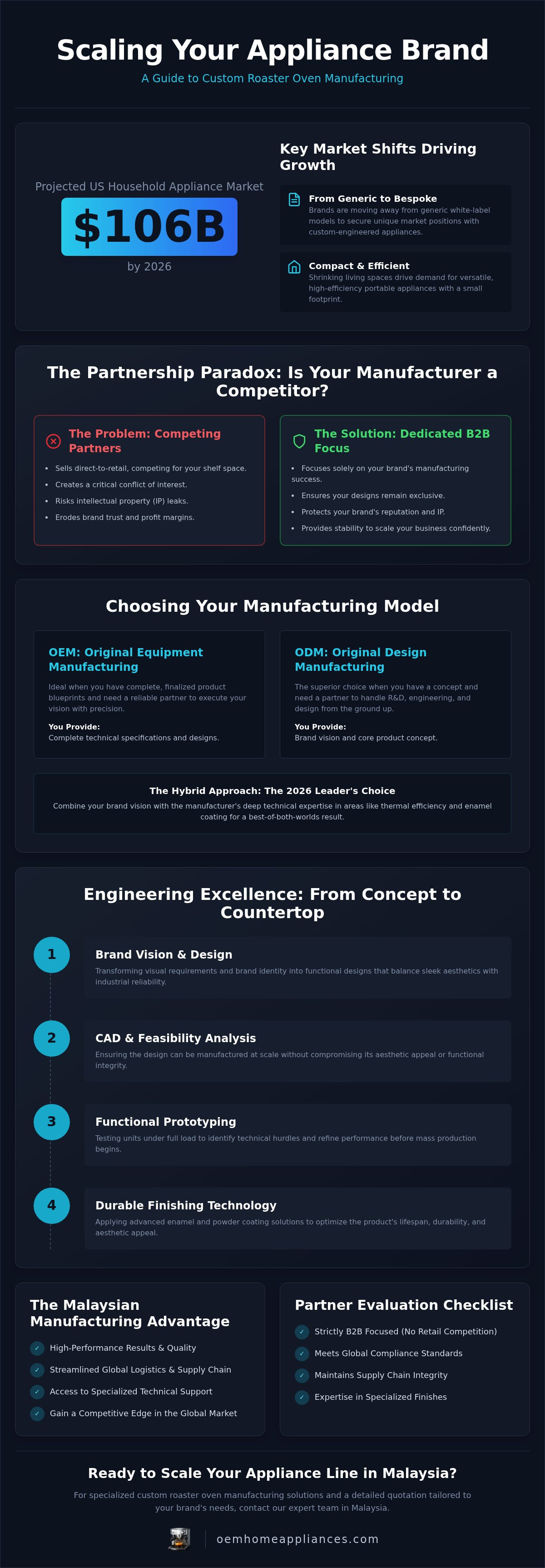
The most significant threat to your appliance brand isn't a competitor's marketing budget. It's a manufacturing partner that competes for your shelf space. As the US household appliances market approaches its projected $106 billion valuation in 2026, finding a partner that prioritizes your growth over their own retail presence is critical. Scaling a product line requires more than just a factory; it demands a dedicated engine for custom roaster oven manufacturing that understands the nuances of B2B exclusivity and technical precision.
You likely understand the frustration of inconsistent enamel quality or technical support that vanishes during the R&D phase. These bottlenecks don't just delay launches; they erode brand trust. This guide reveals how to navigate specialized kitchen appliance development and scale your brand with expert manufacturing solutions. We'll explore the strategic benefits of a Malaysian-based production hub, the importance of durable finishing technology, and the exact steps to streamline your product journey from initial design to global delivery.
Table of Contents
The Landscape of Custom Roaster Oven Manufacturing in 2026
The consumer appliance market in 2026 is no longer satisfied with "good enough." Established brands are moving away from generic white-label products toward bespoke engineering. This shift defines the current state of custom roaster oven manufacturing. It's a move toward specialized partners who understand the deep nuances of oven technology and its application in modern, compact homes. Multi-purpose factories often lack the technical depth required for high-performance roaster ovens, leading brands to seek experts who focus specifically on portable cooking equipment.
Modern living spaces are shrinking. Compact kitchens drive the demand for versatile, high-efficiency portable appliances. A roaster oven is no longer just a holiday tool; it's a daily driver for many consumers. This trend requires manufacturers to innovate in heat distribution and insulation while maintaining a small footprint. For brands targeting culinary enthusiasts who appreciate artisanal quality—much like the gourmet standards of Conserverie Maison Marthe—differentiation through technical precision is the only path to sustained growth. You need a partner that can translate consumer trends into durable, enamel-coated hardware that lasts for years.
OEM vs. ODM: Which Model Fits Your Brand Strategy?
Choosing between OEM and ODM depends on your internal technical resources. Original Equipment Manufacturing (OEM) works best if you have complete blueprints and need a reliable production line to execute your vision. If you need a partner to handle the R&D and engineering from a rough concept, the Original Design Manufacturing (ODM) model is superior. Most 2026 leaders prefer a hybrid approach. They bring the brand vision and rely on the manufacturer's expertise in enamel coating and thermal efficiency to finalize the build. Your choice determines how much control you maintain over the final product's unique features.
The B2B Advantage: Why Your Manufacturer Shouldn't Be Your Competitor
Trust is the foundation of any manufacturing partnership. Many factories now attempt to sell direct-to-retail, effectively competing with their own clients for market share. This creates a conflict of interest that can lead to priority shifts or intellectual property leaks during the custom roaster oven manufacturing process. A dedicated partner focuses solely on your success. By choosing a specialized private label kitchen appliance manufacturer, you ensure your designs stay exclusive. This stability allows you to scale without the fear of your supplier becoming your biggest rival on the retail shelf. It protects your margins and your brand's reputation.
Engineering Excellence: Design and Development for Brand Performance
Engineering a high-performance appliance starts with a clear brand vision. In custom roaster oven manufacturing, the challenge lies in balancing sleek aesthetics with the harsh realities of high-heat cooking. Consumers in 2026 expect appliances that look premium on a countertop but perform with industrial reliability. This requires a meticulous design process where every curve of the chassis and every click of the dial reflects your brand's identity. We focus on transforming these visual requirements into functional designs that meet rigorous safety standards without compromising on style. Effective design ensures that your product isn't just a tool, but a centerpiece of the modern kitchen.
Speed to market is a competitive necessity for established brands. Effective prototyping reduces the development cycle by identifying technical hurdles before mass production begins. Whether your product features traditional analog dials for tactile simplicity or advanced digital interfaces for precision, the engineering must be flawless. Integrating these controls requires a deep understanding of supply chain integrity to ensure every component, from the smallest microchip to the largest heating element, meets your quality benchmarks. This precision prevents costly recalls and builds long-term consumer trust.
The Lifecycle of Kitchen Appliance Prototyping
The journey from concept to shelf starts with detailed CAD designs. We analyze technical feasibility to ensure the design can be manufactured at scale without losing its aesthetic appeal. Functional prototyping follows, where we test the unit under full load to simulate real-world cooking conditions. This phase is critical for refining the user experience (UX). We evaluate heat-up times, handle temperatures, and the ease of cleaning. These details ensure the final product delights the home cook and performs reliably over thousands of cycles.
Technical Solutions for Heat Management
Consistent roasting depends on superior heat management and element placement. We engineer high-performance heating elements that provide even coverage, eliminating the cold spots that often plague generic appliances. Advanced insulation techniques are equally important. They keep the exterior cool to the touch while maximizing energy efficiency and improving safety ratings. By leveraging specialized kitchen appliance R&D services, brands can achieve technical breakthroughs in thermal performance that set them apart from the competition. If you're ready to discuss your specific technical requirements, consult with our engineering team today to explore bespoke solutions.
Specialized Finishes: The Role of Enamel and Powder Coating
The surface finish of a kitchen appliance serves as the primary indicator of quality for the end consumer. In the competitive space of custom roaster oven manufacturing, the choice between industrial enamel and powder coating defines your brand’s market position. It isn't just an aesthetic choice. The finish protects the underlying metal from the extreme thermal stress inherent in roasting. High-quality coatings prevent corrosion and maintain structural integrity over hundreds of cooking cycles. While competitors often rely on standard stainless steel, specialized coatings offer a premium feel and superior heat retention.
Regulatory compliance is a critical factor for 2026 product launches. The Food (Amendments) Regulations 2026 in Malaysia now enforce stricter limits on lead and cadmium release for ceramic and enamel-coated kitchenware. Our manufacturing processes are designed to meet these safety standards, ensuring your products are ready for global distribution. Beyond safety, a superior finish provides the "easy-clean" functionality that modern consumers prioritize. A durable finish reduces friction during cleaning, which prevents the surface scratches that can lead to bacteria growth over time.
Industrial Enamel Coating: The Gold Standard for Roasters
Industrial enamel is the preferred choice for components exposed to direct, high-intensity heat. This glass-to-metal bond offers exceptional resistance to chemical abrasion and temperatures that would degrade standard paint. It creates a non-porous surface that resists staining and persistent food odors. For brands aiming for a premium, long-lasting product, the enamel coating process for roaster ovens provides the technical specifications needed to ensure long-term durability. This finish doesn't just look better; it performs better under heavy load, maintaining its luster even after years of use.
Custom Powder Coating for Brand Differentiation
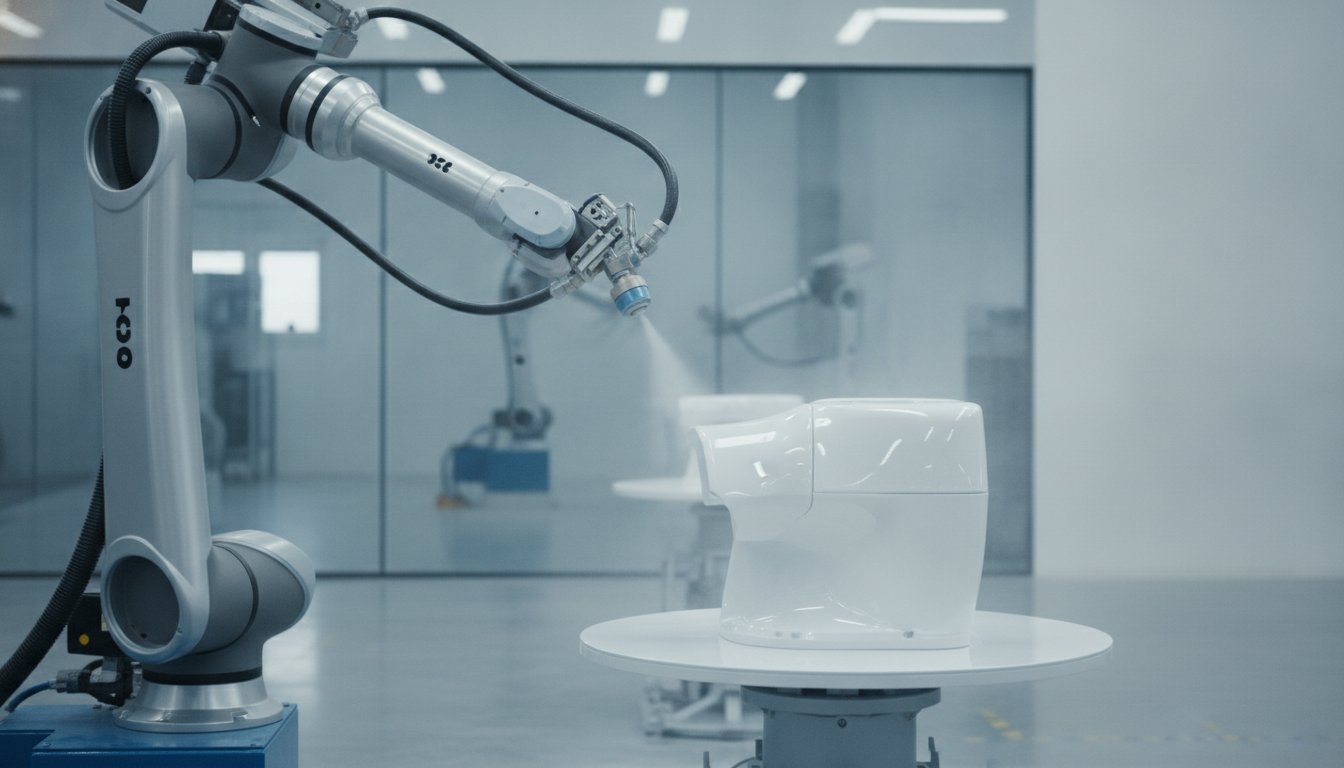
Powder coating allows for a broader range of brand expression through color and texture. It offers a vast palette that helps your product stand out on a crowded retail shelf or in an online gallery. Modern powder coating techniques are also more environmentally friendly. New EPA regulations for 2026 mandate lower Volatile Organic Compound (VOC) limits for industrial coatings. Powder coating naturally aligns with these standards because it doesn't require liquid solvents. We maintain finish consistency across large-scale production runs, ensuring every unit matches your brand’s exact color specifications. This balance of aesthetic variety and environmental responsibility makes powder coating an essential tool for brand differentiation.
Evaluating OEM Partners: Quality Standards and Supply Chain Integrity
Selecting a reliable partner for custom roaster oven manufacturing requires a rigorous evaluation of their quality management systems. A partner must demonstrate more than just raw production capacity. They must offer a transparent look into their daily operations. This transparency protects your brand from liability and ensures your products meet global market requirements. Established brands prioritize compliance with international standards like UL for the US market, CE for Europe, and RoHS for hazardous substance restriction. These certifications aren't optional; they're the baseline for entry into premium retail spaces.
Scalability is another critical factor. Your partner needs the industrial strength to handle high-volume seasonal spikes without compromising on finishing quality. Many factories struggle when orders double during the lead-up to the holiday season. A strategic partner anticipates these fluctuations and maintains consistent output through advanced scheduling and labor management. They should also maintain a strict non-compete policy, ensuring they don't sell direct-to-retail and undermine your market position. If you're ready to secure your production line, request a formal factory audit and quotation today to see how we manage high-volume demands.
Factory Audits and Quality Control Frameworks
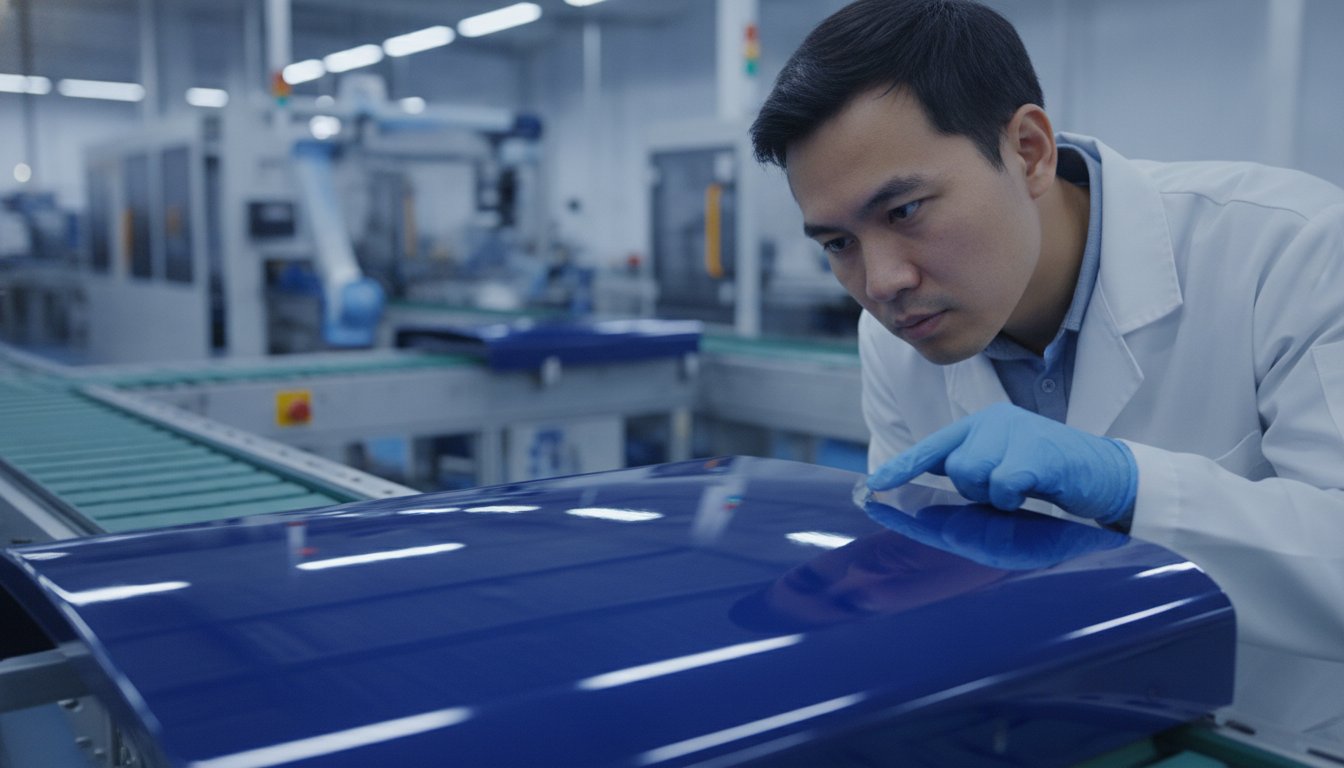
Rigorous inspection protocols are the backbone of quality appliance manufacturing. We don't just inspect the finished product. We implement in-process inspection points to catch defects at the source. This includes testing for electrical safety and verifying thermal performance under sustained load. Our teams verify insulation integrity and element reliability to prevent field failures. These frameworks ensure that every roaster oven leaving the facility performs exactly as engineered. Brands gain peace of mind through detailed audit reports and real-time quality data.
Supply Chain Resilience in 2026
The 2026 manufacturing landscape faces volatile material costs, particularly with steel prices seeing significant year-over-year increases. Managing raw material sourcing for enamel and specialized metal components requires a proactive approach. We minimize lead times through optimized production workflows and strategic inventory management. A partner who manages the entire kitchen appliance manufacturing solutions ecosystem reduces your exposure to supply chain disruptions. This holistic management allows you to focus on marketing and distribution while your manufacturing engine runs with precision and reliability.
Strategic Manufacturing in Malaysia: Scaling Your Appliance Brand
Malaysia has emerged as the premier Southeast Asian hub for custom roaster oven manufacturing in 2026. It offers a unique balance of technical expertise and cost-efficiency that low-cost regions often lack. The Malaysian government, through the Malaysian Investment Development Authority (MIDA), provides significant support for high-tech manufacturing. This includes incentives like Pioneer Status and Investment Tax Allowances. These benefits allow manufacturers to invest in advanced machinery and quality control without passing excessive costs to the client. For established brands, this environment ensures that production meets international safety standards while remaining competitive in a volatile global economy.
Logistics play a vital role in your brand's scalability. Operating from a centralized Southeast Asian base allows for efficient access to global markets. Malaysia's infrastructure is designed for high-volume exports, reducing the friction often found in complex global supply chains. Partnering with oemhomeappliances provides you with localized expertise and a deep understanding of regional regulatory requirements. We navigate the 2026 Food (Amendments) Regulations and OSHA 1994 compliance on your behalf. This ensures your products are safe for consumers and your production remains legally sound. You gain the industrial strength of a global leader with the agility of a localized partner.
The Malaysian Advantage: Talent and Infrastructure
The Malaysian workforce is highly skilled in precision metalwork and electronics. This expertise is essential for the complex assembly of portable cooking equipment and roaster ovens. Proximity to key component suppliers further reduces transit times and assembly costs. This integrated ecosystem allows for faster response times to market shifts. By leveraging this infrastructure, brands can maintain high labor standards and technical precision. This results in a product that feels premium and performs reliably over its entire lifecycle.
Streamlining Your Path to Market
Initiating your production journey starts with a structured Request for Quotation (RFQ). We move quickly from initial CAD concepts to container-load shipments. Our collaborative R&D process ensures that your brand’s unique aesthetic is preserved throughout the scaling phase. By leveraging professional OEM kitchen equipment manufacturer services in Malaysia, you gain a partner that manages the technical complexity of mass production. This allows your team to focus on market expansion and customer engagement. We handle the engineering hurdles so you can focus on the growth of your brand.
Ready to scale your product line with a reliable B2B partner? Contact us today to request a comprehensive quotation for our manufacturing services in Malaysia. Our team is standing by to provide the technical details and pricing structures you need to secure your 2026 production schedule.
Securing Your Competitive Edge in the 2026 Appliance Market
Success in the evolving appliance sector depends on more than just high-volume production. It requires a synergy of technical precision and strategic market protection. By choosing a dedicated B2B partner that refuses to compete for your retail space, you secure your brand's future. Our specialized enamel coating technology provides the durability consumers demand, while our Malaysia-based global logistics hub ensures your products reach their destination with maximum efficiency. This combination of technical expertise and logistical strength allows your brand to scale without the typical risks of supply chain volatility.
Navigating the complexities of custom roaster oven manufacturing shouldn't be a solo journey. The right partnership transforms technical challenges into scalable growth opportunities. We provide the stable backbone your brand needs to thrive in a competitive global landscape. Whether you're refining an existing design or launching a new product line, our team offers the stability and innovation required for long-term success. It's time to move beyond generic hardware and embrace a partnership built on industrial strength and expert facilitation.
Contact oemhomeappliances in Malaysia today for a custom roaster oven manufacturing quotation. We're ready to help you build a high-performance product line that stands the test of time and captures market share with confidence.
Frequently Asked Questions
What is the difference between OEM and ODM roaster oven manufacturing?
Original Equipment Manufacturing (OEM) involves producing appliances based on your pre-defined technical specifications and blueprints. In contrast, Original Design Manufacturing (ODM) relies on our internal R&D team to develop the product from a rough concept or brand vision. Choosing the right model depends on your brand's internal engineering capacity and the level of customization required for your target market.
How long does the prototyping phase take for a custom roaster oven?
The prototyping phase typically spans four to eight weeks, depending on the complexity of the design and required technical features. This period includes initial CAD development, functional testing under load, and refining the user interface. Efficient prototyping is essential for reducing time-to-market and identifying potential manufacturing hurdles before mass production begins.
What are the benefits of enamel coating vs. standard paint for roaster ovens?
Industrial enamel coating offers superior resistance to high temperatures, corrosion, and chemical abrasion compared to standard heat-resistant paint. It creates a non-porous surface that's easier for consumers to clean and maintains its finish under sustained thermal stress. This durability is a hallmark of high-quality custom roaster oven manufacturing, ensuring the appliance remains a premium countertop fixture for years.
Can you handle high-volume production for global retail distribution?
Yes, our facility is engineered to manage high-volume production runs for global retail distribution. We utilize advanced scheduling and automated coating lines to maintain consistency even during seasonal demand spikes. Our strategic location in Malaysia allows us to handle container-load shipments efficiently, supporting your brand's expansion into major international markets without compromising on quality.
Does oemhomeappliances sell directly to retailers or third-party brands?
We operate strictly as a B2B manufacturing partner and don't sell directly to retailers or third-party brands. This non-compete approach ensures that our interests are fully aligned with yours, protecting your market share and intellectual property. We act as a silent engine for your brand, focusing entirely on production excellence rather than retail competition.
What quality certifications do Malaysian appliance factories typically hold?
Malaysian appliance factories typically hold international certifications such as UL for the US, CE for Europe, and RoHS for hazardous substance compliance. Our facility adheres to these global standards to ensure your products are ready for immediate market entry. We also follow OSHA 1994 guidelines for workplace safety and the latest 2026 Food (Amendments) Regulations for material safety.
How do you ensure color consistency in powder-coated metal components?
Color consistency is maintained through precision automated application systems and rigorous batch testing protocols. We monitor the powder-to-air ratio and curing temperatures to ensure every unit matches your brand's exact color specifications. This methodical approach prevents variations across large-scale production runs, preserving the visual integrity of your entire product line.
What is the minimum order quantity (MOQ) for custom roaster oven designs?
Minimum Order Quantities (MOQ) for custom roaster oven manufacturing are determined by the complexity of the engineering and the specific materials required. We work with established brands to establish scalable production volumes that align with their distribution strategy. Contact our team in Malaysia to discuss your project requirements and receive a detailed quotation tailored to your brand's specific needs.

Comments