Enamel Coated Metal Components: 5 Industry Myths Debunked for B2B Brands
Updated: Jul 20
Is the perceived fragility of porcelain enamel actually its greatest industrial strength when facing extreme heat? Many procurement officers and product designers believe that modern polymers have rendered traditional finishes obsolete. You've likely faced the frustration of component failure due to high temperatures or surface corrosion in harsh kitchen environments, leading to the assumption that finding reliable enamel coated metal components is a relic of the past.
We understand the pressure to balance cost with performance. This article explores the industrial reality of vitreous enamel and explains why these high-performance components remain essential for premium appliance longevity. With the global enamel coatings market projected to reach $56.7 billion by 2034, it's clear that industry leaders are doubling down on this technology for its unmatched thermal resistance. We will debunk five common industry myths to help you identify a reliable manufacturing partner and justify the investment in premium coatings to your stakeholders.
Table of Contents
What Are Enamel Coated Metal Components in 2026?
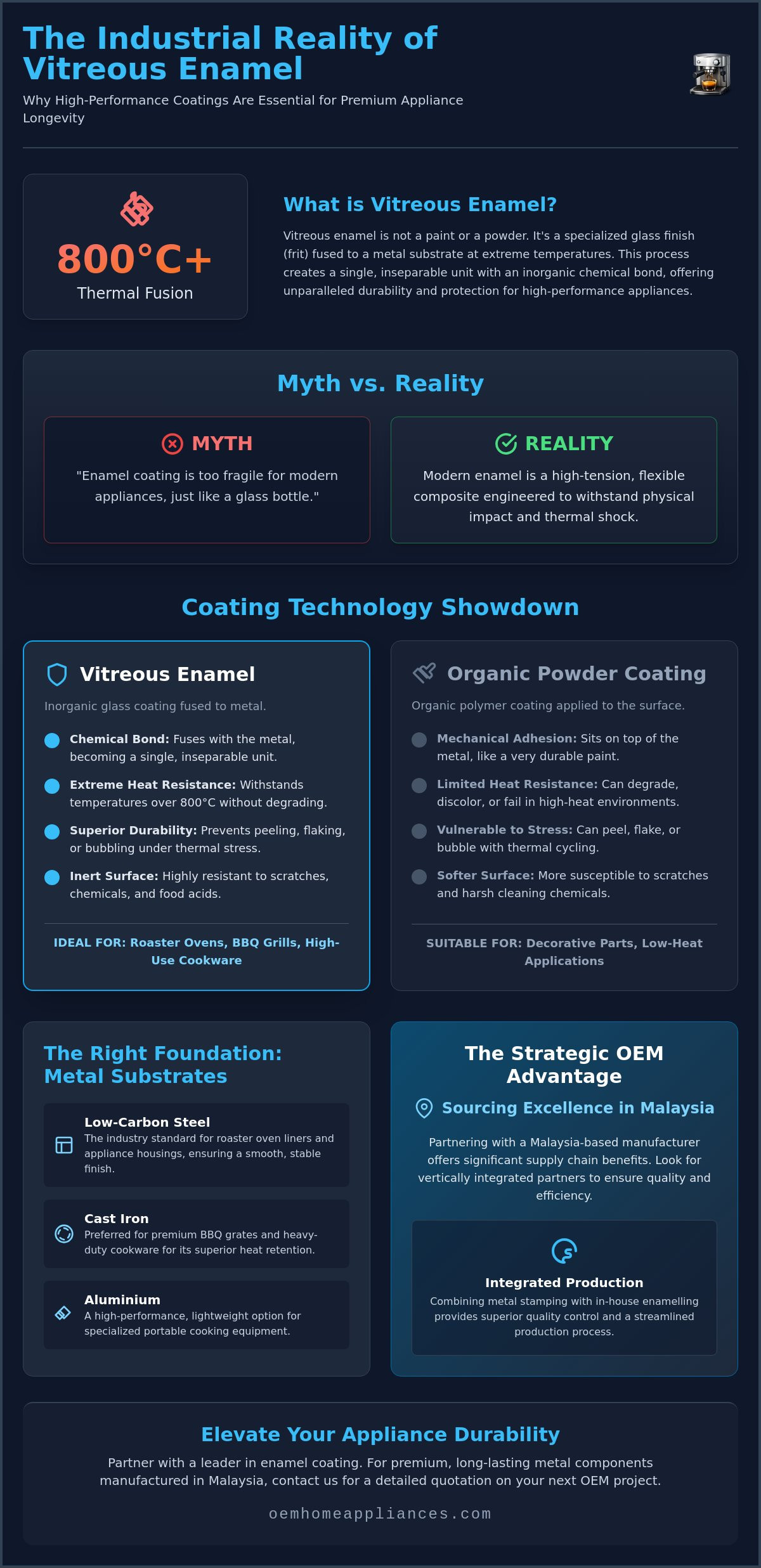
In the high-stakes environment of appliance manufacturing, enamel coated metal components represent the pinnacle of thermal durability. Vitreous enamel, often called porcelain enamel, isn't a mere paint or powder. It's a specialized glass finish fused to a metal substrate at temperatures exceeding 800°C. This intense firing process creates an inorganic barrier that protects the core material from the harshest industrial and domestic environments. Understanding the properties of these enamel coated metal components is the first step toward building a more resilient product line.
While consumers often associate enamel with vintage aesthetics, industrial-grade porcelain coating serves a far more rigorous purpose. It's designed for functional resilience. Premium appliance brands rely on this finish for roaster ovens, BBQ grills, and rice cookers because it offers extreme heat resistance, chemical inertness, and superior scratch resistance. These aren't just decorative choices; they're strategic engineering decisions that extend product lifecycles. The chemical inertness of the glass surface ensures that food acids or cleaning chemicals won't degrade the metal over time. This makes it the ideal choice for high-use kitchen environments where hygiene and durability are non-negotiable.
The Science of Thermal Fusion
Thermal fusion goes beyond simple surface coverage. During the high-temperature firing process, a chemical bond forms between the glass and the steel. This creates a single, inseparable unit. This bond relies on "frit," which consists of ground glass particles specifically formulated to determine the final properties of the component. Unlike organic coatings that rely on mechanical adhesion, which is essentially sticking to the surface, enamel becomes part of the metal itself. This prevents peeling, flaking, or bubbling even under extreme thermal cycling. Manufacturers looking for long-term stability often integrate these specialized services into their production lines to ensure component integrity.
Common Metal Substrates for Enamelling
Choosing the right base metal is critical for a successful finish. The substrate must withstand the high temperatures of the enamelling furnace without warping or losing structural integrity. Three primary materials dominate the B2B appliance sector:
Low-carbon steel: This is the industry standard for roaster oven liners and internal appliance housings. It provides the necessary stability during the firing process and ensures a smooth, bubble-free finish.
Cast iron: Preferred for premium BBQ grill grates and heavy-duty cookware. Cast iron's thermal mass combined with an enamel finish provides excellent heat retention and a non-reactive surface.
Aluminium: Used in specialized applications for lightweight portable cooking equipment. While more challenging to enamel, it offers a high-performance alternative for mobile culinary solutions.
Myth 1: Enamel Coating is Too Fragile for Modern Appliances
Many procurement managers hesitate to specify enamel coated metal components because they equate vitreous enamel with the fragility of a glass bottle. This is a common misconception that ignores decades of material science advancement. Modern industrial enamel isn't a delicate shell. It's a high-tension formulation engineered to withstand physical impact and thermal shock. When fused correctly, the glass-metal interface creates a composite material that is far more resilient than its individual parts.
Technical insights from the Porcelain Enamel Institute highlight how 21st-century porcelain enamel systems have revolutionized durability. These systems allow for thinner, more flexible coatings that resist delamination even under mechanical stress. This durability is why industrial enamel survives the rigors of global shipping and heavy-duty use in commercial kitchens. If you're concerned about field failures, it's time to look at the data behind modern impact resistance testing. These tests prove that today's enamel coated metal components can handle the daily abuse of a high-performance kitchen without compromise.
The Role of Substrate Quality
Durability starts before the component ever reaches the furnace. Using "enamelling grade" steel is essential because it lacks the impurities that cause surface defects like "fish-scaling." Proper substrate preparation, including rigorous degreasing and chemical pickling, ensures a pristine surface for the glass to bond with. At oemhomeappliances, we prioritize substrate purity to maintain high-yield production and long-term coating integrity. This meticulous approach to metal finishing services ensures that every component meets global quality standards and avoids the pitfalls of sub-par materials.
Modern Application Techniques
The transition from traditional wet application to electrostatic powder enamelling has significantly improved finish consistency. Electrostatic methods provide a more uniform thickness across complex geometries, which is vital for minimizing internal stress in the coating. Achieving micron-level precision in coating thickness ensures that thermal expansion rates remain synchronized, effectively eliminating the risk of chipping in 2026 manufacturing standards. This level of control allows brands to utilize specialized coatings in high-wear areas without fear of surface degradation. If you're looking to enhance your product's lifecycle, you might want to discuss technical specifications with our engineering team.
Myth 2: Powder Coating is a Superior Alternative to Enamel
Procurement teams often view powder coating as a modern replacement for traditional finishes. While powder coating is an excellent choice for many industrial applications, it isn't a universal upgrade. The fundamental difference lies in the chemistry. Powder coating is an organic finish composed of carbon-based polymers. In contrast, enamel coated metal components utilize an inorganic glass finish. This distinction dictates how the component performs under stress, particularly when exposed to heat, chemicals, and UV radiation.
For B2B brands, choosing the wrong finish can lead to catastrophic field failures. Organic coatings are susceptible to "chalking" and fading when exposed to sunlight or heat. They also lack the surface hardness of glass, making them prone to scratches that eventually lead to sub-surface corrosion. When your product's reputation relies on a "like-new" appearance after years of use, the inorganic stability of enamel provides a level of protection that polymers simply cannot match.
Performance in High-Heat Environments
Heat resistance is where the gap between these two finishes becomes most apparent. Most high-quality powder coatings begin to degrade or discolor once they exceed 200°C. This makes them unsuitable for the internal components of roaster ovens or BBQ grills. Enamel coated metal components remain stable at temperatures exceeding 500°C without losing their structural or aesthetic integrity. This thermal stability also includes superior resistance to thermal shock. You can move an enamelled component from a cold environment to a hot furnace without risking surface cracks or delamination. For a deeper look at these technical requirements, see our guide on metal component finishing for appliances.
Cost vs. Lifecycle Value
It's true that powder coating often carries a lower initial application cost. However, savvy B2B brands focus on the Total Cost of Ownership (TCO). Powder-coated components in high-heat or high-moisture environments are more likely to trigger warranty claims due to peeling or rusting. These failures don't just cost money in replacements; they damage your brand's standing with retailers and end-users. Enamel's longevity ensures that the component outlasts the appliance's electrical parts. By investing in premium enamel coated metal components, you're effectively buying insurance against the long-term costs of surface failure and the associated logistical headaches of a product recall.
Beyond heat, chemical resistance is a critical factor in kitchen environments. Enamel is completely non-porous and chemically inert. It won't react with acidic foods, fats, or harsh industrial detergents. While polymers might soften or stain when exposed to these substances, enamel remains pristine. This makes it the only viable choice for components that require frequent, aggressive cleaning to maintain hygiene standards.
Sourcing Enamel Coated Metal Components: What Brands Must Verify
Selecting a supplier for enamel coated metal components is a critical decision that impacts your entire product lifecycle. You shouldn't treat this finish as a simple commodity. A reliable manufacturing partner must demonstrate strict compliance with international food safety standards, specifically FDA Title 21 CFR and European Union migration regulations. These tests verify that no harmful substances transfer from the coating to the food during the high-heat cooking cycles characteristic of roaster ovens and air fryers. Verification of these certifications is non-negotiable for brands entering premium markets.
Vertical integration is another essential factor to consider during your audit. Sourcing components where the metal stamping and the enamelling occur under one roof reduces supply chain volatility and logistical costs. In-house finishing allows for immediate feedback during the production process, which minimizes defects and ensures that high-volume orders for roaster oven liners or BBQ grill grates maintain consistent quality. If you're evaluating a partner, ask for a detailed breakdown of their factory capacity to ensure they can scale alongside your brand's global growth without compromising on lead times.
Testing and Quality Control Protocols
Technical verification must go beyond a simple visual check. Adherence tests are vital to ensure the chemical bond between the glass and steel meets industrial standards. You should also verify the acid resistance grading of the finish. For kitchenware, aim for Class AA or Class A ratings to ensure the surface withstands acidic food contact without etching or losing its gloss. Visual inspection standards must also be clearly defined. Managing "black specks" and maintaining surface uniformity are marks of a sophisticated enamelling line that understands the expectations of premium B2B brands.
Collaboration and Prototyping
Successful product launches rely on early-stage technical consultation. You should look for an OEM partner with dedicated R&D capabilities for developing custom enamel colors that align with your brand identity. This technical depth is explored further in our guide on enamel coating for OEM kitchen appliances. Involving coating experts during the design phase prevents structural issues like warping or uneven heat distribution in the final product. To ensure your next project meets these rigorous standards, request a technical consultation and quotation from our Malaysian engineering team.
Strategic OEM Partnerships: Enamel Excellence in Malaysia
Malaysia has emerged as a strategic powerhouse in the Asia-Pacific manufacturing sector. For global brands seeking enamel coated metal components, the country offers a mature industrial ecosystem that balances technical expertise with logistical efficiency. oemhomeappliances operates at the center of this hub, providing a stable foundation for established brands to scale their product lines without the overhead of maintaining their own specialized finishing facilities. We act as a silent partner, handling the complexities of production so you can focus on market expansion.
Choosing the right logistics strategy is as important as the manufacturing process itself. We provide the flexibility to ship finished enamel coated metal components as individual parts or as fully assembled appliances ready for retail distribution. This adaptability allows procurement officers to optimize shipping costs and manage inventory levels more effectively. By consolidating manufacturing and assembly in our Malaysian facility, we ensure your supply chain remains resilient against global disruptions while maintaining a high standard of quality control.
Integrated Production Capabilities
Our facility is engineered for maximum efficiency. We combine metal stamping, powder coating, and specialized vitreous enamel services under one roof. This integration is particularly beneficial for complex projects like custom roaster oven manufacturing. It eliminates the risks associated with moving semi-finished goods between multiple vendors. This streamlined approach ensures that the critical bond of the enamel remains pristine from the initial press to the final high-temperature furnace.
Your Next Step in Premium Component Sourcing
Initiating a partnership begins with a thorough technical audit of our capabilities. We invite brands to request a technical consultation for their 2026 product lines to discuss specific material requirements and performance benchmarks. Our engineering team is ready to assist with customizing component specs for your next private label project, ensuring every piece meets your brand's unique standards. Whether you need specialized BBQ grill grates or internal oven liners, we provide the industrial strength needed for global distribution.
Strategic Advantage through Technical Excellence
Securing high-performance enamel coated metal components is no longer about choosing a "retro" finish. It's about investing in a thermal fusion solution that guarantees appliance longevity in the most demanding environments. We've shown that modern porcelain enamel isn't fragile. It's a scientifically advanced barrier that outclasses organic powder coatings in heat resistance, chemical stability, and long-term durability. For brands targeting the premium market, these technical advantages translate directly into fewer warranty claims and higher customer trust.
As a dedicated B2B partner for high-volume appliance production, oemhomeappliances provides the industrial backbone your brand needs to scale. We offer expert OEM/ODM manufacturing for global brands, supported by specialized in-house enamel and powder coating lines that ensure total quality control. Our Malaysia-based operations provide the supply chain stability and technical precision required for your 2026 product lines. Don't settle for surface-level finishes when you can integrate industrial-strength protection into your designs.
Ready to elevate your component specifications? Request a Quotation for Custom Enamel Coated Components in Malaysia today. We're prepared to help you build more resilient products.
Frequently Asked Questions
Is enamel coating safe for food contact components?
Enamel coating is completely safe for food contact because it's a non-porous, inorganic finish that doesn't leach chemicals. It meets international safety standards, including FDA Title 21 CFR and EU migration regulations. This makes it the preferred choice for internal liners in rice cookers and air fryers where hygiene is a primary concern.
Can enamel coated metal components be recycled at the end of their life?
You can fully recycle enamel coated metal components through standard industrial smelting processes. During recycling, the glass coating is separated from the metal substrate, allowing the steel or cast iron to be repurposed without contamination. This contributes to a circular economy and reduces the environmental footprint of your appliance line.
What is the difference between porcelain enamel and ceramic coating?
Porcelain enamel is a vitreous glass fused to metal at temperatures exceeding 800°C, while many ceramic coatings are sol-gel polymers applied at lower temperatures. Vitreous enamel offers significantly higher surface hardness and thermal stability. It won't soften or degrade under high heat, unlike organic ceramic alternatives that may lose their non-stick properties over time.
How do I prevent enamel components from chipping during assembly?
Preventing chips requires maintaining a uniform coating thickness, typically measured in microns, and using rounded radii in your component design. During assembly, we recommend using nylon washers and calibrated torque tools to avoid localized stress points. Proper handling protocols ensure that the high-tension bond between the glass and steel remains intact throughout the manufacturing process.
Does enamel coating protect against rust better than galvanization?
Enamel provides a more permanent rust barrier than galvanization because it's a non-reactive, non-porous glass shield. Galvanization is a sacrificial zinc layer that eventually wears away, especially when exposed to heat or acidic cleaners. Enamel remains chemically inert, protecting the underlying metal from corrosion for the entire lifespan of the product.
Can you apply enamel coating to stainless steel components?
It's possible to enamel stainless steel, but it requires specialized surface etching to ensure a durable chemical bond. Most B2B brands find that enamelling low-carbon steel provides identical performance benefits at a more efficient price point. If your project specifically requires stainless steel, our engineering team can adapt the fusion process to meet those requirements.
What are the typical lead times for custom enamelled metal parts in Malaysia?
Lead times in Malaysia typically range from 4 to 8 weeks, covering everything from technical specification approval to final quality inspection. Our integrated facility in Malaysia reduces delays by handling both metal stamping and finishing under one roof. This streamlined workflow ensures consistent supply chain stability for high-volume roaster oven and BBQ grill production.
Is industrial enamel coating available in custom brand colours?
Industrial enamel is available in a wide range of custom colours through our R&D matching services. These inorganic pigments are fused into the glass, so they won't fade or "chalk" when exposed to UV light or high temperatures. This allows you to maintain a consistent brand identity across your entire appliance range without sacrificing industrial-grade durability.
To request a quotation for enamel coated metal components or to learn more about our specialized manufacturing services in Malaysia, please contact oemhomeappliances for further details.


Comments