Kitchen Appliance Contract Manufacturing: The 2026 Strategic Brand Scaling Guide
In 2026, the most successful kitchen brands won't compete on the lowest unit price; they'll win by securing technical manufacturing partnerships that prioritize regional stability and specialized finishes. Scaling a product line in this environment requires more than just a factory. It demands a sophisticated approach to kitchen appliance contract manufacturing that can navigate rising costs and complex regulatory landscapes without sacrificing quality.
You've likely felt the pressure of slow time-to-market and the frustration of maintaining consistency in bulk orders. It's a common bottleneck for established brands looking to expand their footprint. This guide provides a strategic roadmap to master global production complexities and leverage technical manufacturing to scale your brand effectively. We'll explore how shifting your production to a strategic hub like Malaysia allows you to access specialized processes like enamel coating and powder finishing. You'll learn to stabilize your supply chain while ensuring every air fryer, rice cooker, and roaster oven meets your exact specifications.
Table of Contents
Navigating the 2026 Landscape of Kitchen Appliance Contract Manufacturing
Mastering Technical Specializations: Enamel Coating and Metal Finishing
Why Malaysia is the Strategic Hub for Kitchen Appliance OEM in 2026
A Brand Manager’s Roadmap: From Prototype to High-Volume Production
Scaling with oemhomeappliances: Your Dedicated Manufacturing Engine in Malaysia
Navigating the 2026 Landscape of Kitchen Appliance Contract Manufacturing
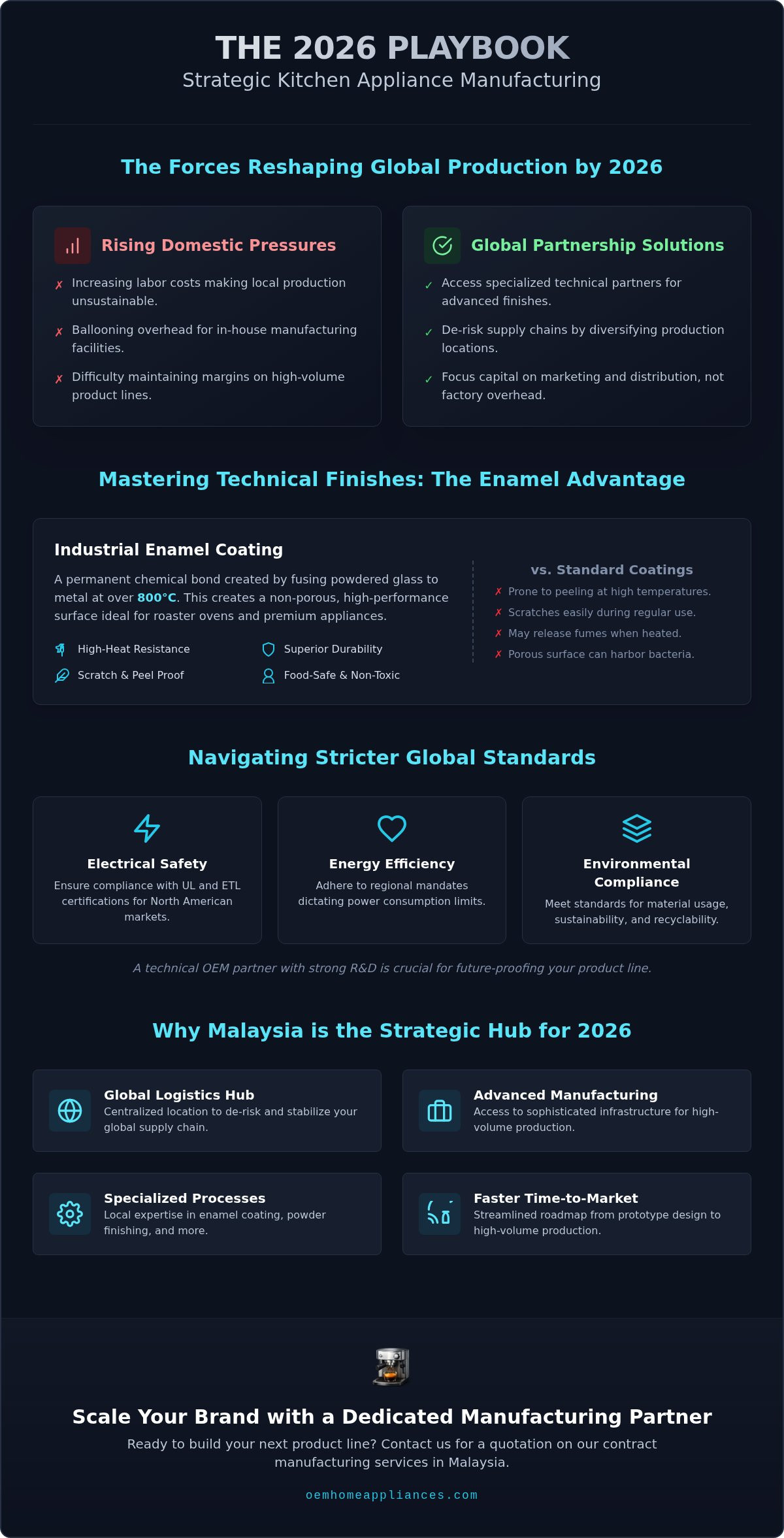
In 2026, the definition of kitchen appliance contract manufacturing has evolved from a simple supply chain tactic into a critical strategic partnership. Established brands are no longer just looking for a factory; they're seeking a reliable backbone for their entire product line. This shift is driven by a stark reality. Rising domestic labor costs and ballooning overhead have made local production increasingly unsustainable for high-volume goods. Brands need a way to maintain margins without compromising the technical integrity of their appliances.
Brands are pivoting toward specialized technical partners for precision. Generalist factories often lack the equipment required for high-performance items like roaster ovens or air fryers. By choosing a dedicated manufacturing service, brands can access advanced finishes like enamel and powder coating that are often too expensive to maintain in-house. A vital component of this selection process is avoiding retail conflict. You need a partner that functions as a silent engine, not a competitor that sells directly to your retail customers.
The Shift from Domestic Production to Global Partnerships
Economic pressures in 2026 are forcing brands to rethink their geographic footprint. De-risking the supply chain is no longer optional. By diversifying production locations, companies can mitigate the impact of local economic volatility or logistics disruptions. In the context of high-volume kitchenware production, contract manufacturing is the strategic delegation of technical assembly and component fabrication to a high-capacity Original Equipment Manufacturer (OEM). This allows brands to focus on marketing and distribution while the technical partner handles the complexities of industrial scale.
Addressing Regulatory Hurdles and Energy Efficiency Standards
The regulatory environment for small appliances is becoming significantly more stringent. By 2026, global energy standards will require kitchen appliances to demonstrate higher efficiency and lower environmental impact. Navigating these requirements alone is a massive undertaking. A technical kitchen appliance contract manufacturing partner provides the necessary expertise to ensure every unit complies with:
UL and ETL certifications for electrical safety in North American markets.
Regional energy efficiency mandates that dictate power consumption limits.
Environmental compliance regarding material usage and recyclability.
Strong R&D capabilities are essential for future-proofing your product lines. When your manufacturer understands the nuances of changing environmental laws, they can adapt designs during the development phase. This proactive approach prevents costly compliance bottlenecks and ensures your products remain viable in international markets.
Mastering Technical Specializations: Enamel Coating and Metal Finishing
Engineering high-performance roaster ovens and cooking equipment requires a deep understanding of thermal dynamics and material science. In the competitive world of kitchen appliance contract manufacturing, technical finishing serves as a primary differentiator between entry-level products and premium, market-leading brands. Brands that prioritize specialized finishes often see higher consumer satisfaction and lower return rates due to the inherent durability of these processes. It isn't just about aesthetics; it's about product longevity and consumer safety in high-heat environments.
The Strategic Value of Industrial Enamel Coating
Enamel is not merely a surface layer; it's a permanent chemical bond. The process involves fusing powdered glass to a metal substrate at temperatures often exceeding 800 degrees Celsius. This creates a non-porous surface that's uniquely suited for the high-heat interiors of roaster ovens and BBQ grills. Unlike standard paint or lower-tier coatings, enamel doesn't peel, scratch easily, or release toxic fumes when subjected to extreme temperatures. It provides a stable, food-safe environment that maintains its integrity over years of use.
Consumers increasingly demand appliances that are easy to maintain and retain heat efficiently. Enamel-coated components deliver on both fronts. The glass-like finish prevents food from sticking and resists bacterial growth, making it the gold standard for food-contact surfaces. If you want to understand the deep technical requirements of this process, you can read more about the enamel coating process for roaster ovens. This level of specialization ensures your private label products stand up to heavy use while maintaining a premium feel.
Precision Powder Coating for Premium Kitchen Aesthetics
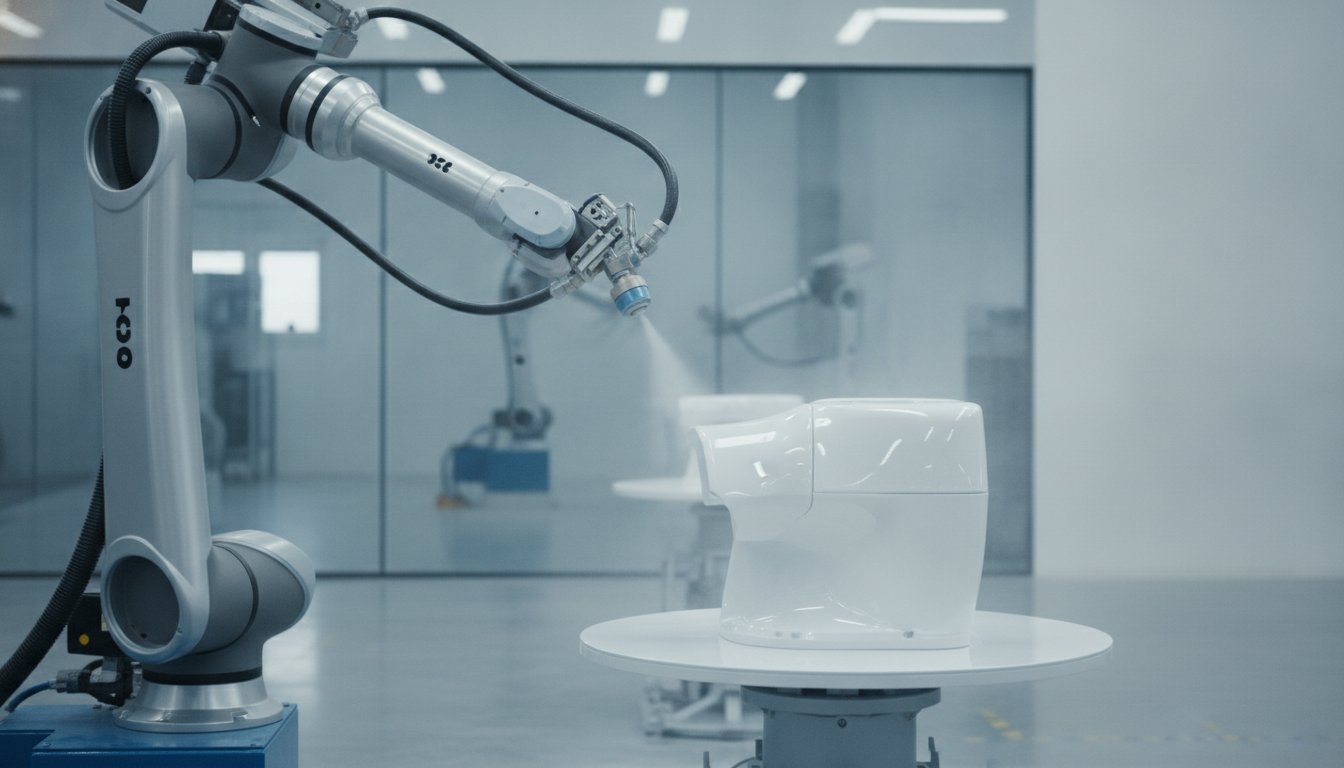
While enamel excels in high-heat interiors, powder coating is the engine behind modern appliance exteriors. This dry finishing process uses an electrostatic charge to apply a protective layer that's significantly more durable than liquid paint. For products like air fryers and kettles, powder coating provides essential scratch resistance. It also allows for vibrant, consistent colors across massive production runs, which is vital for maintaining brand identity.
Maintaining consistency is a major challenge in bulk manufacturing. Precision powder coating systems ensure that the first unit off the line looks identical to the ten-thousandth. As brands analyze the latest supply chain trends, many are shifting toward manufacturers who can offer these specialized finishes under one roof. Integrated finishing reduces the risk of damage during transport between separate facilities and shortens production cycles. If you're ready to elevate your product line with these advanced finishes, you should consult with our technical team to explore available options.
Why Malaysia is the Strategic Hub for Kitchen Appliance OEM in 2026
Malaysia has solidified its position as a premier destination for kitchen appliance contract manufacturing by offering a unique combination of technical expertise and logistical stability. Brands looking to scale in 2026 aren't just chasing the lowest possible labor cost; they're seeking environments where quality consistency and intellectual property protection are guaranteed. Malaysia’s established industrial infrastructure provides a reliable foundation for producing complex items like air fryers and rice cookers. Its reputation for high-quality standards makes it an ideal partner for brands that cannot afford the reputational risk of product failures.
Comparing Malaysia vs. Other Asian Manufacturing Hubs
The "China Plus One" strategy has reached a critical maturity point in 2026. While hubs like Vietnam or India offer competitive labor rates, Malaysia distinguishes itself through a highly skilled technical talent pool. This expertise is vital for specialized processes like enamel coating and precision metal finishing discussed in previous sections. When evaluating hub stability, brands must look beyond the unit price and consider the total cost of quality. Malaysia offers a superior balance. You get the industrial scale of a major Asian hub with the precision and reliability typically associated with more expensive Western facilities. This makes it a top choice for brands exporting to the West, as Malaysian-made products often benefit from favorable trade agreements and reduced tariff pressures compared to other regions.
Supply Chain Resilience and Logistics Efficiency
Proximity to major shipping ports like Port Klang is a decisive factor in reducing lead times for global distribution. A Malaysian partner doesn't just assemble your products; they streamline your entire logistics chain. For high-volume items like rice cookers and blenders, even a few days' delay can disrupt retail seasonal planning. Malaysia’s world-class port infrastructure ensures that finished goods move from the factory floor to international markets with minimal friction. This efficiency is a core reason why many established brands are searching for a private label kitchen appliance manufacturer within the region.
Supply chain resilience also involves access to high-quality raw materials and components. Malaysia’s domestic ecosystem for metal fabrication and electrical components reduces reliance on long-distance imports. This localized strength helps protect your production schedule from global shipping volatility. Brands can also leverage Federal manufacturing resources to better understand how regional partnerships impact their overall compliance and productivity goals. By choosing a hub that prioritizes industrial strength and global readiness, you're investing in a partnership that supports long-term brand equity and operational stability.
A Brand Manager’s Roadmap: From Prototype to High-Volume Production
The transition from a design concept to a high-volume retail product is a high-stakes journey. In 2026, the success of kitchen appliance contract manufacturing relies on rigorous validation before the first mass production run begins. Established brands need a partner that doesn't just build; they must engineer for scale. This roadmap ensures your product maintains its integrity from the initial prototype to the thousandth unit off the line.
The R&D and Prototyping Phase: Reducing Time-to-Market
Research and development is the foundation of any successful appliance launch. When collaborating on bespoke designs for roaster ovens or air fryers, you must validate both functional performance and aesthetics. Rapid prototyping allows your team to catch design flaws early, which saves months of potential delay. It's a critical step to ensure that heating elements and airflow systems function as intended before you invest in expensive tooling. You can explore a comprehensive list of kitchen appliance manufacturing solutions to see how these technical stages fit into a broader scaling strategy.
Once the prototype is approved, the shift to full-scale mass production requires a methodical approach. Small-batch testing, or pilot runs, serves as a safety net. This phase allows the technical partner to manage the complexity of multi-component assembly. Modern kitchen appliance contract manufacturing requires a partner that manages the integration of wiring, sensors, and the specialized finishes discussed previously without losing sight of the technical specs. A silent manufacturing engine ensures that every component fits perfectly, maintaining the quality consistency your brand demands.
Vetting for Quality: Factory Audits and Certification Readiness
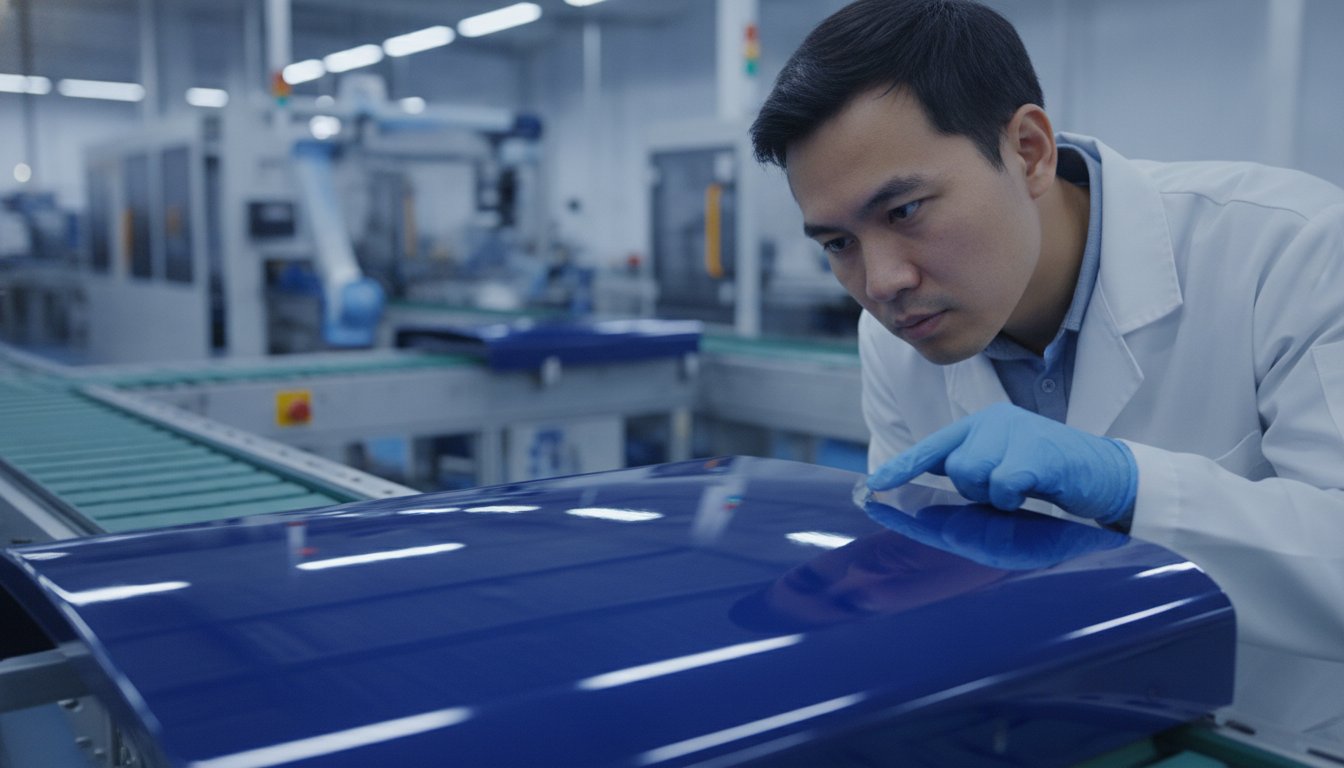
Selecting a manufacturer in Malaysia requires a thorough vetting process. You don't just want a factory; you want a technical partner that understands global standards. A comprehensive factory audit should be your first step to de-risk the partnership. Use this checklist to verify their readiness:
Technical Finish Capabilities: Confirm they have the specialized equipment for enamel and powder coating on-site.
Quality Management Systems: Verify ISO 9001 certifications and internal quality control protocols for every batch.
Assembly Precision: Evaluate their track record with complex, multi-component cooking equipment like rice cookers and air fryers.
Ensuring your partner has the technical solutions for high-performance finishes is vital. This prevents the quality drift that often plagues bulk orders. If you're ready to begin the transition from design to production, reach out to our Malaysia-based team for a technical consultation. We provide the engineering support needed to move your brand from a single prototype to high-volume market readiness.
Scaling with oemhomeappliances: Your Dedicated Manufacturing Engine in Malaysia
oemhomeappliances acts as the specialized technical engine behind many of the world's most successful kitchen brands. Our role is to provide the industrial strength and precision required to scale your product lines without the massive overhead of domestic production. We focus exclusively on B2B partnerships. This approach ensures we never compete with our clients in the retail space or through third-party distribution. By choosing us for your kitchen appliance contract manufacturing needs, you gain a partner dedicated to your brand's growth and long-term market stability.
Our expertise centers on high-performance cooking equipment, including roaster ovens, rice cookers, and air fryers. We understand that established brands require more than just assembly; they need technical superiority. That's why we've integrated advanced solutions like enamel and powder coating directly into our production lines. This integration ensures that every BBQ grill or portable cooking unit meets rigorous durability standards before it leaves our facility.
Comprehensive Private Label Solutions for Global Brands
Established brands often need to expand their product catalogs quickly to meet shifting consumer demands. We offer a library of proven designs for rice cookers and air fryers that allow for rapid market entry through white-label manufacturing. These aren't generic products; we provide extensive customization options for branding, housing colors, and specialized metal finishes. For brands seeking specific technical advantages in high-heat environments, our custom roaster oven manufacturing services include specialized enamel coating for superior heat retention. This flexibility ensures your product line remains unique while benefiting from our established production efficiencies.
Streamlining Your Supply Chain with a Technical Partner
Managing a global supply chain in 2026 requires more than just shipping products; it demands integrated technical solutions. We provide end-to-end support that covers everything from initial product development to global logistics. Our facility in Malaysia is equipped with in-house enamel and powder coating lines, which eliminates the need for third-party finishers. This reduces lead times and significantly improves quality control consistency across high-volume batches.
A Malaysian partnership is the optimal choice for brands looking to de-risk their operations while maintaining high quality. You benefit from a strategic global hub with a skilled workforce and advanced assembly infrastructure. We handle the complexities of kitchen appliance contract manufacturing so you can focus on brand strategy and market expansion. Whether you need high-volume runs of BBQ grills or precision-engineered coffee machines, our facility provides the scalability you require for 2026 and beyond.
We invite you to contact us today for a detailed quotation on your upcoming production requirements. Our team in Malaysia is ready to discuss how our specialized manufacturing processes and private label services can support your brand’s scaling goals. Reach out to us for more information or pricing details to begin your next project.
Strategic Scaling for the 2026 Kitchen Market
Success in the coming years depends on securing a manufacturing partner that functions as a silent, high-performance engine for your brand. Mastering kitchen appliance contract manufacturing in 2026 requires more than just high-volume capacity; it demands a technical ally that understands the nuances of precision engineering and global logistics. By leveraging Malaysia’s strategic location and advanced infrastructure, you can de-risk your supply chain and ensure consistent quality across every unit.
Our facility provides specialized enamel coating and powder finishing expertise, ensuring your roaster ovens and air fryers meet the highest technical standards. As a dedicated B2B partner, we eliminate retail conflict and focus entirely on your brand's growth. We provide the stability and industrial strength needed to move from prototype to global market leader with confidence.
Contact us today for a custom quotation on your Malaysia-based manufacturing project. We are ready to help you navigate the complexities of production and distribution. Reach out to our team in Malaysia for more information or pricing details to start your scaling journey.
Frequently Asked Questions
What is the difference between OEM and ODM in kitchen appliance manufacturing?
OEM involves manufacturing products based on your specific designs and technical specifications. ODM provides pre-engineered appliance designs that your brand can adopt and customize. Both paths are essential components of kitchen appliance contract manufacturing for scaling brands. OEM offers maximum control over unique features; whereas ODM allows for faster market entry with white label products. Both options benefit from our established technical expertise and assembly infrastructure in Malaysia.
Why is Malaysia considered a strategic hub for appliance production in 2026?
Malaysia is a top choice in 2026 because of its stable logistics and technical talent pool. It's a strategic hub that avoids many of the tariff pressures found in other Asian regions. Proximity to major ports like Port Klang reduces lead times for global shipping. Brands also value the country's strong intellectual property laws. This environment supports reliable production for complex appliances like rice cookers and blenders.
What are the benefits of enamel coating for roaster ovens and cooking equipment?
Enamel coating creates a glass-like finish that is permanently fused to the metal substrate. It's ideal for roaster ovens and BBQ grills because it withstands extreme heat without peeling or releasing fumes. This finish is non-porous and resists food acids; making it easy to clean and highly sanitary. It also improves heat distribution. These benefits make enamel a key differentiator for premium brands seeking durability and consumer trust.
How long does the prototyping phase typically take for a new kitchen appliance?
Prototyping duration depends on the specific project scope. A minor design update might be completed in a few weeks; but ground-up development for a new coffee machine can take several months. This stage includes functional testing and aesthetic validation. It's a vital step in catching design flaws before mass production begins. Investing time here prevents costly manufacturing errors and ensures the product's market readiness and safety.
Does oemhomeappliances work with startup brands or direct-to-retail distributors?
No; we operate strictly as a B2B partner for established brands. We don't provide services to in-home appliance startups or direct-to-retail distributors. This focus allows us to avoid retail conflict and serve as a dedicated manufacturing engine for our clients. We prioritize long-term partnerships with businesses that have an existing market presence and require high-volume production for their roaster ovens, air fryers, and rice cookers.
What certifications are required for exporting kitchen appliances to the USA or Canada?
Exporting appliances to North America requires specific safety marks like UL or ETL. These certifications prove the appliance has passed rigorous electrical safety tests. You must also comply with regional energy efficiency standards. A technical manufacturing partner in Malaysia handles these regulatory requirements during the design phase. This ensures your products are fully compliant and ready for sale in North American retail markets without facing legal bottlenecks.
How does a contract manufacturer ensure quality consistency in high-volume orders?
Consistency is maintained through standardized assembly protocols and ISO 9001 quality management systems. Every batch of kitchen appliance contract manufacturing undergoes multi-stage inspections; from raw materials to final functional testing. Using automated systems for powder coating and enamel application reduces human error. This methodical approach ensures that every unit; from the first to the ten-thousandth; meets the same technical specifications and quality standards your brand expects.
Can I customize the metal finishing of my private label appliances?
Yes; customization is fully supported for all private label lines. We provide various powder coating and enamel options to align with your brand’s aesthetic and functional needs. You can specify colors and textures for the exteriors of air fryers, kettles, or BBQ grills. These finishes are engineered to be scratch-resistant and durable. Our technical team works with you to ensure the finishing process matches your specific brand requirements exactly.

Comments