OEM Roaster Oven Guide for Appliance Brands 2026
Can your current supply chain withstand the 2026 shift toward stricter safety and energy standards without compromising your profit margins? You've likely experienced the frustration of seasonal retail peaks being derailed by inconsistent product quality or long lead times from an unreliable OEM roaster oven manufacturer. It is difficult to scale a premium kitchen appliance brand when technical support for custom enamel or powder coatings remains a constant bottleneck. You need a partner that acts as a silent engine for your growth rather than a source of logistical friction.
This guide provides a strategic framework to identify and partner with a high-capacity manufacturer that offers precision-engineered solutions. We understand that stability and technical expertise are the backbones of a successful product line. You will discover how to evaluate production scalability, material science capabilities, and compliance with the latest Malaysian safety regulations, such as the 2026 Food Amendments for ceramic ware. We will examine the critical steps for building a resilient supply chain that ensures your brand remains competitive and compliant in an evolving global market.
Table of Contents
What is an OEM Roaster Oven Manufacturer and Why Do Brands Need One?
An Original equipment manufacturer (OEM) is a specialized business partner that manages the entire engineering and production cycle for another company’s brand. In the kitchen appliance sector, an OEM roaster oven manufacturer does more than just assemble parts. They provide the industrial infrastructure and technical expertise needed to transform a conceptual sketch into a high-performance, market-ready appliance. This partnership allows brands to scale rapidly without the prohibitive costs of owning and maintaining their own manufacturing facilities.
By 2026, the industry has moved beyond simple assembly lines. Modern partnerships are now "Full-Service" integrations. This means the manufacturer manages everything from raw material sourcing to the application of specialized coatings. Brands can focus entirely on marketing and distribution while the manufacturer handles the technical complexity of thermal efficiency and safety compliance. Choosing a partner that strictly operates on a B2B model is vital for long-term stability. It prevents channel conflict. You don't want your supplier competing against you on the same retail shelves or digital marketplaces.
The Strategic Advantage of Private Labeling
Private labeling offers a significant competitive edge through three primary channels:
Speed to market: You can leverage existing factory blueprints to launch new products in months rather than years.
Cost efficiency: Shared manufacturing infrastructure reduces the capital needed for equipment and labor.
Brand exclusivity: Customizing aesthetics and features, such as specialized enamel coatings, helps your product stand out in retail.
These advantages allow a brand to remain agile while maintaining high standards of production quality. By utilizing a manufacturer's established supply chain, you minimize the risks associated with raw material price fluctuations and logistics bottlenecks.
OEM vs. ODM: Which Model Fits Your Brand?
Choosing the right engagement model depends on your internal R&D capabilities and long-term goals. OEM manufacturing usually involves production based on your proprietary designs. You own the IP; the factory handles the execution. ODM (Original Design Manufacturing) allows you to utilize the manufacturer’s existing R&D for "off-the-shelf" products that can be quickly rebranded. Many high-growth brands now prefer hybrid models. This involves collaborative engineering to develop bespoke features or unique aesthetics. You can review our specific manufacturing services to see which approach best supports your 2026 product roadmap.
Engineering Performance: Material Science in Roaster Oven Production
Engineering performance in portable cooking equipment begins with material integrity. Choosing an experienced OEM roaster oven manufacturer ensures that your product doesn't just look premium but functions safely under extreme thermal stress. Material selection directly impacts the safety of food contact materials, especially as global regulations become more stringent. For instance, the Food (Amendments) Regulations 2026 in Malaysia now enforce strict limits on lead and cadmium release for cooking ware. Precision engineering at the material level prevents these heavy metals from leaching into food. We ensure lead release remains below 0.5 mg/l to meet these updated safety benchmarks.
Thermal efficiency is another critical factor that separates professional-grade appliances from entry-level units. It requires a precise balance between heating element wattage and internal insulation. High-quality manufacturers use high-grade aluminum or stainless steel to optimize heat retention. This reduces energy consumption while maintaining consistent cooking temperatures. Meeting global safety certifications like UL, CE, or Malaysia's SIRIM Type Approval requires rigorous testing of these materials. We test at least four samples from every production batch to ensure they withstand long-term use without structural degradation or safety failures.
The Power of Industrial Enamel Coating
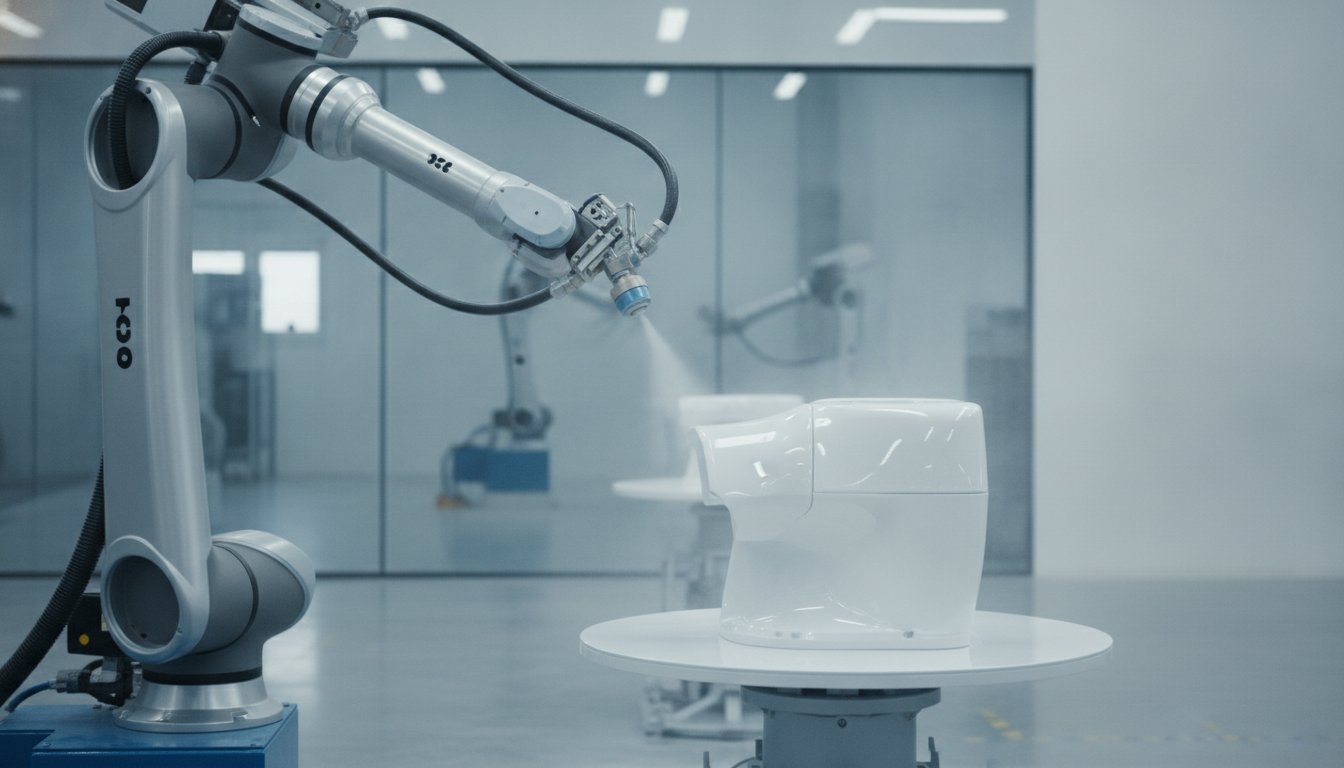
Enamel coating is the gold standard for internal roaster components. This glass-like finish protects metal from high-heat oxidation, which is the primary cause of rust in kitchen appliances. Beyond durability, enamel provides a non-porous surface that is easy for consumers to clean. For brands targeting the high-end market, achieving a premium, high-gloss finish is essential for perceived value. You can explore our detailed Industrial Enamel Coating Process for Roaster Ovens to understand how we maintain these technical standards during mass production.
Powder-Coated Metal Components and Durability
While the interior handles the heat, the exterior must handle the environment. We use powder-coated metal components for the outer housing to provide superior resistance to scratches and impact. Powder coating is more durable than traditional liquid paint and offers a more consistent finish in high-volume production. It also allows for perfect custom color matching. This ensures your roaster oven matches the rest of your appliance line, maintaining brand consistency across your entire portfolio. If you need specific technical data on our coating durability or material specifications, reach out to our engineering team for a detailed consultation.
Evaluating Factory Capacity and Quality Standards
Scaling a retail brand requires more than just a prototype; it demands a manufacturing partner that can absorb the pressure of Q4 seasonal surges. When you evaluate an OEM roaster oven manufacturer, you must look past the showroom and into the production schedule. A factory’s ability to ramp up output without diluting quality is what protects your retail partnerships during peak demand. Vertical integration is a key indicator of this stability. Manufacturers that produce their own metal components and manage their own coating lines maintain tighter control over lead times and costs than those who outsource critical parts to third-party vendors.
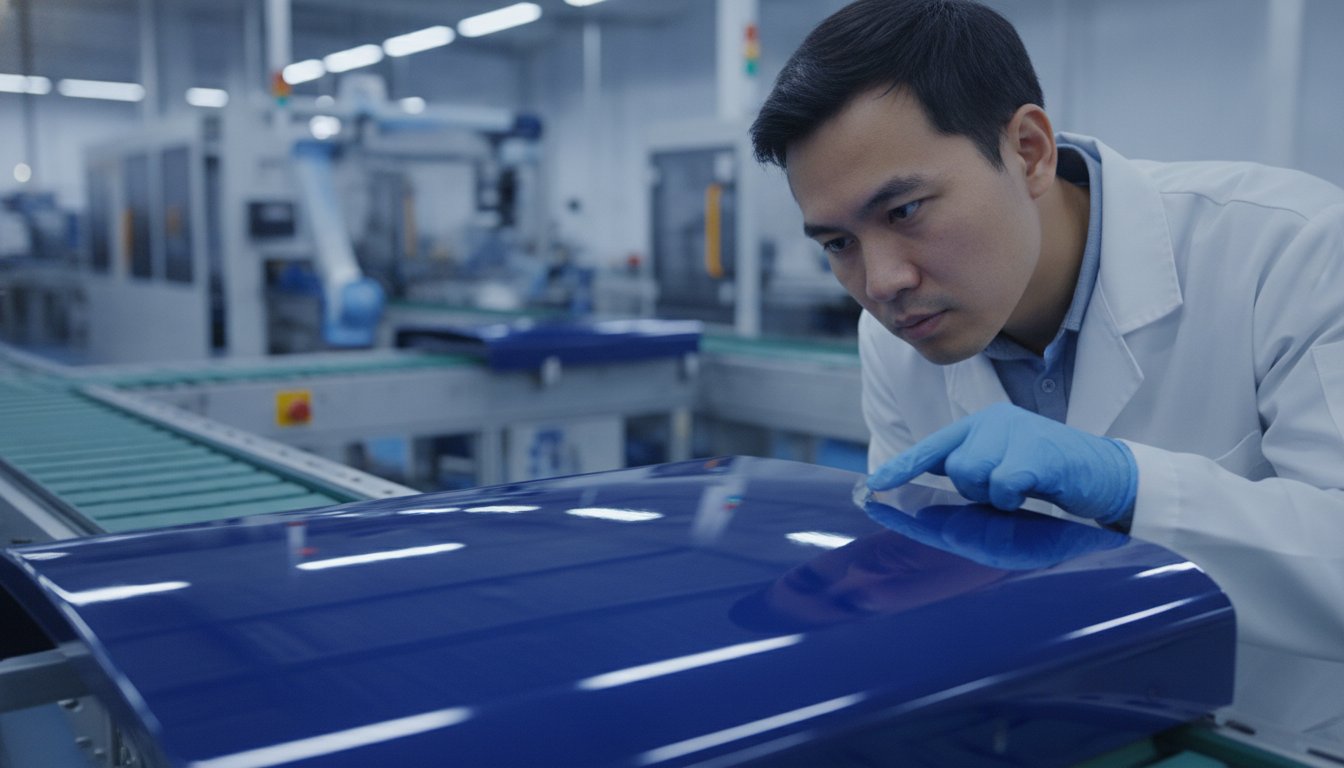
Quality Control (QC) isn't a single event but a series of methodical milestones. This process starts with rigorous raw material inspection to verify the grade of steel and the chemical composition of enamel powders. During production, in-line inspections monitor the assembly of heating elements and thermostats. The process concludes with final functional testing, where every unit is powered on to verify thermal performance. Regular factory audits are essential to maintain this standard. They ensure that your brand's reputation remains untarnished by the high-volume failures that often plague less disciplined suppliers.
Supply Chain Transparency and Resilience
Identifying potential bottlenecks in the production of critical components like heating elements and thermostats is vital for long-term planning. Relying on a single geographical source can be risky. A Malaysia-based manufacturer offers a strategic alternative to China-centric supply chains, providing a hedge against shifting trade tariffs and logistics congestion. This resilience is supported by Malaysia's government initiatives, which focus on smart manufacturing and advanced electronics. For a deeper dive into these selection criteria, read our Strategic Guide to Selecting a Private Label Kitchen Appliance Manufacturer.
Standardizing Quality Across Product Lines
Consistency is the foundation of brand trust. If your roaster ovens perform at a high level but your rice cookers or air fryers fail, your brand equity suffers. We implement ISO standards across all small appliance manufacturing lines to ensure uniform quality. Automated testing plays a significant role in high-volume environments. It removes human error from the equation, ensuring that every unit meets the same technical specifications for wattage and heat distribution. This methodical approach ensures that your entire portfolio reflects the same level of engineering precision.
The Lifecycle of Custom Roaster Oven Development
Transforming a concept into a market-leading appliance requires a methodical development lifecycle. As an experienced OEM roaster oven manufacturer, we guide brands through four distinct phases to ensure precision and scalability. Phase 1 begins with conceptual design and high-fidelity 3D modeling. This stage is crucial for aligning the physical product with your brand’s specific aesthetics and ergonomic requirements. Phase 2 moves into prototyping and rigorous functional testing. We focus specifically on heating cycles and thermal distribution to ensure consistent performance across all cooking modes. This phase identifies potential engineering flaws before they become expensive production errors.
Transitioning to mass production involves Phase 3: tooling and mold creation. This is where engineering precision meets industrial scale. We use high-grade steel for molds to ensure consistency across thousands of production cycles. Finally, Phase 4 integrates packaging design and private label manufacturing. This ensures the product arrives at retail in shelf-ready condition. We design packaging that balances aesthetic appeal with structural integrity to survive the rigors of global shipping. Each phase is designed to eliminate technical bottlenecks before they impact your market launch.
R&D Solutions for Brand Innovation
Innovation in 2026 centers on smart features and user convenience. Modern consumers expect more than basic heating. Brands are increasingly requesting digital timers, integrated probe thermometers, and IoT connectivity for automated cooking cycles. Portability is also a primary driver for consumer demand in the portable cooking equipment sector. We engineer these units using lightweight yet heat-resistant materials and ergonomic handles to improve the user experience. Review our Full Manufacturing Services to see how we integrate these advanced features into custom roaster designs.
Scaling Production from Prototype to Bulk
Scaling production requires meticulous logistics and design optimization. Managing lead times is critical for ensuring your inventory arrives before seasonal retail peaks. We optimize container loading patterns to maximize shipping efficiency and reduce global transit costs per unit. Implementing Design for Manufacturing (DFM) early in the lifecycle is the most effective way to reduce unit costs. By simplifying assembly processes and optimizing material usage during the design phase, we help you maintain healthy margins even at high volumes. If you are ready to begin your product development journey, request a technical consultation with our engineering team today to discuss your project requirements.
Why Partner with a Malaysia-Based Kitchen Appliance Manufacturer?
Malaysia has solidified its position as a global hub for electrical and electronic (E&E) manufacturing. In the second quarter of 2026, the country's manufacturing sector expanded by 7.5%, driven largely by a 13.3% surge in the E&E sub-sector. Partnering with a Malaysia-based OEM roaster oven manufacturer provides brands with immediate access to this sophisticated industrial ecosystem. The nation's infrastructure is specifically optimized for household appliance production. This ensures that complex components, such as heating elements and control boards, meet rigorous international safety benchmarks and energy efficiency standards.
Strategic geography is a primary advantage for global distribution. Malaysia serves as a central gateway for shipping to North America, Europe, and Australia. This location minimizes transit times and optimizes container logistics, which is crucial for maintaining lean inventory levels during volatile market shifts. The local engineering workforce is highly skilled and well-versed in global quality standards, including SIRIM Type Approval and MS IEC 60335 safety requirements. This technical maturity ensures that your products are ready for immediate entry into highly regulated markets without the need for extensive redesigns.
Cost-Effectiveness Without Quality Compromise
You benefit from competitive labor and overhead costs without the quality risks often associated with lower-cost manufacturing hubs. The focus remains on high-value output through advanced technical solutions. We utilize specialized enamel coating and precision powder-coating processes to deliver a product that rivals Western-made appliances in both durability and aesthetics. This balance of cost and quality is essential for maintaining healthy retail margins. For a broader view of current industry trends and manufacturing strategies, see our Kitchen Appliance Manufacturing Solutions: A 2026 Strategic Roundup.
A Dedicated B2B Manufacturing Model
Our business model is built exclusively on empowering your brand. We don't sell directly to retail. This eliminates any risk of channel conflict or competition with our own clients. This dedicated focus allows us to provide personalized technical support throughout the custom product development journey. We act as your silent industrial partner, providing the scalability and precision needed to dominate your market segment. We prioritize long-term stability and partnership over short-term retail gains.
If you are ready to expand your appliance portfolio with high-performance products, we invite you to reach out for a consultation. You can request a quotation for your next project and discover the technical advantages of our Malaysia-based manufacturing services. Contact us today for detailed pricing, technical specifications, and lead time information tailored to your brand's 2026 roadmap.
Scaling Your Appliance Brand with Precision Engineering
Selecting the right OEM roaster oven manufacturer is a strategic decision that determines your brand’s long-term stability and market reputation. By prioritizing material science, such as specialized enamel and powder coating expertise, you ensure your products meet the rigorous safety standards of 2026. Leveraging full R&D and prototyping support allows you to innovate quickly while maintaining precision at scale. Our dedicated B2B model ensures there is no direct-to-retail competition; our focus remains entirely on your brand's growth.
Malaysia's robust manufacturing infrastructure provides the perfect foundation for global distribution. It offers a resilient alternative for brands looking to diversify their supply chains without sacrificing engineering quality. Whether you are launching a new line of portable cooking equipment or scaling existing designs, a methodical approach to factory evaluation is essential. We are ready to help you build a precision-engineered product line that stands out in the competitive retail landscape.
Ready to scale your appliance brand? Contact our Malaysia-based team for a custom roaster oven manufacturing quotation today. Let's discuss how our technical expertise can empower your next product launch.
Frequently Asked Questions
What is the typical lead time for a custom roaster oven order?
Mass production lead times typically range from 45 to 60 days following the final approval of your product samples. This timeline accounts for raw material procurement, precision assembly, and rigorous quality control testing. Lead times may fluctuate based on the complexity of custom engineering requirements or current seasonal production volumes. We prioritize clear communication to ensure your inventory arrives well before peak retail cycles.
Can an OEM manufacturer help with the design of enamel-coated components?
Yes, we provide specialized technical support for the design and development of enamel-coated metal components. Our engineering team assists with material selection and coating thickness to ensure maximum durability and heat resistance. This expertise is critical for preventing internal oxidation and ensuring the product meets the latest safety standards for food contact materials. We focus on delivering high-gloss finishes that align with your brand's aesthetic.
What are the minimum order quantities (MOQ) for private label roaster ovens?
Minimum order quantities generally start at 1,000 units per model for most private label manufacturing projects. This volume ensures production efficiency and allows us to maintain competitive unit pricing for your brand. Partnering with a high-capacity OEM roaster oven manufacturer ensures that even at these scales, every unit adheres to the same precision engineering standards. Specialized or high-value appliance lines may have different requirements based on tooling costs.
How do I ensure my custom roaster oven meets international safety standards?
We ensure compliance through SIRIM Type Approval and rigorous adherence to international certifications such as UL, CE, and MS IEC 60335. Every production batch undergoes functional testing and material analysis to verify safety and performance. This includes testing for lead and cadmium release to comply with the 2026 Malaysian Food Amendments. We provide full documentation to support your brand's regulatory filings in global markets.
What is the difference between a roaster oven and a traditional toaster oven from an OEM perspective?
Roaster ovens are specifically engineered for high-volume roasting, steaming, and slow cooking, whereas toaster ovens are designed for browning and small-scale baking. Roasters require deep, removable pans and specialized lids for moisture retention, necessitating different heating element configurations. From a manufacturing standpoint, roaster ovens demand higher-grade insulation and more robust thermal management systems to handle longer cooking cycles safely and efficiently.
Why should I choose a manufacturer in Malaysia over one in China for my appliance brand?
Malaysia offers a strategic alternative to China-centric supply chains by providing a stable business environment and a highly skilled engineering workforce. The country’s established electronics infrastructure and favorable trade agreements make it an ideal hub for global distribution. Choosing a Malaysia-based partner helps you diversify your supply chain and mitigate risks associated with regional logistics congestion and shifting international trade tariffs.
Do you provide prototyping services for new kitchen appliance concepts?
We offer comprehensive prototyping services that transform your initial concepts into functional, testable models. This process includes 3D modeling followed by the creation of physical prototypes to evaluate thermal performance and ergonomic design. Our R&D team works as a silent partner to refine these designs, ensuring they are optimized for mass production. This collaborative approach minimizes technical risks before you commit to full-scale tooling.
How does powder coating differ from enamel coating in appliance manufacturing?
Powder coating is primarily used for the exterior housing to provide impact resistance and a wide range of custom color options. Enamel coating is a glass-like finish applied to internal components because it withstands extreme heat and prevents metal oxidation. Both coatings serve distinct purposes; enamel ensures the longevity of the cooking chamber, while powder coating maintains the external brand aesthetic against scratches and wear.
Ready to scale your appliance brand with precision-engineered products? Contact our Malaysia-based team for a custom roaster oven manufacturing quotation today. We provide the technical expertise and production scale needed to empower your business growth.
Comments