Private Label Air Fryer Manufacturer: A Strategic B2B Sourcing Guide
Updated: Jul 19
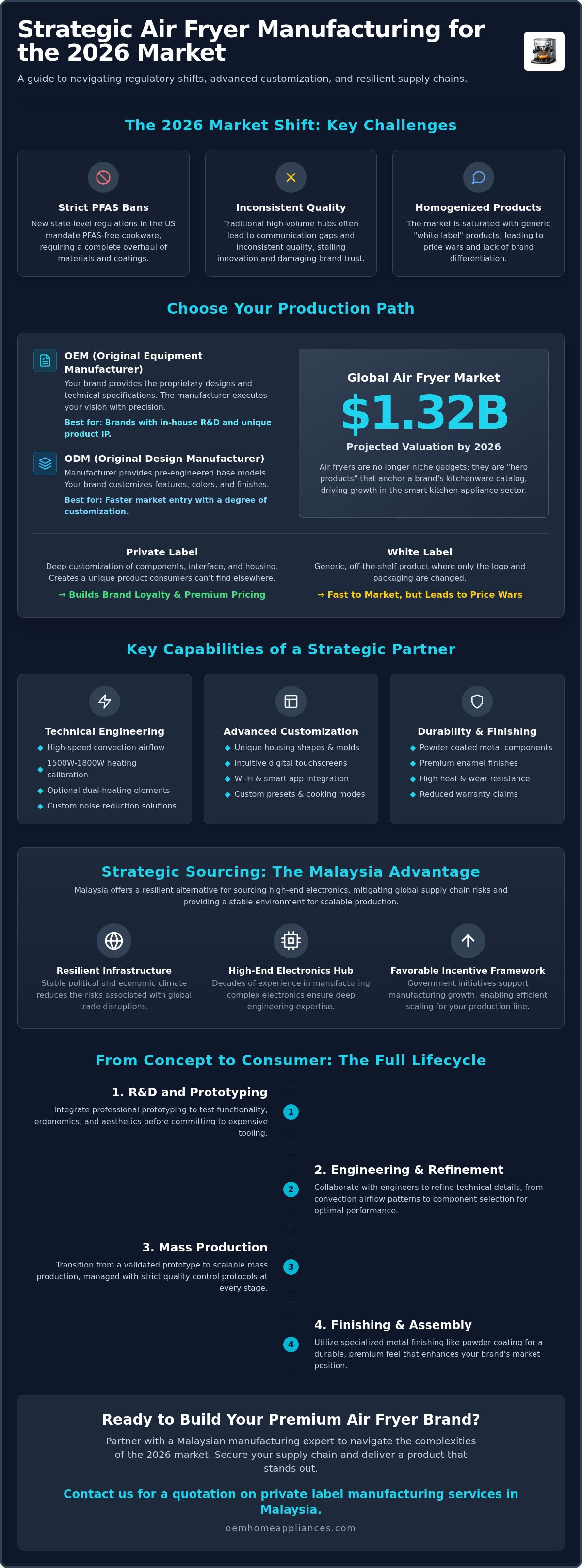
The standard for air fryer production in 2026 has shifted from simple assembly to a high-stakes race against regulatory deadlines. With several US states now enforcing strict bans on PFAS in cookware and new safety standards becoming mandatory, selecting a strategic private label air fryer manufacturer determines your brand's survival. You've likely dealt with the headache of inconsistent quality and the communication gaps that stall innovation when working with traditional high-volume hubs.
Successful sourcing now requires looking beyond the lowest unit price to find a partner capable of technical engineering and regional stability. This guide provides a strategic roadmap to help you select a manufacturing partner that can customize your product line while navigating global trade complexities. We'll examine how to utilize Malaysia's New Incentive Framework to scale your production efficiently. You'll learn how to transition from a prototype to mass production with a focus on superior finishing and durable, powder-coated components that differentiate your brand in the 2026 market.
Table of Contents
What is a Private Label Air Fryer Manufacturer?
A private label air fryer manufacturer is a specialized B2B partner that engineers and produces high-performance cooking appliances designed to be sold under your company's unique brand identity. Unlike traditional suppliers that simply provide off-the-shelf products, a strategic partner integrates with your business to provide a scalable manufacturing engine. They act as a silent facilitator, managing the industrial complexities of production while your brand focuses on market expansion and consumer engagement.
The relationship usually follows one of two paths. Selecting a Original Equipment Manufacturer (OEM) allows your brand to provide proprietary designs and technical specifications that the factory then executes with precision. Alternatively, an Original Design Manufacturer (ODM) offers pre-engineered base models that you can customize with specific features or aesthetic finishes. Both models allow brands to enter the market without investing millions in their own factory infrastructure, though the shift in 2026 is moving toward deep custom engineering to avoid product homogenization.
Modern brands are moving away from simple rebranding. They now demand custom-engineered solutions that solve specific consumer pains, such as noise reduction or improved energy efficiency. By securing a dedicated manufacturer, you gain a partner that helps navigate global trade shifts and ensures your product line remains technically competitive across international borders.
Private Label vs. White Label: Which Fits Your Brand?
White label solutions offer the fastest route to market. These are generic designs where you only change the logo and packaging. While efficient, this model often leads to price wars because competitors can sell the exact same unit. Private labeling involves deep customization of internal components, interface designs, and housing shapes. This bespoke approach supports premium pricing and builds long-term brand loyalty by offering a product that consumers cannot find elsewhere. It's the difference between being a commodity and being a market leader. To see how this strategy is applied in the health and wellness industry, check out GREENDO.
The Growing Demand for Healthy Cooking Appliances
Consumer preferences have solidified around oil-free convection technology as a household standard. Air fryers are no longer niche gadgets; they're "hero products" that anchor a brand's kitchenware catalog. This dominance is driven by a global push for healthier lifestyles and faster meal preparation times, often popularized by culinary media brands like So Yummy that provide creative recipes and kitchen hacks. With the global air fryer market projected to reach a valuation of USD 1.32 billion by 2026, these appliances now serve as the primary growth engine for the smart kitchen appliance sector. Success in this segment requires a manufacturer that understands the nuances of airflow precision and durable metal finishing.
Technical Specifications and Customization Capabilities
Engineering excellence serves as the primary differentiator in a crowded marketplace. A professional private label air fryer manufacturer must offer precise control over core components like high-speed convection airflow and heating element calibration. While standard residential units typically operate between 1500W and 1800W; premium models often incorporate dual-heating elements to ensure consistent results across various cooking modes. These technical foundations determine the actual performance that builds consumer trust.
Customization extends far beyond simple color selection. Unique housing shapes and intuitive digital interfaces allow your brand to occupy a specific market niche. Data from the Small Appliances - Worldwide sector highlights that smart integration is no longer optional. Modern consumers expect Wi-Fi connectivity, touchscreens, and app-controlled presets as standard features. Integrating these capabilities requires a manufacturer with deep electronics expertise and a robust R&D framework. Brands looking to refine these technical details should consult with our engineering specialists to review available customization options.
Durability is another critical factor for long-term brand equity. Utilizing high-quality powder coated metal components provides a superior finish that resists heat and physical wear. This level of technical detail ensures your product line doesn't just look good at launch but maintains its integrity after years of daily use. High-grade materials reduce the risk of warranty claims and improve the overall consumer experience.
Advanced Finishing: Enamel and Powder Coating
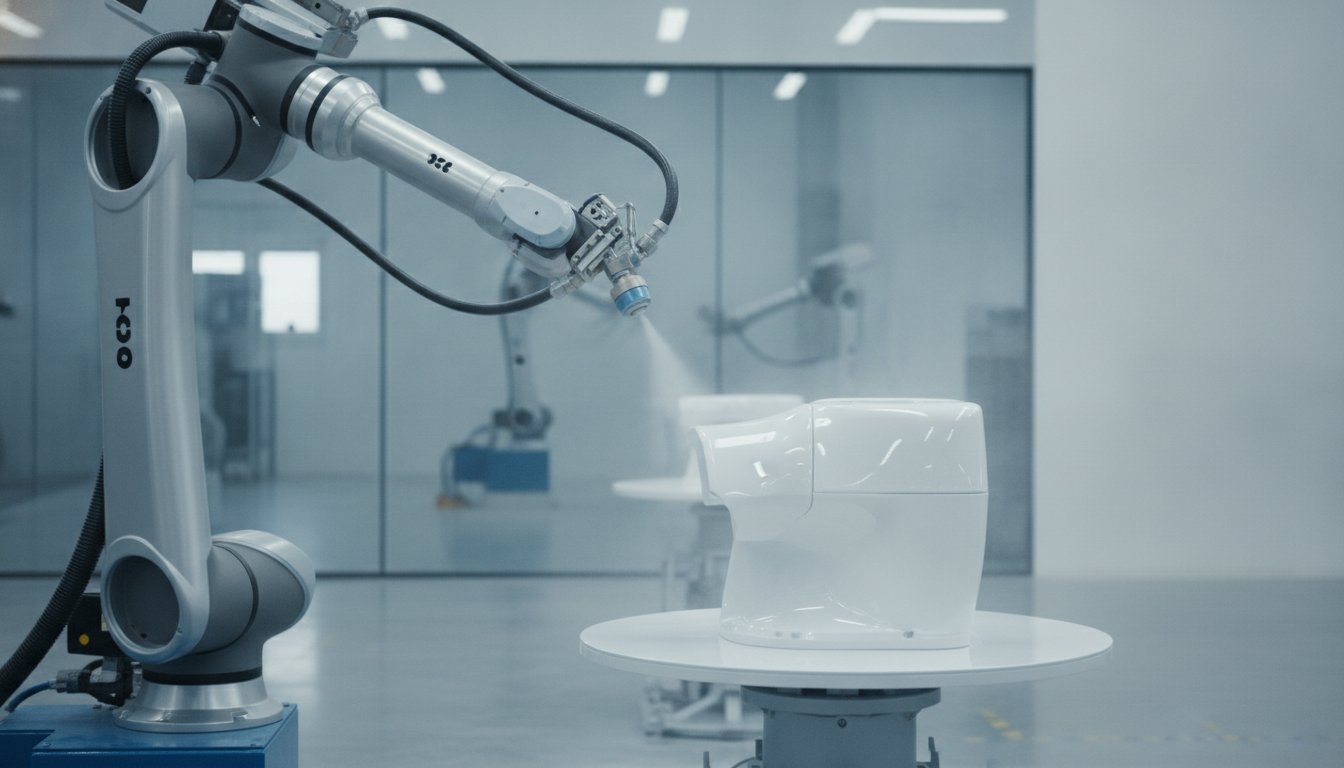
The quality of metal component finishing for appliances directly impacts consumer safety and brand perception. Enamel-coated interiors are preferred for their non-toxic properties and ease of cleaning; they provide a food-safe barrier that withstands high temperatures without degrading. For the exterior; powder coating offers a premium, scratch-resistant finish. This specialized finishing is essential for premium branding, ensuring the appliance remains a centerpiece in the modern kitchen.
Capacity and Form Factor Strategy
Product positioning depends heavily on capacity and design. While basket-style air fryers held a 51.10% market share in 2025; oven-style models are the fastest-growing segment with a 6.92% CAGR. Brands targeting families should focus on models with a capacity greater than 5 quarts; which are projected to have the highest growth rate at 8.48% CAGR through 2031. Portable cooking equipment remains a priority for urban demographics where compact form factors are essential for smaller living spaces.
Strategic Sourcing: Why Choose a Malaysia-Based Manufacturer?
Sourcing decisions in 2026 prioritize supply chain resilience over the lowest possible unit cost. While traditional manufacturing hubs face increasing tariff uncertainties and rising labor expenses, Malaysia has emerged as a premier destination for high-end appliance production. The country's infrastructure supports complex electronics assembly; this is a legacy of its long-standing semiconductor and electronics industries. Selecting a private label air fryer manufacturer in this region allows brands to leverage a mature ecosystem that understands international safety standards like IEC 60335-2-9.
Geographic diversification is no longer a luxury. It's a risk-management necessity. By shifting production to Malaysia, brands reduce their dependence on a single region and mitigate the impact of trade disputes. Malaysia's logistical efficiency is a core benefit; major ports like Port Klang provide streamlined shipping routes to North American and European markets. This connectivity ensures that high-volume orders reach their destination without the bottlenecks often found in congested traditional hubs. Furthermore, the Malaysian government's New Incentive Framework, implemented in March 2026, offers performance-based tax allowances that help manufacturers maintain competitive pricing while investing in advanced production technology.
Malaysia vs. China: A B2B Comparison
China remains a high-volume leader, but the gap is closing as brands seek technical expertise and duty benefits. Malaysia offers a sophisticated workforce skilled in specialized processes. For instance, Malaysia's history with complex enamel coating for OEM kitchen appliances provides a technical edge for brands focused on food safety and durability. Trade agreements like the CPTPP also provide significant duty advantages for international importers, making the total cost of ownership in Malaysia highly competitive when factoring in logistics and tariffs.
Stability and Communication in Partnership
B2B partnerships thrive on transparency and project management. A Malaysia-based private label air fryer manufacturer typically offers a communication style that aligns with global corporate standards. This reduces the friction often experienced during the R&D and prototyping phases. Expert project management teams ensure that lead times are strictly managed, providing a clear path from initial design to mass production. This stability is essential for multi-year product lifecycles; it allows your brand to scale with confidence knowing the production backbone is reliable and responsive to market shifts.
The Manufacturing Lifecycle: From R&D to Mass Production
A successful product launch depends on a methodical progression from initial concept to the final shipping container. A professional private label air fryer manufacturer operates as a technical partner rather than a simple assembly line. This lifecycle ensures that every unit meets the specific engineering and aesthetic standards required for your brand's market positioning. Each phase is designed to mitigate risk and ensure the product performs reliably in a consumer's kitchen.
Phase 1: Conceptual Design. Engineers conduct technical feasibility studies to validate new brand concepts, power requirements, and performance targets.
Phase 2: Prototyping. Utilizing kitchen appliance prototyping allows brands to test functionality and airflow dynamics before committing to expensive tooling.
Phase 3: Tooling and Mold Creation. Precision molds are engineered for custom appliance shapes and internal component housing to ensure structural integrity.
Phase 4: Quality Control and Certification. Products undergo rigorous testing for UL, CE, RoHS, and IEC safety standards to ensure global market access.
Phase 5: Mass Production. High-volume manufacturing is synchronized with supply chain logistics to ensure timely delivery to international hubs.
Brands ready to move from concept to reality can request a technical consultation and quotation to begin their development journey. This structured approach prevents costly errors during the scaling phase.
R&D: The Foundation of a Unique Product
Engineering teams focus on optimizing convection airflow systems and energy efficiency to meet modern consumer expectations. Customizing the digital user interface (UI) is equally important; it ensures the interaction feels native to your brand's identity. This technical solution approach prioritizes engineering excellence over simple assembly to ensure the final product delivers superior results. It's about building an appliance that performs consistently across thousands of cycles while maintaining its aesthetic appeal.
Quality Control and Compliance
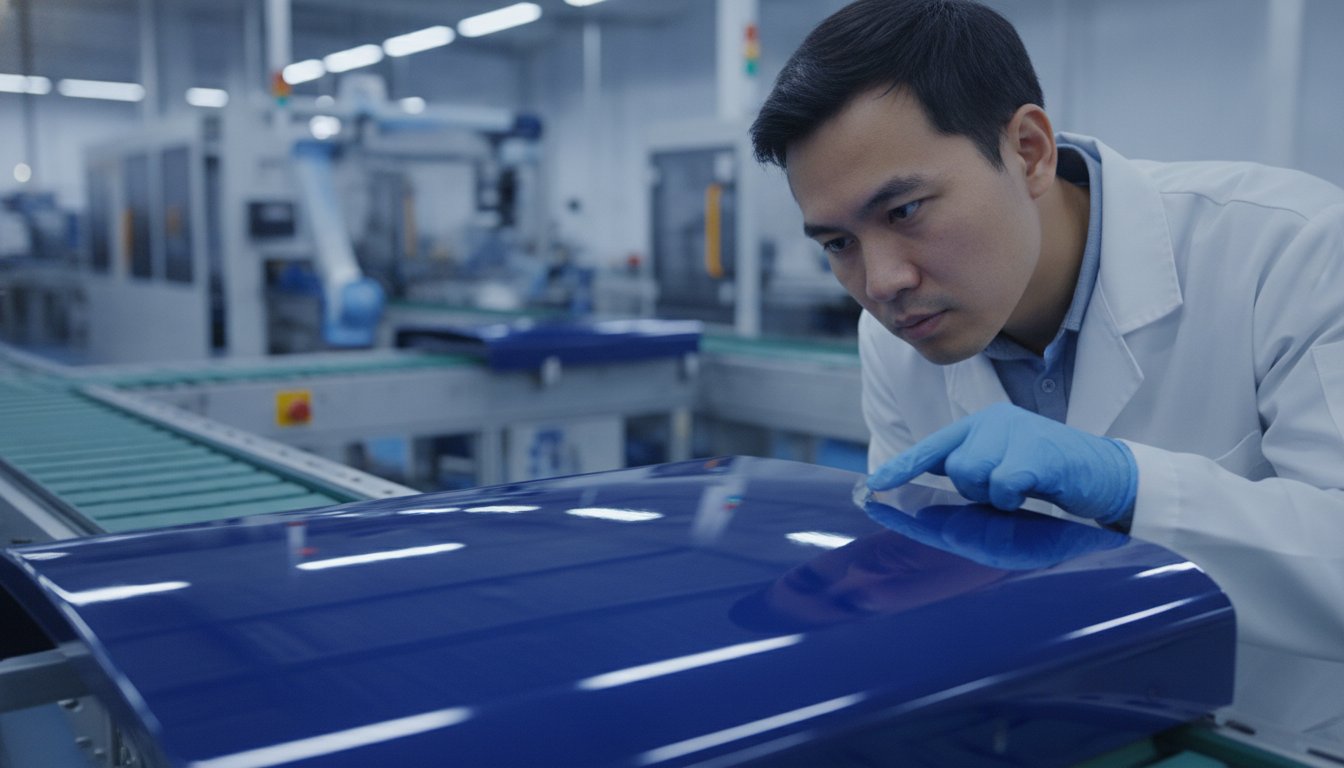
Maintaining brand reputation requires zero-defect production through strict factory audits and in-line inspections. These protocols catch technical deviations before they reach the final packaging stage. Managing safety certifications is a core responsibility; for instance, the European EN IEC 60335-2-9:2023+A11:2023 standard becomes mandatory on January 12, 2026. Ensuring all food-contact surfaces and coatings meet regional material compliance standards, such as upcoming PFAS restrictions in the US and EU, is essential for long-term market viability.
Partnering with Keiteq for Your Air Fryer Brand
Keiteq serves as the industrial backbone for brands seeking a reliable private label air fryer manufacturer in Malaysia. Our facility is engineered to handle the full product lifecycle; this includes everything from initial design to the specialized metal finishing that defines a premium product. By maintaining a strategic focus on the 2026 product roadmap, we ensure your brand stays ahead of regulatory shifts and consumer trends. We act as a trusted expert facilitator, providing the technical precision and industrial scale required to turn a conceptual design into a high-performance appliance.
Our specialized expertise in enamel and powder-coated metal components provides a technical advantage that generic factories cannot match. These finishes aren't just about aesthetics; they're about ensuring food safety and component longevity in a demanding kitchen environment. Established brands choose us as their dedicated manufacturing engine because we prioritize the practicalities of distribution and industrial strength. We provide full product design and development lifecycle support, ensuring that your air fryer line is both innovative and manufacturable at scale.
Our B2B-Only Philosophy
We operate with a strict B2B-only mandate to avoid any conflict of interest with our clients. We aren't your competitor; we are your partner. Our focus remains entirely on large-scale production for established brands and growing enterprises that require precision and scalability. This commitment allows us to provide tailored solutions for complex appliance design and development without the distraction of retail-side operations. You gain a silent but powerful partner that exists solely to empower your brand’s success in the global marketplace.
Next Steps for Your Air Fryer Project
Partnering with a private label air fryer manufacturer like Keiteq ensures you have access to specialized engineering and regional supply chain stability. Initiating this partnership begins with a clear understanding of your technical requirements. Prepare your specifications regarding wattage, capacity, and desired smart features for a preliminary consultation. We offer robust capacity for high-volume orders and the expertise required for custom tooling and mold creation to ensure your product stands out. This structured engagement ensures a methodical and frictionless path from your initial concept to a market-ready product line.
Our team manages the industrial complexities so you can focus on your brand's growth and market expansion. If you're ready to scale your brand's presence in the kitchen appliance market, contact us today to discuss your manufacturing needs. We invite you to reach out for more information or to request a formal quotation for your specific private label requirements within Malaysia. Let’s work together to engineer a product line that meets the highest standards of quality and durability for the 2026 market.
Securing Your 2026 Production Roadmap
Scaling a successful kitchen appliance brand requires moving beyond basic off-the-shelf sourcing. Success in the upcoming market demands a partner capable of navigating complex technical specifications and global trade shifts. By prioritizing a manufacturer with a robust R&D lifecycle and specialized expertise in powder-coated metal components, you ensure your product line remains durable and competitive. Malaysia's established infrastructure and favorable trade framework provide the stability needed for long-term growth.
Selecting the right private label air fryer manufacturer is the most critical decision for your brand's global scaling strategy. You need a dedicated B2B OEM/ODM partner that understands the nuances of high-volume production without the conflict of retail competition. Our specialized Malaysia-based manufacturing facility is ready to act as your technical backbone. We provide the precision and reliability your brand deserves. It's time to transition from a simple prototype to a market-leading product line.
Ready to scale your brand with a reliable partner? Contact Keiteq today for a custom quotation on our Malaysia-based air fryer manufacturing services. We look forward to facilitating your brand's expansion.
Frequently Asked Questions
What is the typical MOQ for a private label air fryer manufacturer?
The minimum order quantity (MOQ) typically begins at 1,000 units for standard configurations. While smaller batches are occasionally possible for initial market testing; reaching this threshold allows a private label air fryer manufacturer to optimize production lines and maintain competitive unit costs. High-volume orders exceeding 10,000 units often trigger additional efficiencies in tooling and supply chain logistics; which are essential for brands planning a significant market entry.
Can I customize the digital interface and presets on an OEM air fryer?
Yes; full customization of the digital user interface (UI) and cooking presets is a standard service during the R&D phase. You can define specific temperature ranges; timing increments; and pre-programmed cycles that align with your brand's unique value proposition. This process often includes the integration of touchscreens and Wi-Fi connectivity for app-controlled functionality; ensuring your appliance meets the technical expectations of modern; tech-savvy consumers.
How long does the prototyping phase take for a custom air fryer design?
The prototyping phase generally spans 4 to 8 weeks depending on the technical complexity of your design. This timeline includes initial feasibility studies; 3D modeling; and the creation of functional samples to test airflow dynamics and heating efficiency. Working with a private label air fryer manufacturer during this phase allows your team to evaluate the physical form and interface before moving into intensive tooling; reducing the risk of costly post-production adjustments.
What are the benefits of sourcing air fryers from Malaysia instead of China?
Sourcing from Malaysia provides significant supply chain resilience and reduces dependence on single-region hubs. Brands benefit from Malaysia's mature electronics infrastructure and the New Incentive Framework implemented in March 2026; which offers performance-based tax advantages. Malaysia's strategic location and established ports like Port Klang offer efficient logistical routes to North American and European markets; helping to mitigate trade uncertainties and tariff-related risks often associated with other regions.
Are your air fryers compliant with international safety standards like UL or CE?
Yes; all manufactured units undergo rigorous certification testing to ensure full compliance with international safety standards including UL; CE; and RoHS. We specifically adhere to the IEC 60335-2-9 standard for cooking appliances. For brands targeting the European market; we ensure all production meets the mandatory EN IEC 60335-2-9:2023+A11:2023 requirements that took effect on January 12; 2026; providing a clear path for global distribution.
Do you offer custom colors and finishes like powder coating?
Yes; we provide extensive aesthetic customization through specialized metal finishing techniques such as powder coating and enamel. Powder coating is particularly effective for achieving a premium; scratch-resistant exterior that maintains its appearance under high-heat conditions. These advanced finishes allow your product line to stand out in a crowded market while providing the durability consumers expect from high-end kitchenware brands; ensuring long-term brand loyalty.
Can you handle the design and development of the packaging as well?
Yes; our full product development lifecycle includes comprehensive support for packaging design and development. We coordinate with your branding team to ensure that the final retail packaging reflects your unique brand identity while meeting international shipping and durability requirements. This all-in-one approach ensures a seamless transition from the manufacturing floor to the retail shelf; maintaining brand consistency across all consumer touchpoints and logistical stages.
What is the difference between an OEM and an ODM air fryer?
The primary difference lies in the ownership of the design and technical specifications. In an OEM (Original Equipment Manufacturer) relationship; your brand provides the proprietary designs and engineering specs for us to produce according to your exact requirements. In contrast; an ODM (Original Design Manufacturer) model involves using our pre-engineered base designs which you then customize with your logo; colors; and specific interface presets to match your brand's market positioning.

Comments