Private Label Portable Cooking Equipment: A 2026 Strategic Manufacturing Guide
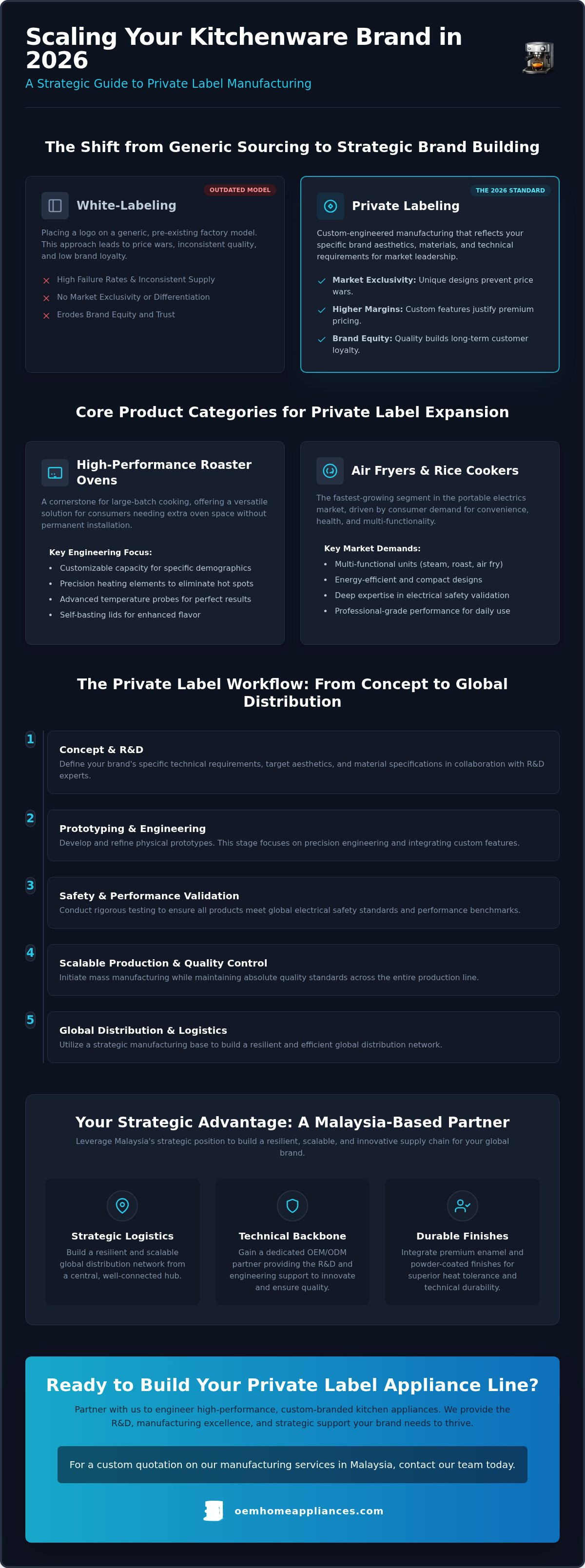
Scaling a kitchenware brand in 2026 requires more than just slapping a logo on a generic factory model. Most businesses quickly realize that relying on low-cost white-label goods leads to high failure rates and inconsistent supply chain logistics. To truly compete, you need private label portable cooking equipment that reflects your specific brand aesthetics and technical requirements. Generic sourcing is no longer enough. This shift toward custom-engineered manufacturing is the only way to ensure long-term market stability and customer trust.
You're likely looking for a way to differentiate your product line while maintaining a scalable production capacity. We understand the need for a reliable partner that offers technical support and R&D rather than just a transaction. In this strategic guide, you'll learn how to leverage specialized manufacturing to develop unique, high-performance appliances like air fryers and roaster ovens. We'll examine how precision engineering, enamel-coated durability, and a strategic manufacturing base in Malaysia can transform your supply chain into a competitive advantage. This approach provides the technical backbone your brand needs to thrive in a crowded global market.
Table of Contents
Defining Private Label Portable Cooking Equipment in 2026
The manufacturing landscape for 2026 distinguishes clearly between generic white-labeling and high-performance private labeling. While white-labeling involves placing a logo on a pre-existing factory model, Defining Private Label strategies requires a deeper level of technical customization. This distinction is critical for businesses looking to launch a line of private label portable cooking equipment. By controlling the specifications, materials, and aesthetics, brand managers create market exclusivity and capture higher margins that generic products cannot achieve.
Urban living trends continue to drive this market. As living spaces become more compact, consumers prioritize efficiency and versatility. They aren't looking for single-use gadgets; they demand high-performance appliances like air fryers and rice cookers that function as primary cooking stations. This shift forces brands to move away from low-tier sourcing toward sophisticated OEM/ODM models for their private label portable cooking equipment. Strategic benefits of this model include:
Market Exclusivity: Unique designs prevent price wars with identical products.
Higher Margins: Custom features justify premium price points.
Brand Equity: Reliable, high-quality appliances build customer loyalty over time.
The Shift from Gadgets to Electric Appliances
Modern consumers expect their portable units to deliver professional-grade results. The market has moved past simple kitchen tools toward complex electric cooking systems. In 2026, multi-functional units that combine steaming, roasting, and air frying are the standard. This transition requires manufacturers to possess deep expertise in electrical safety and performance validation. High-performance, compact kitchen electronics are no longer optional accessories. They're essential infrastructure for the modern home.
Strategic Brand Control Through OEM Partnerships
Successful brand scaling relies on maintaining absolute quality standards across global distribution networks. Engaging in specialized product design and development through an OEM partner allows you to dictate every technical detail. This partnership ensures your brand stands out through bespoke aesthetics and superior durability, such as enamel-coated finishes. It's about building a product that lasts.
These technical solutions differentiate your brand from generic competitors who lack the R&D support to innovate. A dedicated manufacturing partner acts as your technical backbone. They provide the R&D necessary to validate new features while ensuring scalable production capacity. This level of control builds long-term brand equity by delivering consistent, high-performance products to a demanding global audience.
Core Product Categories for Private Label Expansion
The retail market for electric appliances is expanding rapidly. While many competitors still focus on manual kitchen tools or simple catering gear, the real opportunity lies in high-performance electrics. To capture this growth, your portfolio of private label portable cooking equipment must prioritize appliances that offer both convenience and professional results. This includes everything from high-capacity roaster ovens to energy-efficient air fryers designed for daily use. Scaling your brand requires a focus on these high-demand categories to ensure long-term market relevance.
Engineering High-Performance Roaster Ovens
Roaster ovens remain a cornerstone for holiday and large-batch cooking. They provide a versatile solution for consumers who need extra oven space without a permanent installation. When developing these units, brands can choose between standard or custom capacities to fit specific retail demographics. Precision heating elements are vital to avoid hot spots and ensure consistent results. For a deeper look at the production side, review our Custom Roaster Oven Manufacturing: The 2026 Strategic Partner Guide. These units often feature advanced temperature probes and self-basting lids to differentiate them from entry-level models.
The Rapid Growth of the Air Fryer and Rice Cooker Segment
Air fryers and rice cookers are currently the fastest-growing categories in the portable electrics market. Partnering with a dedicated private label air fryer manufacturer provides access to advanced engineering for rapid heat circulation and energy efficiency. These technical requirements are essential for maintaining the crisp textures consumers expect. Similarly, large-scale distribution requires a high capacity rice cooker factory that doesn't compromise on precise temperature control or non-stick durability.
Customization goes beyond the internal components. You can align the user interface and aesthetic finishes with your brand identity through bespoke designs. Using durable Enamel and Powder Coatings ensures these appliances withstand high heat while maintaining a premium, scratch-resistant look. This level of technical durability is what separates a long-lasting brand from a seasonal fad.
The outdoor and travel segments are also seeing increased demand for specialized gear. These products need to be lightweight yet rugged enough for transport. Key categories include:
Portable BBQ Grills: Engineered for high heat retention and easy cleanup in compact formats.
Electric Kettles: Focused on rapid boil technology and minimal footprints for frequent travel.
Providing high-performance heating in a compact frame is a significant engineering challenge that requires specialized manufacturing expertise. If you're ready to explore these high-growth categories, you can request a technical consultation to discuss your specific private label portable cooking equipment requirements.
Technical Durability: The Role of Enamel and Powder Coatings
Technical durability defines the premium tier of the appliance market. For brand managers developing private label portable cooking equipment, the external and internal finishes aren't merely aesthetic choices. They are technical requirements that determine heat tolerance, scratch resistance, and overall product lifecycle. Enamel and powder coatings represent two distinct industrial solutions that elevate a product from a generic tool to a high-value asset. Choosing the right finish directly impacts how consumers perceive your brand's quality over years of use.
Enamel stands out as the superior choice for high-heat applications. It is essentially a glass finish fused to a metal substrate at extremely high temperatures. This creates a non-toxic, non-porous surface that remains stable even under intense thermal stress. Unlike chemical non-stick coatings that might degrade or release fumes, enamel offers permanent heat stability and an easy-clean surface. This makes it the ideal material for the interiors of roaster ovens and BBQ grills where food contact and high temperatures are constant.
Industrial Enamel Coating Processes
The technical integrity of an appliance depends on the quality of the bond between the metal and the enamel layer. During production, the metal components undergo rigorous cleaning before the enamel slurry is applied. Firing the components in specialized kilns ensures a chemical bond that prevents chipping or peeling. For a detailed breakdown of these manufacturing steps, consult our Industrial Enamel Coating Process for Roaster Ovens: A 2026 Technical Guide.
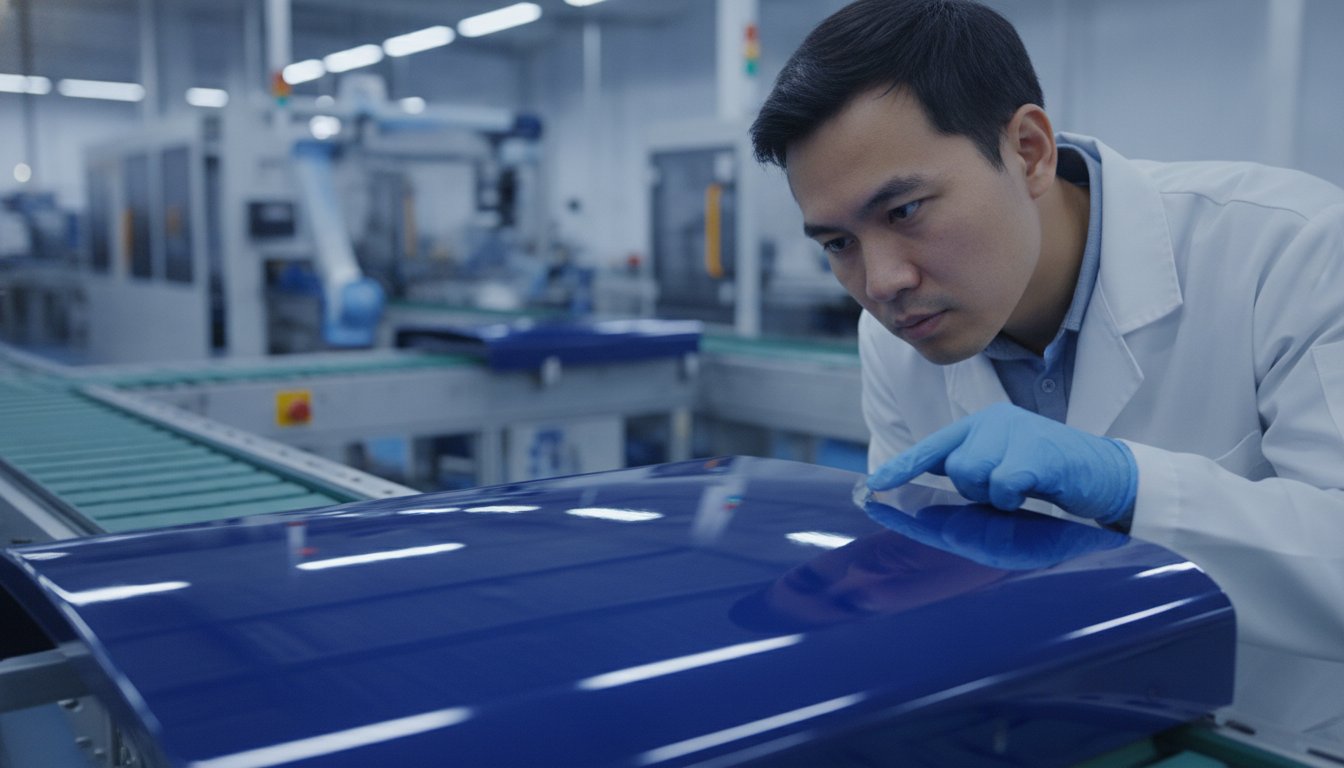
Quality control standards must be strictly maintained during this process. We monitor enamel thickness and uniformity across every batch to ensure the finish can withstand years of thermal expansion and contraction. A consistent coating prevents rust and maintains the appliance's perceived value long after the initial purchase. This precision is what allows a private label brand to compete with established global manufacturers.
Powder Coating for Aesthetic and Functional Excellence
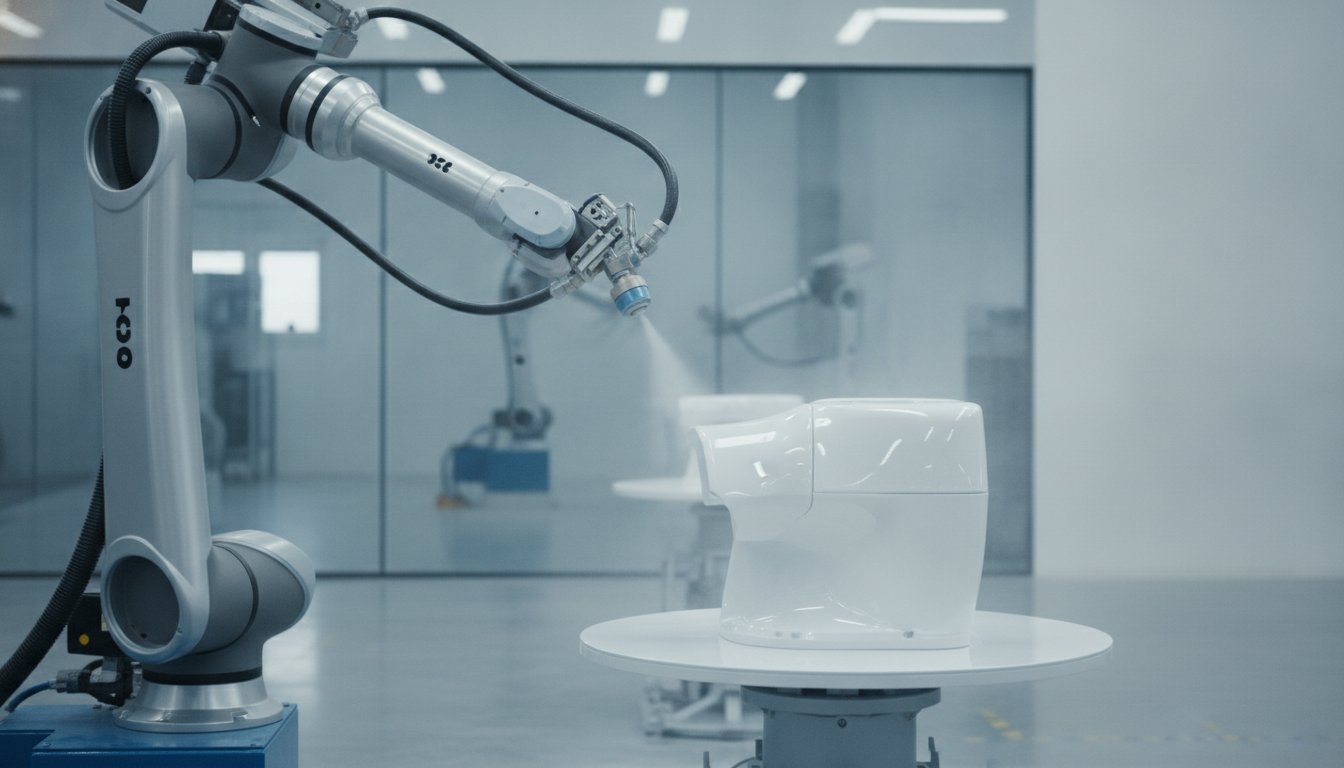
While enamel handles the internal heat, powder coating provides the versatility needed for external brand alignment. Modern powder coating techniques allow for precise color matching, enabling you to launch appliance collections with a unified brand aesthetic. This finish is particularly effective for the outer casings of air fryers, kettles, and blenders where visual appeal is a primary selling point.
In high-use portable environments, scratch resistance is vital. Powder-coated metal components are significantly more durable than traditional liquid paints. They resist impact and abrasion, ensuring the product looks new even after frequent transport or storage. Additionally, modern powder coating is an environmentally responsible choice. The process produces minimal volatile organic compounds (VOCs) and allows for the reclamation of over-spray, reducing material waste. Selecting these advanced finishes ensures your private label portable cooking equipment meets both functional demands and modern sustainability goals.
The Private Label Workflow: Prototyping to Global Distribution
A structured manufacturing lifecycle is essential for any brand scaling its private label portable cooking equipment. Without a methodical workflow, technical errors and logistical delays can derail a market launch. The process begins with Product Design & Development, where we align your brand vision with manufacturing feasibility. This ensures that aesthetic choices don't compromise electrical efficiency or safety. A successful workflow transforms a concept into a market-ready asset through the following stages:
Step 1: Product Design & Development: We bridge the gap between creative vision and industrial reality by refining specifications for mass production.
Step 2: Prototyping and Technical Validation: This involves rigorous testing of electrical components and thermal performance to meet international safety standards.
Step 3: Tooling and Mold Creation: We engineer precision molds to ensure consistent part replication across high-volume runs.
Step 4: Quality Assurance and Compliance: Every batch undergoes strict testing to mitigate liability and ensure product reliability.
Step 5: Mass Production and Logistics: We scale output and manage the complexities of global market entry.
R&D and Technical Prototyping
Utilizing professional kitchen appliance R&D services significantly reduces your time-to-market. In the competitive 2026 landscape, speed is as important as quality. Functional testing for portable electric components is non-negotiable. We focus on iterative design, which allows us to refine the product's aesthetics without sacrificing cooking performance. This technical precision ensures your air fryers or roaster ovens perform reliably under heavy use, protecting your brand's reputation from the first unit sold.
Managing Large-Scale Production Cycles
Scaling requires optimizing workflows for kitchen appliance manufacturing solutions. Brand growth projections must balance with Minimum Order Quantities (MOQ) to maintain healthy inventory levels and cash flow. We ensure consistency across thousands of units in bulk orders by implementing strict batch-testing protocols. This reliability is vital for maintaining brand reputation when distributing private label portable cooking equipment in global markets. Our methodical approach to mass production prevents the quality drift often seen in lower-tier factories.
If you're ready to initiate your next production run, contact us for a quotation on Malaysia-based manufacturing services.
Choosing a Malaysia-Based Partner for Scalable Production
Malaysia is emerging as a preferred hub for high-end appliance manufacturing. While most industry guides focus exclusively on China-based production, strategic brand managers are diversifying into Southeast Asian hubs to mitigate supply chain risks. Malaysia offers significant logistical advantages due to its central location along major global shipping routes. This proximity reduces transit times and enhances supply chain resilience for global brands. Choosing a partner in this region provides a stable environment with fewer tariff complications compared to traditional manufacturing centers.
The region's advanced technical infrastructure and skilled labor force are perfectly suited for the production of private label portable cooking equipment. Manufacturing complex electric appliances requires a workforce that understands international safety standards and precision engineering. By sourcing from Malaysia, Western brands benefit from supply chain diversification and a high level of technical expertise. This combination ensures that your product line maintains its quality without the risks associated with over-concentration in a single geographic market.
Keiteq: Your Dedicated Manufacturing Partner in Malaysia
At oemhomeappliances (Keiteq), we operate as a "Trusted Expert Facilitator." We don't seek the retail spotlight for ourselves; instead, we act as the silent engine behind your brand's growth. Our commitment to B2B excellence ensures there is no direct-to-retail competition, allowing us to focus entirely on your success. We implement comprehensive private label kitchen appliance manufacturer strategies that cover everything from initial R&D to mass production.
Initiating a partnership for your next portable cooking line is a methodical process. We start by aligning our technical capabilities with your brand's aesthetic and functional requirements. By leveraging our expertise in enamel and powder coating, you can ensure your products meet the durability standards expected in the 2026 market. We provide the stability and technical support necessary to scale your operations confidently. Our goal is to empower your brand to lead the market through superior engineering and reliable delivery.
Getting Started with Your Custom Quote
Obtaining an accurate manufacturing quotation requires a clear exchange of technical data. We need information regarding your desired product dimensions, power specifications, and material choices. Our team consults with you on these details to ensure the final product is both high-performing and cost-efficient. We prioritize transparency and precision in every quote we provide to avoid surprises during the production cycle.
If you're ready to scale your kitchenware brand with a reliable partner, reach out to us today. Contact oemhomeappliances in Malaysia for a detailed quotation on your private label portable cooking equipment project. We are ready to provide the pricing and project feasibility data you need to move forward with confidence.
Future-Proofing Your Appliance Brand through Strategic Partnerships
Strategic growth in the kitchenware sector requires a shift from simple rebranding to genuine technical innovation. We've detailed how precision engineering, durable enamel finishes, and a methodical R&D workflow define the modern appliance market. By leveraging our full-service prototyping and manufacturing in Malaysia, your brand gains a competitive edge. You avoid the risks of direct-to-retail competition. This partnership provides the industrial stability necessary to scale your private label portable cooking equipment line across global markets with confidence.
Our specialized expertise in enamel-coated roaster ovens and advanced air fryer development ensures your products exceed consumer expectations. We focus exclusively on empowering your brand through technical excellence and logistical resilience. We act as the dependable backbone for your business. This provides the R&D support required to differentiate your products from generic competitors. We are ready to help you navigate the 2026 manufacturing landscape with quiet authority and industrial strength.
Frequently Asked Questions
What is the difference between OEM and ODM for portable cooking equipment?
OEM involves building to your exact specifications, whereas ODM utilizes pre-existing factory designs. For private label portable cooking equipment, the OEM model is superior because it allows for technical differentiation and brand-specific aesthetics. This approach ensures your product stands out in a crowded retail landscape. By controlling the design process, you avoid the market saturation issues common with generic white-label models.
How long does the prototyping phase take for a new private label roaster oven?
The prototyping phase for a new roaster oven typically ranges from several weeks to a few months. This timeline includes CAD development, physical sample creation, and rigorous thermal testing of enamel-coated interiors. We prioritize electrical safety and performance validation during this stage to prevent future field failures. Developing a functional prototype is a critical step in aligning your creative vision with large-scale manufacturing feasibility.
What are the benefits of manufacturing appliances in Malaysia compared to China?
Manufacturing in Malaysia provides significant logistical advantages and supply chain resilience compared to traditional hubs. The region features advanced technical infrastructure and a skilled workforce experienced in international safety standards. Additionally, Malaysia’s central location along global shipping routes helps Western brands reduce transit times and mitigate tariff-related costs. This diversification is essential for brands looking to build a more stable and reliable global distribution network.
Can I customize the color and finish of my private label air fryers?
You can fully customize the color and finish of your air fryers through our advanced powder coating processes. This allows for precise color matching to ensure your appliance collection aligns with your brand identity. Beyond aesthetics, these finishes provide essential scratch resistance and heat tolerance for portable environments. Modern powder coating techniques also offer environmental benefits by reducing VOC emissions and material waste during the production cycle.
What quality certifications are standard for portable electric cooking appliances?
Portable electric cooking appliances require certifications such as CE, GS, UL, and ETL to verify electrical safety. For surfaces with food contact, compliance with FDA or LFGB standards is mandatory to ensure consumer safety. We manage the entire technical validation process, ensuring your products meet the rigorous requirements of global markets. These certifications are vital for mitigating liability and establishing long-term customer trust in your brand.
Do you provide enamel coating services for third-party metal components?
We primarily provide enamel coating services for appliances manufactured within our own facility. This integrated approach ensures the chemical bond between the metal substrate and the enamel layer meets our strict quality standards. By controlling the entire production cycle, we prevent the chipping or peeling issues that can occur when using third-party components. This focus ensures the technical durability of high-heat items like roaster ovens and BBQ grills.
What is the typical MOQ for a private label portable appliance order?
Minimum Order Quantities (MOQ) for private label portable cooking equipment are determined based on the specific appliance type and customization requirements. We focus on providing scalable production solutions that support the growth projections of our B2B partners. These requirements are discussed during the initial technical consultation to ensure the project remains cost-effective. We strive to balance manufacturing efficiency with the logistical needs of your brand.
How does oemhomeappliances handle intellectual property during the R&D phase?
We handle intellectual property with absolute confidentiality through formal non-disclosure agreements (NDAs) established at the project's start. As a dedicated B2B partner, we don't engage in direct retail sales, which removes any conflict of interest. Your proprietary designs and technical innovations are protected throughout the R&D and prototyping stages. This partnership-oriented approach allows us to act as a secure technical backbone for your brand's innovation.
To request a manufacturing quotation for services in Malaysia or to discuss project feasibility, please contact oemhomeappliances today.

Comments