Quality Appliance Manufacturing in Malaysia: A 2026 Strategic Reference Guide
Updated: Jul 19
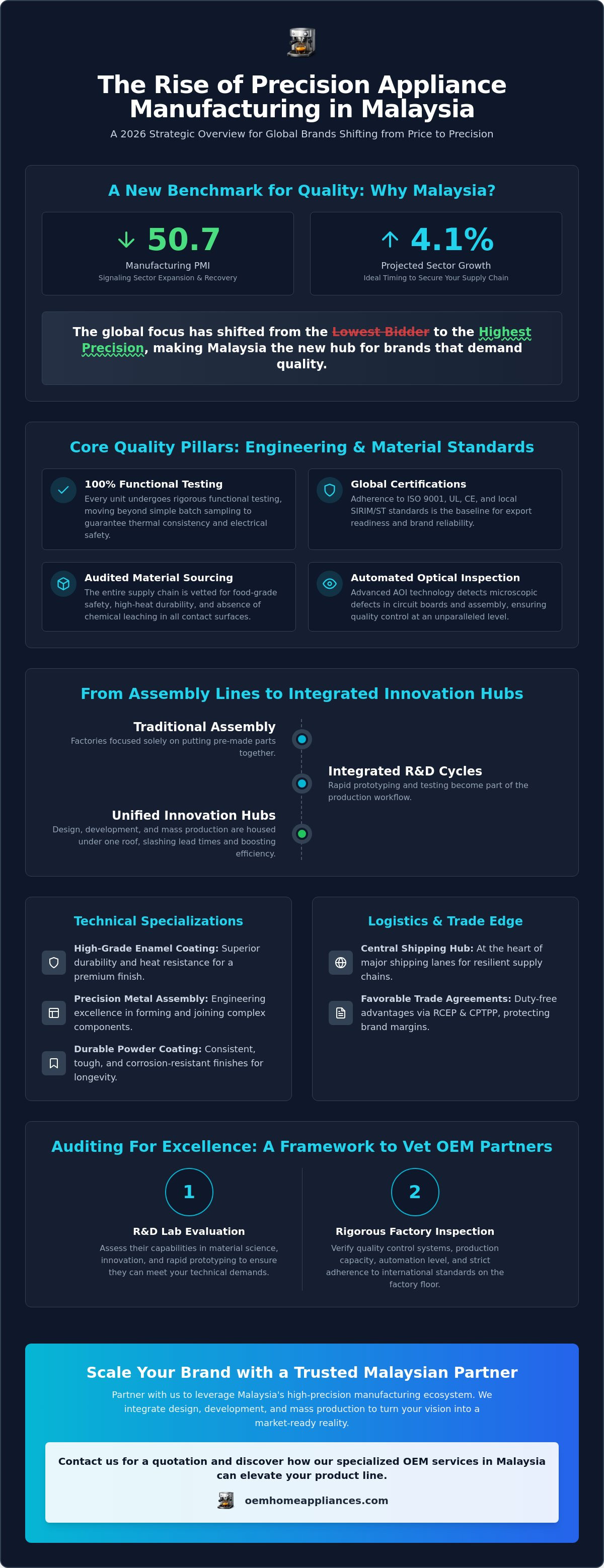
By 2026, the global supply chain has shifted its focus from the lowest bidder to the highest precision, and quality appliance manufacturing Malaysia is now the primary beneficiary of this transition. You've likely felt the sting of rising costs in traditional hubs and the frustration of receiving products that don't meet your brand's finishing standards. It's difficult to maintain consistency at scale when you lack specialized technical solutions like high-grade enamel coating or precision metal assembly.
This strategic guide shows you why Malaysia has become the global benchmark for high-quality kitchen appliance manufacturing and provides the framework you need to select a reliable OEM partner. We'll explore the technical advantages of specialized production and why the projected 4.1% growth in the manufacturing sector makes this the ideal time to secure your supply chain. From SIRIM certification requirements to advanced coating techniques, you'll gain the insights necessary to turn production into a reliable engine for your brand's growth.
Table of Contents
The Evolution of Quality Appliance Manufacturing in Malaysia
The 2026 landscape for quality appliance manufacturing Malaysia has moved far beyond basic factory work. It's now a high-tech ecosystem centered on precision and export readiness. Global brands are increasingly shifting large scale appliance production to Southeast Asia to escape the volatility of traditional hubs. This movement isn't accidental. It's the result of a "Quality First" culture supported by government initiatives and strict regulatory oversight. With the Manufacturing PMI rising to 50.7 in mid-2026, the sector shows clear signs of recovery and expansion. Bodies like the Energy Commission (ST) and SIRIM ensure that every product, from roaster ovens to air fryers, meets rigorous safety and performance benchmarks before it leaves the port. These standards aren't just hurdles; they're proofs of a sophisticated industrial base.
From Assembly Lines to Innovation Hubs
Malaysia's role in the supply chain has matured significantly. Factories no longer just put parts together; they've become centers for specialized kitchen appliance development. Modern manufacturing workflows now integrate R&D and rapid prototyping directly into the production cycle. This allows for faster iterations on products like rice cookers, coffee machines, and blenders. The Malaysian OEM sector stands as a multi-billion dollar pillar of the 2026 regional economy. By housing design and assembly under one roof, manufacturers reduce lead times and eliminate the communication gaps that often plague cross-border partnerships. This integration is vital for brands that require bespoke metal components or specialized powder-coated finishes.
The Strategic Advantage of Southeast Asian Logistics
Geographical positioning remains a primary driver for investment. Malaysia sits at the heart of major shipping lanes, providing immediate access to both raw material suppliers and global markets. This proximity offers a layer of resilience against the supply chain disruptions that have hampered other regions. Malaysia's economic transition has prioritized trade agreements like the RCEP and CPTPP. These frameworks provide duty-free advantages that significantly benefit international brand partners looking to maintain margins. For a brand looking to scale, these logistics aren't just a convenience; they're a competitive necessity. Whether you're producing BBQ grills or portable cooking equipment, the infrastructure supports a seamless flow from the factory floor to the international consumer. Access to local technical expertise in enamel-coated products further solidifies Malaysia as a technical leader, proving that while automation is helpful, material science remains the backbone of premium kitchenware.
Core Quality Pillars: Engineering and Material Standards
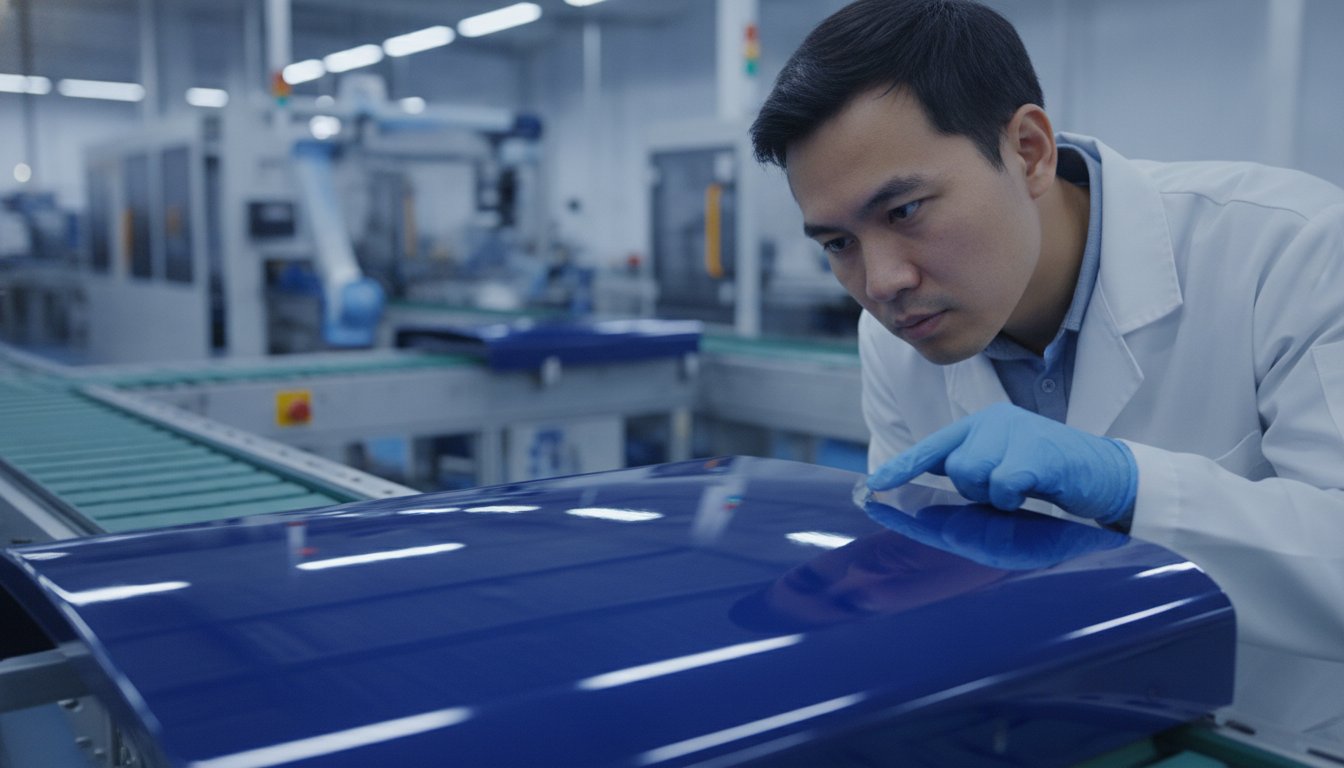
Engineering standards in Malaysia serve as the bedrock for global brand reliability. For any serious OEM partner, international certifications like ISO 9001, UL, and CE aren't optional extras. They're the baseline. The Malaysian manufacturing sector has evolved to prioritize these global benchmarks to ensure export readiness. In 2026, quality appliance manufacturing Malaysia relies on 100% functional testing for critical components rather than simple batch sampling. This shift ensures that every roaster oven or air fryer leaving the line maintains thermal consistency and electrical safety. Manufacturers now implement automated optical inspection (AOI) to catch defects in circuit boards and assembly before they reach the final testing phase.
Material sourcing is equally rigorous. Factories must verify food-grade safety for all contact surfaces. This includes testing for chemical leaching and high-heat durability. Reliable sourcing involves auditing the entire supply chain, from the raw steel mill to the plastics supplier. It's about ensuring that every component can withstand the rigors of daily use without degradation. If you're looking to refine your current production standards, you can consult with our engineering team for a technical review of your material specifications.
Engineering Excellence in Portable Cooking Equipment
Portable cooking equipment presents unique thermal challenges. Managing consistent wattage in a high capacity rice cooker factory requires precision-engineered heating elements and advanced sensors. Modern air fryers demand similar attention to airflow dynamics and thermal regulation. Beyond heat, there's a growing move toward energy-efficient motor design in blenders and coffee machines. These motors provide higher torque with lower power consumption, meeting the 2026 global demand for sustainable home appliances. Compliance with Malaysia's 230V/240V electrical standards is mandatory. The ST-SIRIM label must be affixed directly to the product to guarantee safety and compliance with national regulations.
Structural Integrity and Metal Fabrication
When evaluating quality appliance manufacturing Malaysia, structural integrity starts with metal fabrication. High-grade steel is used for appliance chassis to prevent warping under high-heat conditions. In roaster oven production, advanced stamping and welding techniques ensure airtight seals and structural rigidity. Malaysian manufacturers excel at balancing lightweight design with industrial-strength durability. This is achieved through precision stamping that maintains metal thickness at stress points while reducing unnecessary bulk. These components often undergo powder-coating or enamel-coating processes to add a layer of corrosion resistance. This extends the product's lifespan in diverse kitchen environments while maintaining a premium aesthetic for the end consumer.
The Role of Specialized Coatings in Premium Appliances
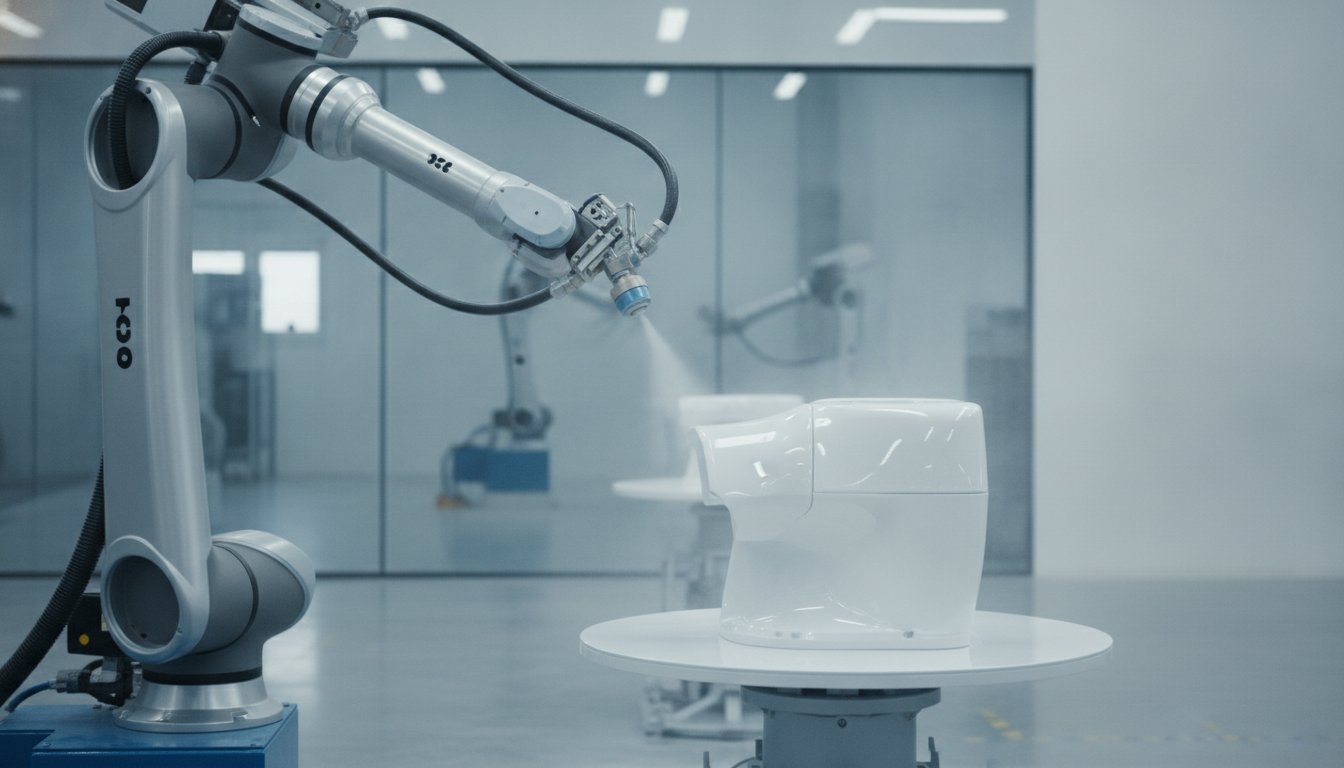
The final stage of production often determines whether a consumer perceives a product as a premium asset or a budget-grade tool. In the competitive landscape of quality appliance manufacturing Malaysia, specialized finishing techniques like enamel and powder coating are essential differentiators. These aren't merely aesthetic choices; they're functional requirements that ensure long-term durability in high-heat environments. While liquid paint might offer lower initial costs, it often fails to provide the industrial-strength protection required for modern kitchen standards. Premium finishes drive brand perception by offering a tactile sense of quality that consumers associate with longevity and safety.
For roaster ovens and heavy-duty cookware, high-temperature enamel application remains the industry benchmark. The process involves fusing glass particles to a metal substrate at temperatures often exceeding 800 degrees Celsius. This chemical bond creates a surface that's virtually impervious to scratches and chemical corrosion. It's a technical solution that ensures the appliance remains safe for food contact throughout its entire lifecycle. In 2026, the demand for these specialized finishes has surged as brands look to distance themselves from the "disposable" appliance market.
Industrial Enamel Coating for High-End Cookware
High-grade enamel offers exceptional thermal shock resistance. It won't crack or peel when moving from high heat to cooler temperatures, which is a common failure point in lower-quality coatings. It's also completely non-toxic and inert, making it a critical selling point for health-conscious consumers. Manufacturers in Malaysia have mastered the aesthetic flexibility of this medium. They can achieve vibrant, heat-resistant colours that don't fade or discolor over years of use. Brand managers can explore these technical capabilities further through our industrial enamel coating services to see how these finishes elevate product lines.
Durability Standards for Powder Coated Metal Components
Powder coating provides a robust defense for external appliance housings, BBQ grills, and kettles. Unlike liquid paint, powder finishes are applied electrostatically and then cured under heat to form a hard, continuous skin. This results in a thicker, more durable finish that resists chipping, scratching, and anti-corrosion. It's particularly effective for portable cooking equipment that faces frequent handling and transport. From an environmental standpoint, the process is superior. It produces zero volatile organic compound (VOC) emissions and allows for the reclamation of over-spray. This makes it a sustainable choice for quality appliance manufacturing Malaysia, aligning with 2026 global environmental standards without sacrificing performance or cost-efficiency. Supporting these green initiatives often involves optimizing facility-wide climate control; to learn how Engico Air Conditioning supports professional environments with high-performance cooling, read more.
Auditing for Excellence: How to Vet a Malaysian OEM Partner
Selecting an OEM partner requires a methodical approach to risk management. In the context of quality appliance manufacturing Malaysia, you can't rely on digital brochures alone. A factory visit is a non-negotiable step for any brand manager selecting a private label kitchen appliance manufacturer. Whether conducted physically or via a high-definition virtual tour, you need to observe the real-time synchronization of the assembly line. This inspection provides immediate clarity on the factory's operational discipline and safety standards. It's the only way to ensure their reported capacity matches the reality of their floor space.
A high-tier partner should also demonstrate robust capabilities in product design for kitchen appliances. Look for an in-house R&D lab equipped with 3D prototyping tools and thermal testing chambers. If a factory outsources its design work, you'll likely face communication delays and intellectual property risks. You should also verify their production capacity against your 2026 scaling requirements. Ask for a clear breakdown of their monthly output for specific categories like air fryers or rice cookers to ensure they can grow with your brand.
The 5-Step Factory Audit Checklist
A thorough audit should focus on quantifiable data and ethical transparency. Use these pillars to assess reliability:
Historical Quality Data: Request defect rates measured in parts per million (PPM). A reliable partner will have documented trends showing continuous improvement over several quarters.
Raw Material Warehouse: Inspect how raw materials are stored and tracked. Vetting their sub-suppliers is critical to ensuring food-grade safety and material consistency.
Ethical Manufacturing: Verify labor practices and look for international ethical certifications. This protects your brand from reputational risks in a global market.
Technical Capability Assessment
Technical leadership is defined by the equipment on the floor. You must confirm whether the factory owns their tooling or if they rely on third-party shops. In-house tooling ownership usually results in better maintenance and faster production restarts. Verify the presence of specialized equipment such as high-temperature enamel kilns, automated powder coating booths, and precision CNC machines. Software integration is another key indicator of maturity. High-quality appliance manufacturing Malaysia is now driven by ERP and PLM systems that provide real-time order tracking and lifecycle management. If you're ready to evaluate a facility that meets these high standards, you can request a factory audit overview to begin your vetting process.
Strategic Advantages of Partnering with oemhomeappliances
Success in the 2026 global market requires more than just a factory; it demands a strategic partner that understands the intersection of industrial precision and brand identity. At oemhomeappliances, we embody the highest standards of quality appliance manufacturing Malaysia, combining local production efficiency with the rigorous expectations of global brands. Our specialized focus on roaster ovens, air fryers, and rice cookers allows us to deliver deep technical expertise that generalist manufacturers simply can't match. This narrow focus ensures that every product we build is optimized for thermal performance, safety, and durability.
The Keiteq advantage provides our partners with a heritage of engineering excellence and reliability. We don't just assemble components. We provide comprehensive, end-to-end solutions that cover the entire product lifecycle. This includes everything from initial custom roaster oven manufacturing designs and prototyping to final enamel or powder coating. By managing every stage of the process under one roof, we eliminate the quality gaps that often occur when multiple vendors are involved in a single product line.
Your Dedicated OEM/ODM Partner in Malaysia
We provide bespoke technical solutions tailored specifically for private label branding and global market entry. Our facility is designed for scalability, with production lines capable of handling massive global rollouts for premium retailers. We understand that your designs are your most valuable assets. That's why we maintain a strict commitment to intellectual property protection and exclusive partnerships. We act as the silent, reliable engine behind your brand, ensuring that your innovations remain secure while we handle the complexities of mass production and supply chain logistics.
Ready to Scale Your Appliance Brand?
Our Malaysian facility is uniquely positioned to serve the needs of premium global retailers who demand consistency across every batch. We believe in a partnership-first approach, where our success is directly tied to the growth of your product line. This collaborative mentality ensures that we're always looking for ways to optimize your designs for better manufacturing efficiency and lower defect rates. We invite you to request a technical consultation for your next product line to see how our expertise can streamline your path to market.
If you're ready to secure a reliable supply chain, contact oemhomeappliances today for a comprehensive quotation. Our team is standing by to discuss how our specialized manufacturing services in Malaysia can empower your brand's expansion. Reach out now for further details on our pricing, customization options, and production timelines within the Malaysian region.
Securing Your 2026 Production Roadmap
The transition toward high-precision quality appliance manufacturing Malaysia offers a stable foundation for brands seeking technical excellence and logistical resilience. We've explored how specialized finishing and rigorous engineering standards define the modern Malaysian facility. Success in the premium kitchenware market now depends on selecting a partner that integrates R&D directly into the production workflow. By prioritizing Keiteq-backed engineering and utilizing our specialized enamel and powder coating facilities, you ensure your products withstand the demands of the global consumer.
Our dedicated B2B focus means we exist solely to empower your brand. We don't operate direct-to-retail lines; our engineering resources are entirely committed to your private label success. Whether you're scaling a line of roaster ovens or developing new portable cooking equipment, our facility provides the industrial strength required for global distribution.
Ready to take the next step?Request a quotation for your next project or contact our Malaysian manufacturing team for more details on our specialized OEM/ODM services. We're ready to help you build a more reliable and scalable supply chain today.
Frequently Asked Questions
Why is Malaysia considered a top choice for quality appliance manufacturing in 2026?
Malaysia stands out due to its high-tech infrastructure and commitment to precision engineering. The 2026 manufacturing sector growth of 4.1% indicates a robust recovery and a clear shift toward high-value production. Quality appliance manufacturing Malaysia offers a unique combination of technical expertise in specialized coatings and access to major global shipping lanes, making it a stable alternative to traditional manufacturing hubs.
What are the main differences between OEM and ODM services in Malaysian factories?
OEM services involve manufacturing products based on your exact specifications and blueprints. In contrast, ODM services provide a full-service approach where the factory handles the design, development, and production of the appliance. Most Malaysian partners offer both models to provide flexibility for brands that either have their own designs or need a ready-to-market solution.
How do Malaysian manufacturers ensure the quality of enamel-coated products?
Manufacturers use high-temperature kilns to fuse glass particles to metal substrates at temperatures often exceeding 800 degrees Celsius. This creates a durable, non-toxic surface that undergoes rigorous thermal shock testing to prevent cracking or peeling. These standards ensure that products like roaster ovens remain safe for food contact and functional throughout their entire lifecycle.
Is it cost-effective to manufacture small kitchen appliances in Malaysia compared to China?
Malaysia is highly competitive due to duty-free advantages provided by trade agreements like the RCEP and CPTPP. While unit costs vary, the reduction in supply chain disruptions and lower import duties often result in a lower total cost of ownership. The focus on quality appliance manufacturing Malaysia also reduces long-term expenses associated with product defects and consumer returns.
What certifications should I look for in a Malaysian appliance manufacturer?
You should prioritize factories with ISO 9001 for quality management and UL or CE certifications for international safety standards. For any electrical product, the ST-SIRIM label is mandatory. This certification ensures the appliance meets specific electrical safety benchmarks, and the label must be affixed directly to the product to guarantee compliance.
Can Malaysian factories handle custom product design and prototyping for new appliances?
Yes, leading manufacturers operate in-house R&D labs equipped with 3D prototyping and thermal regulation testing chambers. This allows for rapid iteration of products like air fryers, rice cookers, and coffee machines. Integrating design and production under one roof significantly reduces the lead time and communication gaps during the development phase.
What is the typical lead time for bulk roaster oven production in Malaysia?
Typical lead times for bulk production usually range between 45 and 60 days depending on the complexity of the custom design. This timeframe accounts for raw material procurement, precision metal stamping, and the specialized enamel-coating process. Establishing a consistent production schedule with your partner helps maintain a steady inventory flow for global retail rollouts.
How does oemhomeappliances protect a brand’s intellectual property during the OEM process?
We maintain strict intellectual property protocols, including non-disclosure agreements and siloed production workflows. Our dedicated B2B focus ensures that we don't compete with our clients in the retail market or distribute third-party brands. We act as a silent, reliable partner, providing the industrial backbone for your brand without compromising your proprietary innovations.

Advanced Plastic Injection Molding for Interface Components
Interface components, such as bezels and card reader entries, require advanced plastic injection molding. We utilize UV-stabilized polymers to prevent material degradation and brittleness caused by constant sun exposure. Managing the tolerances between these plastic parts and the metal chassis is critical for maintaining waterproof seals. Our specialized Plastic Injection Molding Services in Malaysia facilitate the production of these high-precision components at scale. If you are ready to move from design to physical production, you may contact our engineering team to discuss your specific hardware requirements.