Scaling Your Brand: The Strategic Guide to Large Scale Appliance Production in 2026
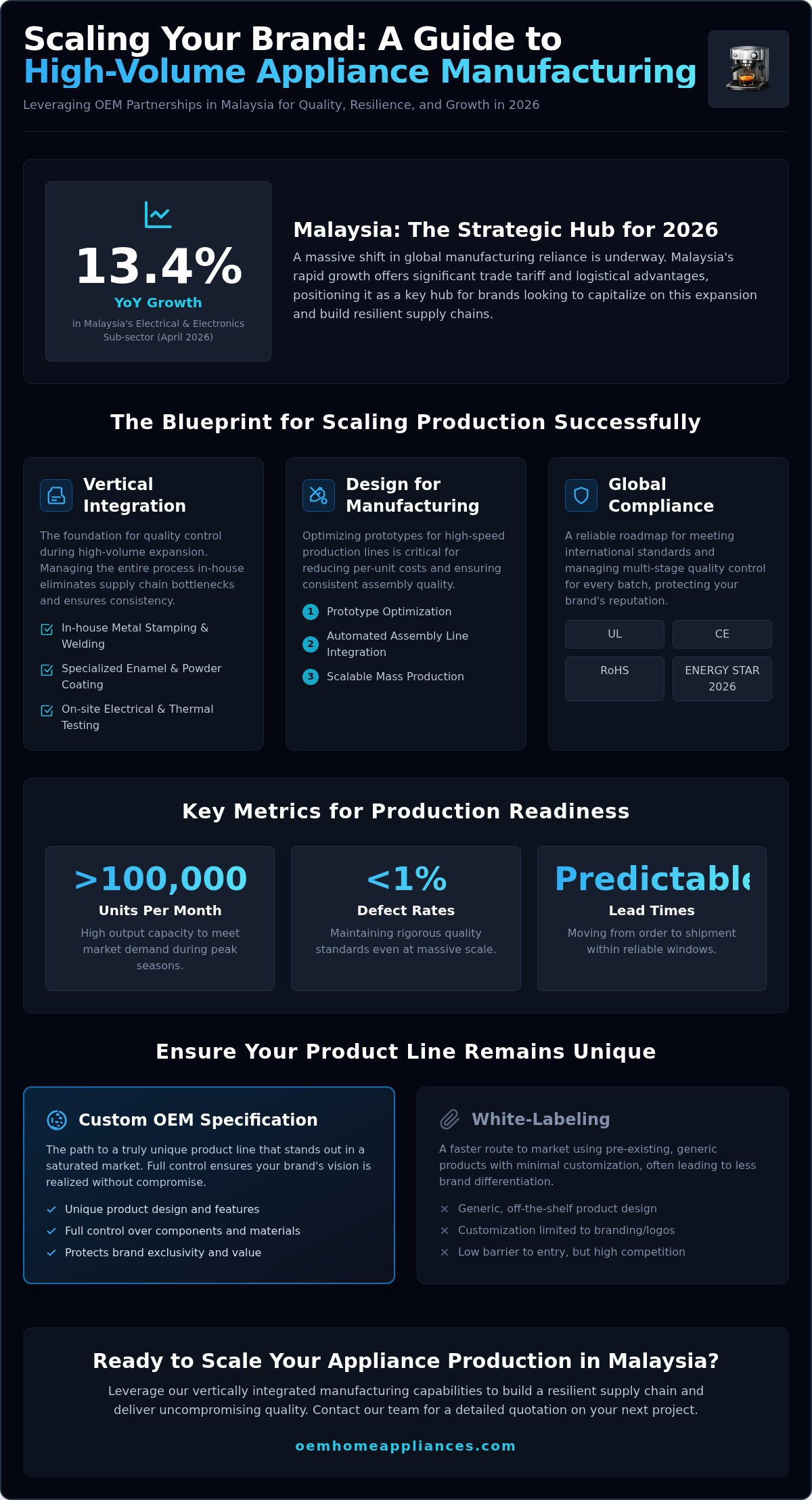
Malaysia's electrical and electronics sub-sector saw a 13.4% year-on-year increase in sales in April 2026, signaling a massive shift in global manufacturing reliance. For brands looking to capitalize on this growth, securing reliable, large scale appliance production is no longer just an operational goal; it's a competitive necessity. You've likely experienced the frustration of quality dipping as volumes rise or facing opaque communication from OEM partners during supply chain disruptions. These bottlenecks don't just delay launches; they erode the trust you've built with your customers.
We believe that scaling should strengthen your brand, not strain it. This guide shows you how to leverage high-volume OEM partnerships to scale production while maintaining uncompromising quality and supply chain resilience. We'll examine the infrastructure required for bulk orders and explain how finding a partner with vertical integration can help you manage new 2026 ENERGY STAR requirements and shifting international tariffs with ease.
Table of Contents
Understanding the Dynamics of Large Scale Appliance Production
Large scale appliance production represents a sophisticated synthesis of automated precision, technical labor, and rigorous supply chain oversight. It marks a definitive transition from small-batch manufacturing toward total market saturation. This shift requires a move away from the principles of artisanal craft toward the established efficiencies of Mass Production, where volume drives down costs while maintaining a strict quality ceiling. In 2026, as Malaysia's electrical and electronics sub-sector continues its 13.4% year-on-year growth, the ability to scale rapidly is what separates market leaders from those struggling with backorders.
To evaluate production readiness, procurement officers must look beyond simple factory size. They need to analyze specific metrics that impact the bottom line. These key indicators include:
Lead Times: The ability to move from order to shipment within predictable windows, even during peak seasons.
MOQ Flexibility: Balancing high-volume efficiency with the need for inventory agility to avoid overstocking.
Defect Rates: Maintaining sub-1% failure rates even at outputs exceeding 100,000 units per month.
Established brands increasingly bypass generalist factories. They seek specialized OEM partners who understand the technical nuances of specific categories, such as enamel-coated roaster ovens or high-performance air fryers. This niche expertise ensures that large scale appliance production doesn't dilute the brand's unique value proposition. Explore our specialized manufacturing services to see how we bridge the gap between design and scale.
The Role of Automation in Modern Appliance Lines
Automation is essential for reducing human error in complex assemblies like air fryers. While robots handle repetitive tasks with micron-level precision, manual quality checks remain vital for aesthetic and tactile verification. This hybrid approach ensures every component fits perfectly every time. For kitchenware production in 2026, Smart Manufacturing is defined as the integration of real-time data analytics with automated hardware to ensure every unit meets precise technical specifications without manual intervention.
Economic Advantages of High-Volume Manufacturing
High-volume manufacturing unlocks significant economies of scale. By spreading the fixed costs of R&D and specialized tooling over larger runs, the per-unit cost of roaster ovens and kettles drops substantially. It's a strategic move that allows brands to reinvest savings into marketing or product development. Strategic inventory management then ensures these products reach global markets efficiently, mitigating the risks of stockouts during peak demand cycles. When you scale correctly, your margins grow alongside your volume.
Essential Infrastructure for High-Volume OEM Manufacturing
Effective large scale appliance production requires more than just floor space; it demands a vertically integrated ecosystem that controls every stage of the manufacturing process. When a factory manages its own metal stamping, welding, and finishing, it eliminates the supply chain bottlenecks that often plague generalist assemblers. This level of oversight is a primary reason Why Malaysia is the Hub for international brands seeking reliable manufacturing partners in 2026. By keeping specialized processes in-house, manufacturers ensure that technical transparency isn't lost between subcontractors.
Infrastructure must also include comprehensive testing facilities for electrical safety and thermal performance. Brands scaling in 2026 face stricter regulatory environments, including updated ENERGY STAR requirements that demand a 15% reduction in power consumption for certain categories. Without on-site labs to verify these metrics during the prototyping phase, a brand risks significant delays or compliance failures at the final hurdle. If you're currently evaluating a partner's technical capacity, reach out to our engineering team for a facility overview.
Specialized Coating and Finishing Capabilities
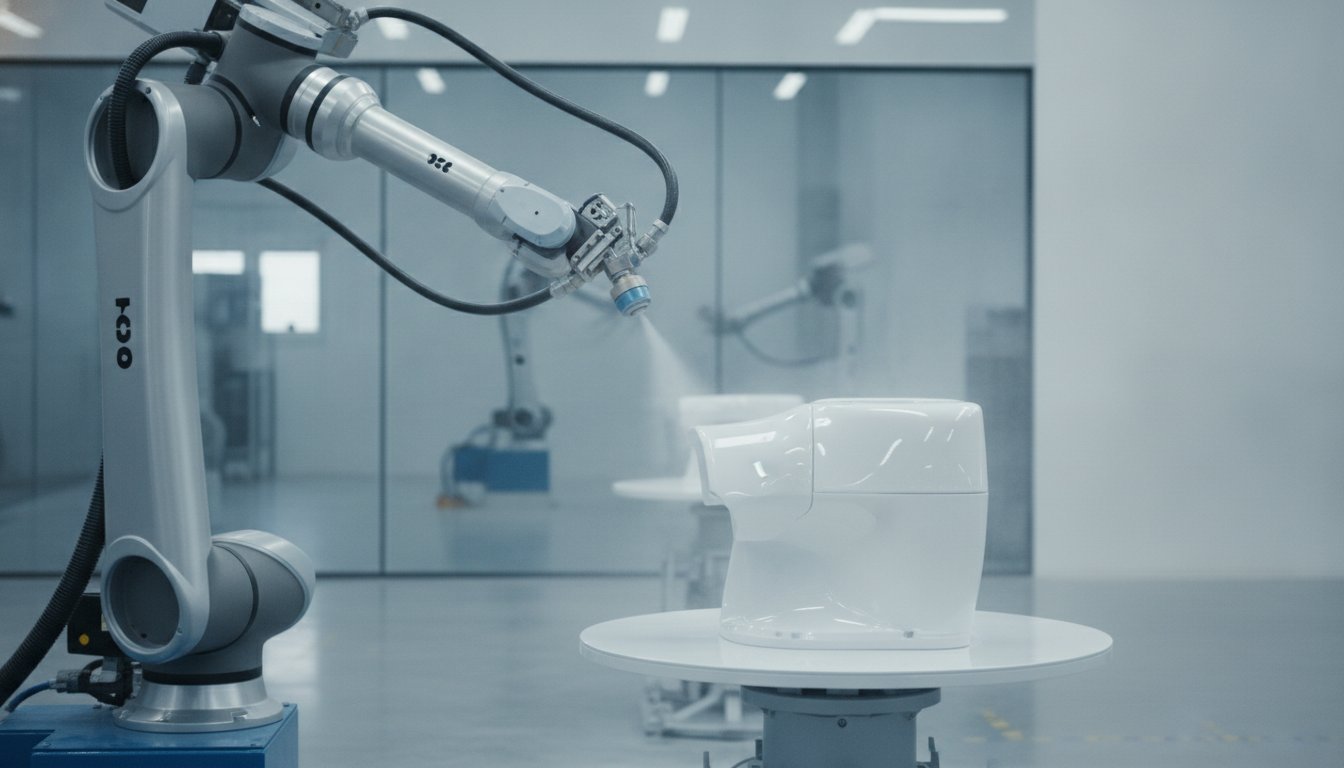
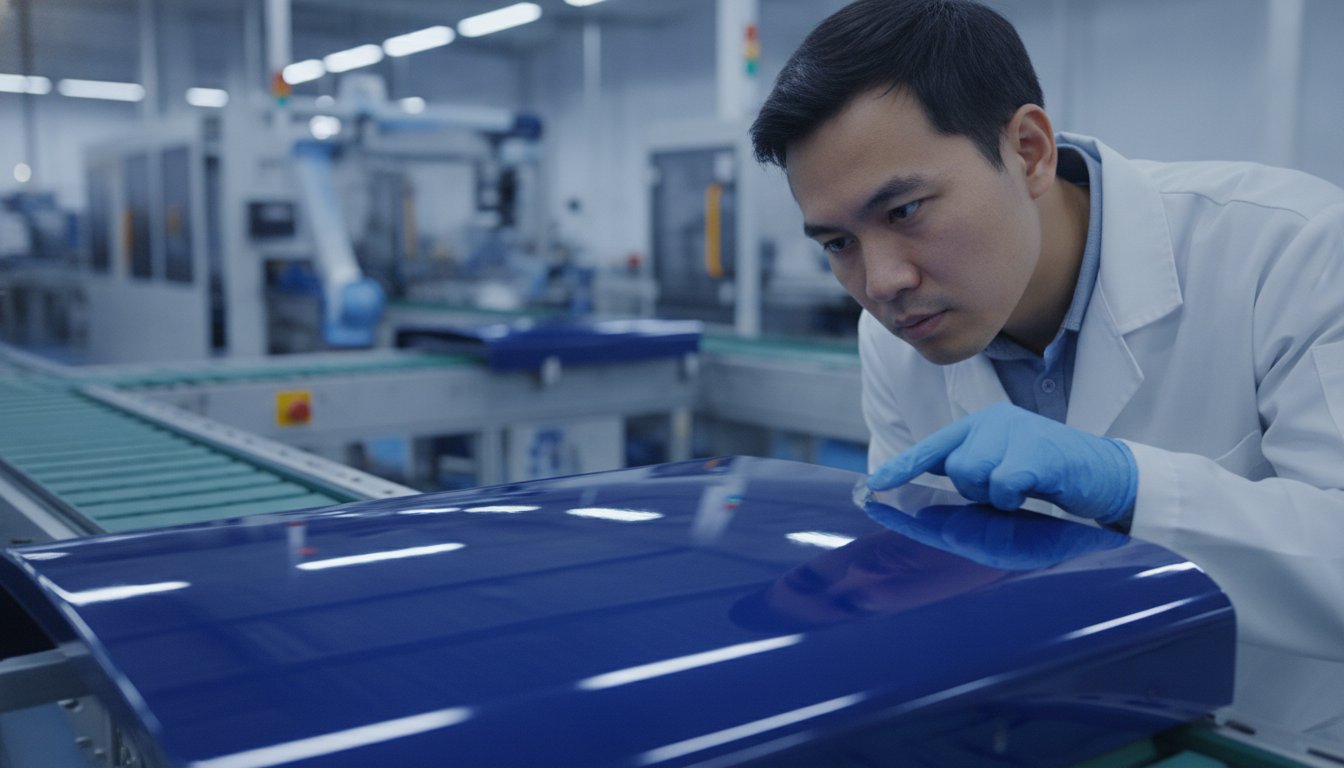
Consistency is the biggest challenge when scaling to hundreds of thousands of units. For premium lines, industrial enamel coating for cookware provides a superior thermal finish that resists scratching and chemical erosion. The enamel coating process for roaster ovens serves as a benchmark for durability, ensuring that high-heat appliances maintain their aesthetic and functional integrity over years of use. Similarly, powder coating for metal components in BBQ grills and outdoor equipment must meet strict salt-spray and UV resistance standards. Maintaining this level of aesthetic consistency across 100,000 units requires automated coating lines that eliminate the variances of manual application.
R&D and Technical Development Workflows
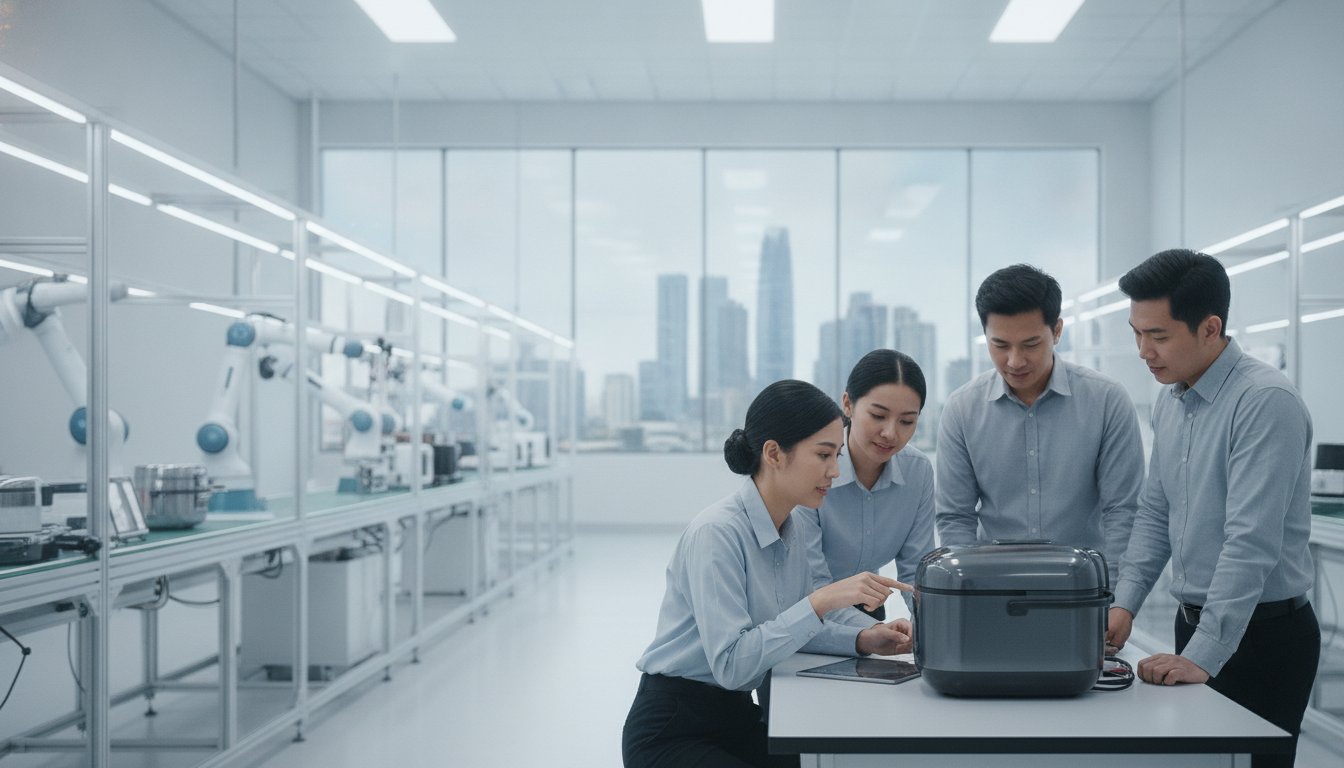
Success in large scale appliance production starts long before the assembly line moves. Advanced kitchen appliance R&D services act as a bridge between a conceptual design and a mass-producible reality. Prototyping allows engineers to identify potential failure points in electrical safety or thermal performance before they become costly recalls. This phase is especially critical as brands navigate the transition to induction technology and AI-driven ecosystems. Engineering for energy efficiency in modern rice cookers or air fryers doesn't just meet 2026 regulatory standards; it lowers long-term operational costs for the end-user. Robust R&D labs ensure that every bulk order arrives fully compliant with CE, UL, and RoHS standards.
Scaling Strategies: Transitioning from Prototyping to Mass Production
Transitioning from a functional prototype to large scale appliance production requires a rigorous Design for Manufacturing (DFM) phase. DFM isn't just about making the product work; it's about making it work on a high-speed assembly line without increasing defect rates. Engineers analyze every screw, clip, and circuit board layout to ensure they're optimized for automated assembly. This process often involves transitioning from white-label designs to custom OEM specifications that reflect your brand's unique identity. Precision in these early stages saves your margins later.
Pilot runs aren't optional. Before committing to a full-scale launch, we recommend executing smaller production batches that simulate the full manufacturing environment. They're essential for identifying bottlenecks in the assembly sequence or unforeseen material stresses that only appear at speed. By catching these issues early, you avoid the catastrophic costs of a line stoppage during a major production run. For a deeper look at choosing the right partner for this transition, see our Strategic Guide to Selecting a Private Label Kitchen Appliance Manufacturer.
OEM vs. ODM: Choosing the Right Scaling Model
Choosing between OEM and ODM models depends on your brand's speed and customization needs. Don't confuse the two. Use an OEM model when you've developed proprietary technology, such as a unique airflow system for custom air fryers. This gives you total control over the intellectual property. Conversely, leveraging an ODM model allows for faster market entry by using proven appliance platforms that require only aesthetic or minor functional tweaks. Many established brands now use hybrid models. They use ODM for basic kettle or blender lines while investing in full OEM for their flagship cooking equipment.
Supply Chain Synchronization
Reliable output depends on the synchronization of your entire supply chain. Sourcing high-grade components is the first priority for any high capacity rice cooker factory operation. In 2026, the trend toward regionalizing supply chains helps mitigate the risks of global disruptions. While Just-in-Time (JIT) manufacturing reduces storage costs, maintaining a strategic safety stock is vital for large scale appliance production to buffer against sudden demand spikes. Navigating global logistics for bulk appliance shipments requires a partner who understands the nuances of international shipping and tariff management, especially given the current 10% additional tariff on Malaysian goods entering the U.S. market.
Mitigating Risks in Global Supply Chains and Production Lines
Operating at the level of large scale appliance production introduces complex risks that can derail a brand's market position if not managed with precision. Global volatility, from shifting trade policies to fluctuating raw material costs, requires a proactive mitigation strategy. Successful brands don't just react to disruptions; they build resilient systems that prioritize technical transparency and quality stability. Protecting your brand's integrity means ensuring that every unit leaving the factory floor is a perfect representation of your design. Explore our insights on Quality Standards in Global Roaster Oven Production to understand how these benchmarks are maintained at scale.
Compliance is the non-negotiable foundation of risk management. Meeting UL, CE, and RoHS standards at scale requires more than a certificate; it demands a manufacturing partner that integrates these requirements into the daily production workflow. Intellectual Property (IP) protection is equally vital in a B2B partnership. Brands must ensure their proprietary heating elements or airflow designs are secured through strictly controlled manufacturing environments. When scaling, the goal is to expand your reach without compromising the unique technical advantages that define your product line.
Quality Management Systems (QMS) for Bulk Orders
Managing quality for bulk orders relies on the rigorous application of Acceptable Quality Level (AQL) standards. These protocols define the maximum number of defects allowed in a production batch before it's rejected, providing a clear mathematical framework for quality expectations. We utilize both in-line inspections, which catch errors during assembly, and final-stage protocols to verify the finished product's performance. Achieving and maintaining ISO 9001 certification is the definitive standard for operational excellence in 2026 appliance manufacturing, providing the necessary framework for consistent process improvement and risk reduction. This systematic approach ensures that high-volume output never translates to high-volume returns.
Resiliency Against Market Disruptions
Supply chain resiliency is achieved through diversification and local network strength. Relying on a single-point failure for critical components like thermostat sensors or specialized coatings is a significant operational hazard. Partnering with a private label air fryer manufacturer that maintains robust local networks in Malaysia allows brands to bypass many of the bottlenecks associated with long-distance raw material shipping. This proximity reduces lead times and provides a buffer against global logistics delays. Additionally, managing energy costs through sustainable, high-volume facility practices is essential for maintaining price stability in a competitive 2026 market. If you're ready to secure your production line, contact us for a detailed manufacturing quotation tailored to your scale.
Why Malaysia is the Hub for Large Scale Appliance Production
Malaysia has solidified its position as a global manufacturing powerhouse in 2026, with the electrical and electronics sub-sector recording a 13.4% year-on-year increase in sales as of April. This growth isn't accidental. It reflects a strategic shift by global brands seeking more than just low-cost assembly. Large scale appliance production in Malaysia offers a unique combination of technical expertise, stable governance, and geographic advantage. While other regions struggle with shifting labor costs, Malaysia's manufacturing workforce of 2.4 million people provides the specialized skills needed for complex electrical engineering and high-end metal finishing.
The "Malaysia vs. China" debate has evolved significantly. Brands now prioritize supply chain resilience and quality over the absolute lowest unit cost. Malaysia provides a sophisticated middle ground, offering advanced enamel and powder coating capabilities that generalist factories elsewhere often lack. Additionally, the new manufacturing tax incentive framework implemented in March 2026 offers projects either a Special Tax Rate or an Investment Tax Allowance for up to 15 years. This makes the region an financially sound choice for long-term production roadmaps, even when accounting for the 10% Section 301 tariffs currently applied to Malaysian goods entering the U.S. market.
Logistical and Trade Advantages
Malaysia serves as a vital gateway between Eastern and Western markets. Its world-class port infrastructure ensures the efficient global distribution of bulk appliance orders. With manufacturing sector sales hitting RM173.1 billion in March 2026, the local ecosystem is built for high-volume output and rapid export. International kitchenware brands benefit from established trade agreements that streamline customs processes and reduce administrative delays. This stability is a critical asset for businesses looking to maintain a consistent presence on retail shelves without the risk of sudden geopolitical or logistical blockages.
Request a Quotation for Your Next Scale-Up
Partnering with oemhomeappliances gives your brand access to a dedicated B2B engine focused on industrial strength and meticulous execution. We specialize in empowering established brands through custom roaster oven manufacturing and high-volume production of air fryers, rice cookers, and kettles. Our technical team is ready to discuss your 2026 production roadmap and help you navigate the complexities of international compliance and technical specifications. We act as the quiet backbone for your growth, ensuring your products meet the highest standards of durability and performance. Contact our Malaysia team for a detailed production quote and take the next step in scaling your appliance line with a partner you can trust.
Securing Your Production Future in 2026
Sustainable growth in the kitchenware sector requires a shift from reactive sourcing to proactive strategic partnership. You've seen how vertical integration and specialized finishing like enamel and powder coating create a foundation for quality that stands up to high-volume demand. By prioritizing rigorous quality management and leveraging Malaysia's logistical strengths, your brand can navigate the complexities of 2026's regulatory and trade landscape with confidence.
Success in large scale appliance production isn't just about the number of units shipped. It's about ensuring each roaster oven, air fryer, and rice cooker reinforces your brand's reputation for excellence. We operate exclusively as a B2B partner, which means we don't compete with you in the retail space. Our focus remains entirely on being the dependable backbone for your global expansion.
Ready to move from planning to execution? Request a custom manufacturing quotation for your Malaysia-based production needs today. Our technical team is standing by to help you translate your 2026 product roadmap into a tangible, high-quality reality. Let's build a resilient supply chain that empowers your brand to lead the market.
Frequently Asked Questions
What is considered "large scale" in kitchen appliance manufacturing?
Large scale appliance production is generally defined by monthly outputs that exceed 10,000 units per SKU. It requires fully automated assembly lines and a synchronized supply chain to maintain unit cost efficiency. This volume allows brands to achieve market saturation while amortizing fixed R&D and tooling costs across a wider distribution base.
How does oemhomeappliances ensure quality consistency across high-volume orders?
We maintain consistency through a rigorous Multi-Stage Quality Control system. This involves in-line inspections at critical assembly points and final-stage AQL (Acceptable Quality Level) testing. By integrating these checks into the daily workflow, we identify and resolve variances before products reach the shipping stage.
Can I customize the coating for my private label appliances?
You can fully customize coatings to differentiate your brand's aesthetic and durability. We specialize in industrial enamel coating for roaster ovens and high-performance powder coating for metal components. These finishes are applied using automated lines to ensure color and texture consistency across every unit in your order.
What are the typical lead times for bulk roaster oven production in Malaysia?
Lead times depend on the specific technical requirements and order volume. Once the prototyping phase is complete and raw materials are secured, we establish a methodical production schedule. This ensures predictable delivery windows for global distribution, even during peak seasonal demand cycles.
Does oemhomeappliances handle the R&D and prototyping phase for new brands?
Our team provides complete product design and development services for established brands looking to expand their lines. We handle the technical R&D and prototyping phases to ensure every design is optimized for high-speed manufacturing. This process mitigates risk by identifying potential engineering challenges before you commit to a full production run.
How do you manage intellectual property during the OEM process?
Intellectual property is secured through strictly controlled manufacturing environments and binding B2B agreements. We act as a silent backbone for your brand; we don't compete in the retail market. Your proprietary designs, heating elements, and airflow systems remain your exclusive property throughout the manufacturing partnership.
What certifications do your large-scale production facilities hold?
Our production facilities hold ISO 9001 certification, reflecting our commitment to international quality management standards. We engineer and manufacture appliances to comply with UL, CE, and RoHS requirements. This ensures your products are ready for immediate entry into major Eastern and Western markets.
Is it possible to scale production from 5,000 to 50,000 units within a single year?
Scaling from 5,000 to 50,000 units is a core capability of our high-capacity infrastructure. This rapid expansion is made possible by our vertical integration, including in-house metalwork and coating processes. We coordinate the necessary labor and supply chain logistics to ensure your large scale appliance production remains stable during periods of rapid brand growth.
Comments