Sourcing Kitchen Appliance Manufacturers: A Strategic 2026 B2B Guide
With a 25% federal tariff on imported appliances now in full effect, the traditional playbook for sourcing kitchen appliance manufacturers has officially expired. You've likely felt the impact as major brands like GE and LG hiked prices by up to 11% this summer; meanwhile, some factories have even stopped honoring signed contracts. It's a frustrating reality where lead times slip and quality in metal finishing remains inconsistent. You need more than just a vendor. You need a technical partner that can bridge the gap between complex R&D and high-volume mass production without the typical overseas risks.
This guide provides a strategic framework to master these procurement complexities. You'll learn how to vet appliance factories for long-term reliability and discover how specialized technical solutions, such as in-house enamel and powder coating, can elevate your brand's durability. We'll explore why Malaysia has emerged as a stable, high-quality alternative for OEM production in 2026, offering the precision and scalability required to protect your margins. By the end of this article, you'll have a clear path to reducing production risk and securing a partnership that empowers your brand to grow.
Table of Contents
What is Strategic Sourcing for Kitchen Appliance Brands?
Strategic sourcing in 2026 is a data-driven methodology that aligns your long-term business goals with the technical capabilities of your production partners. It's no longer just about the lowest unit cost. With a 25% tariff on imported appliances and price volatility across the industry, sourcing kitchen appliance manufacturers now requires a focus on total value and supply chain resilience. While procurement manages day-to-day transactions, strategic sourcing identifies the partners capable of supporting your brand's growth through technical excellence and stable logistics.
Appliances demand deeper technical vetting than generic consumer goods. A blender or a rice cooker isn't just a plastic shell; it's a complex assembly of motors, heating elements, and food-safe coatings. Reliability depends on the factory's ability to maintain tight tolerances and consistent quality in specialized finishes like enamel or powder coating. A refined framework for sourcing kitchen appliance manufacturers ensures your supply chain can withstand geopolitical shifts while maintaining the high standards your customers expect.
Tactical vs. Strategic Sourcing Models
Tactical sourcing is a short-term approach focused on immediate price wins. It often fails in high-complexity categories like air fryers or roaster ovens because it ignores the hidden costs of poor quality and unreliable lead times. Strategic sourcing builds a resilient network of specialized factories. By transitioning from transactional buying to a strategic manufacturing partnership, you secure priority production slots and access to R&D resources that generic vendors can't provide. It turns your supply chain into a competitive advantage rather than a logistical hurdle.
The Impact of Sourcing on Product Lifecycle
Your early sourcing decisions dictate your future R&D potential. Partnering with a specialized Original Equipment Manufacturer (OEM) allows you to leverage existing engineering expertise to iterate on products faster. The cost of poor sourcing is high. Recalls, inconsistent finishing, and brand damage can wipe out years of marketing investment. Using strategic sourcing as a tool for market entry ensures your pricing remains competitive while your technical standards remain elite. This is especially true when working with partners in Malaysia, where established infrastructure supports rapid scaling and consistent mass production from the first prototype to the final retail unit.
Core Technical Criteria for Evaluating Appliance Manufacturers
Effective sourcing kitchen appliance manufacturers requires a shift from examining balance sheets to inspecting factory floor capabilities. You must verify that a partner has deep expertise in your specific category. When you're sourcing kitchen appliance manufacturers, a factory that produces generic plastic kettles might lack the engineering rigor required for roaster ovens or high-pressure rice cookers. These products involve complex heat distribution and safety sensors that demand high-level component precision even during high-volume production runs.
A manufacturer's ability to scale without compromising quality is the benchmark of a true OEM partner. You need a facility that maintains rigorous quality control across 10,000 units just as strictly as it does for the first 100. This precision ensures that every air fryer or blender leaving the line meets international safety standards and functions exactly as designed. Without this consistency, your brand faces the high costs of returns and reputation damage.
Specialized Coatings and Material Science
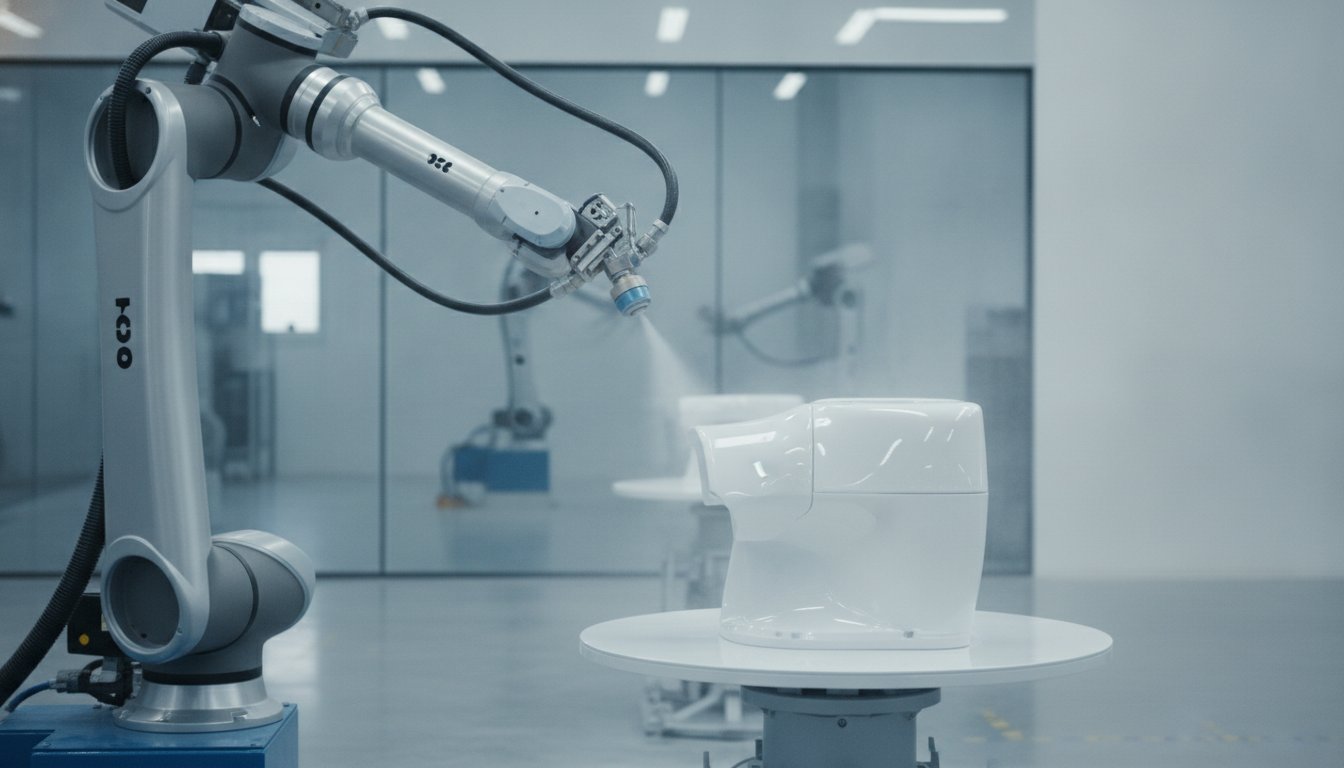
Durability in the kitchen environment depends on material science. Enamel-coated products are the industry standard for food safety and heat resistance, yet many factories outsource this critical step. By choosing a partner with in-house enamel and powder coating capabilities, you eliminate a common point of failure in the supply chain. Powder-coated metal components provide the aesthetic longevity necessary for premium brand positioning. You can explore our technical manufacturing services to see how integrated coating processes stabilize quality across large orders.
R&D and Engineering Readiness
Modern product development moves fast. According to the US Home Appliances Market Report 2026, regionalization and AI-driven efficiency are reshaping how brands iterate on new designs. Your manufacturer must offer more than just a production line; they need an engineering team ready for bespoke product design. This includes rapid prototyping services that allow you to test functionality before committing to mass-market tooling.
Transitioning from a 3D-printed prototype to a full production run is where most sourcing relationships fail. A reliable OEM partner manages this transition by providing technical solutions for complex engineering challenges, such as airflow optimization in air fryers or structural integrity in portable cooking equipment. Our facility in Malaysia is equipped to handle these high-precision demands while maintaining global export standards. If you're ready to discuss how these technical standards can be applied to your next product line, reach out to our specialist team in Malaysia for a technical consultation.
Global Sourcing Trends: Why Malaysia is a Strategic Hub in 2026
The global manufacturing landscape is undergoing a fundamental realignment. Following the federal government's implementation of a 25% tariff on imported appliances in April 2026, procurement officers are aggressively diversifying their supply chains. This shift has positioned Malaysia as a premier destination for sourcing kitchen appliance manufacturers. Unlike traditional hubs that are currently facing severe price hikes and contract volatility, Malaysia offers a stable environment backed by a projected $1.73 billion in home appliance exports for 2026.
Malaysia combines a highly skilled workforce with an established industrial infrastructure. This makes it an ideal location for producing high-end goods like roaster ovens and air fryers that require technical precision. Logistically, Malaysia's central position within the ASEAN region provides a streamlined path to global markets, ensuring that lead times remain predictable even when other regions experience congestion. By sourcing kitchen appliance manufacturers in this region, brands can insulate themselves from the geopolitical disruptions that have plagued the industry throughout the mid-2020s.
Supply Chain Resilience and Risk Mitigation
Adopting a "China Plus One" strategy is no longer a luxury; it's a requirement for brand survival. Relying on a single manufacturing region exposes your business to sudden regulatory changes and price surges, such as the 11% increases recently seen from major US-market brands. Malaysian factories provide a high-quality alternative that adheres to the same rigorous standards found in more expensive European or North American facilities. For a deeper look at how to navigate these choices, consult our Strategic Guide to Selecting a Private Label Kitchen Appliance Manufacturer.
Quality Control and Compliance in Malaysia
Compliance is the backbone of the Malaysian manufacturing sector. Factories here operate under strict adherence to international safety standards for electrical kitchen equipment, which is critical for B2B brands looking to avoid the liability of poor-quality components. Regular factory audits and a commitment to sustainable production have turned the "Made in Malaysia" label into a mark of premium OEM quality. This focus on ethical and technical excellence ensures that the portable cooking equipment or kettles you source today will maintain your brand's reputation for years to come.
The 5-Step Framework for Sourcing Appliance Partners
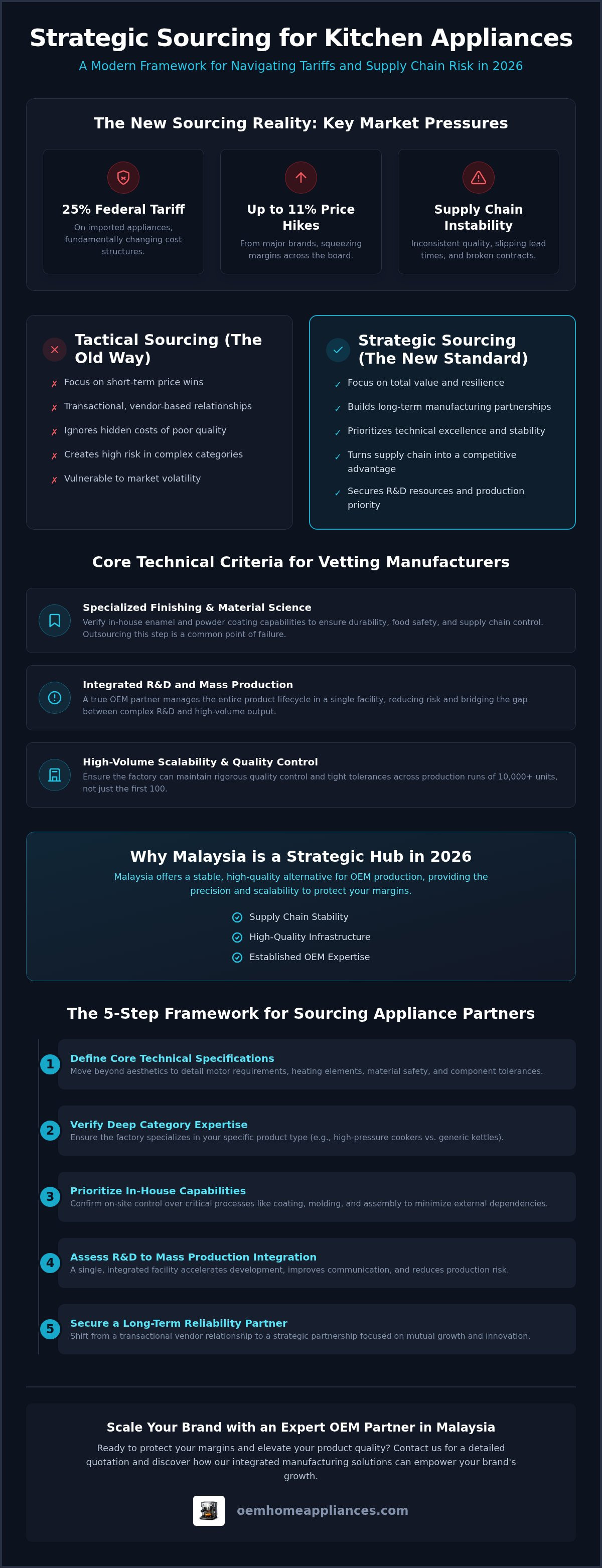
Successful sourcing kitchen appliance manufacturers depends on a repeatable, technical framework that prioritizes engineering over simple unit pricing. In a market where major brands are currently raising prices by up to 11%, a methodical approach protects your margins and brand equity. Follow these five essential steps to secure a reliable partner:
Step 1: Define Technical Specifications. Document exact wattage requirements, internal capacity, and material grades, such as 304 stainless steel.
Step 2: Identify Specialized OEM Factories. Screen for manufacturers with a proven track record in your specific category, such as air fryers or rice cookers.
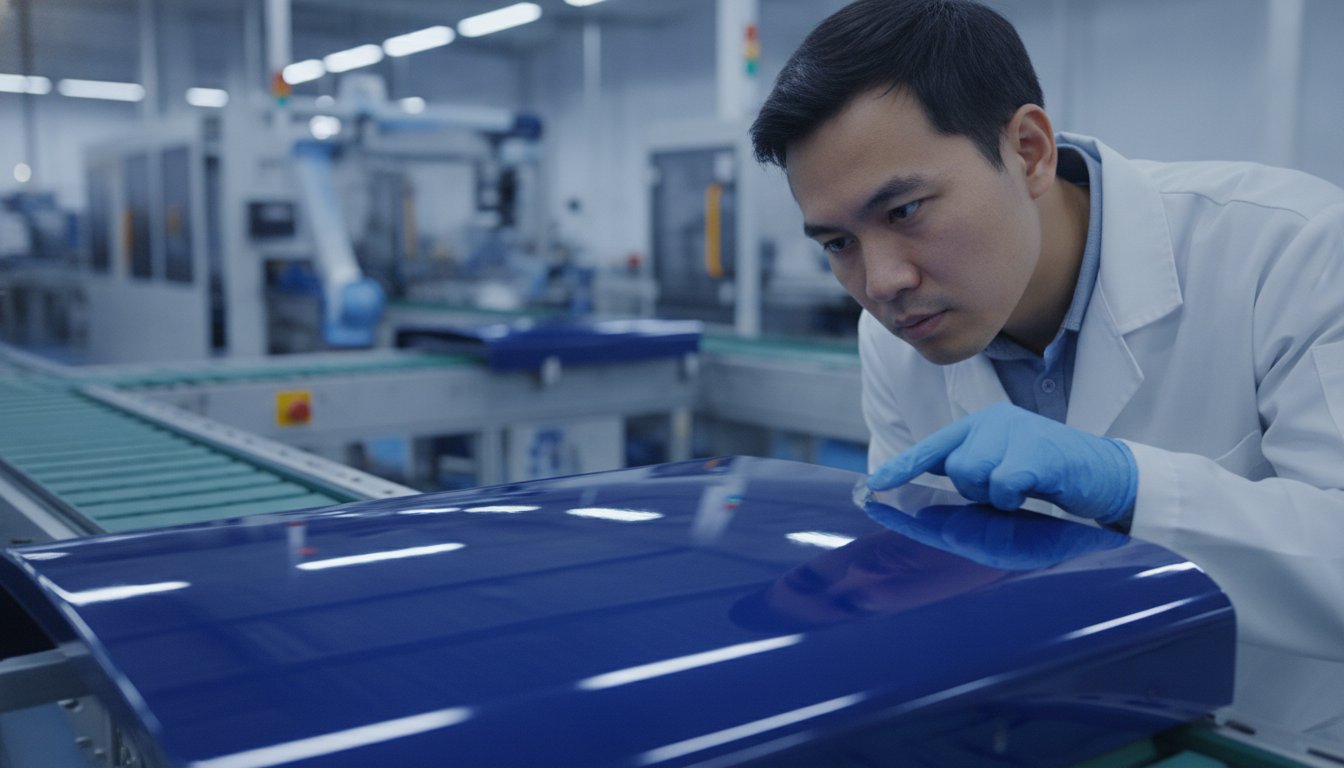
Step 3: Evaluate Technical Samples. Conduct rigorous testing on samples to inspect enamel finish durability and the precision of component fitting.
Step 4: Verify Compliance. Perform a factory audit to ensure adherence to international safety standards and ethical labor practices.
Step 5: Finalize Scalability Plans. Establish a private label agreement that includes clear roadmaps for volume increases and future product iterations.
Defining Your Technical RFP
Your Request for Proposal (RFP) is the first filter for technical competence. A vague RFP invites low-quality bids. You must specify heating element types for air fryers or the exact thickness of enamel coatings. If you're focusing on high-capacity cooking equipment, our Custom Roaster Oven Manufacturing Guide provides a blueprint for drafting these technical requirements. This level of detail ensures the factories you engage have the machinery and expertise to meet your standards.
Negotiating for Scalability and Quality
Negotiation should focus on quality consistency rather than just the bottom line. The process of sourcing kitchen appliance manufacturers should result in a partnership, not just a transaction. It's vital to set clear Key Performance Indicators (KPIs) for lead times and maximum allowable defect rates in bulk orders. A strategic partner in Malaysia will work with you to establish these benchmarks, ensuring that as your brand scales, the quality of your portable cooking equipment remains elite. Establishing these terms early prevents quality drift during mass production.
If you need a partner capable of executing this rigorous framework, get a quotation for your appliance project in Malaysia to see how our technical expertise can support your growth.
Scaling Your Brand with an Expert OEM Partner in Malaysia
Choosing oemhomeappliances means aligning with a partner that operates with quiet authority in the manufacturing sector. We act as a dedicated engine for your brand's growth, functioning as a trusted expert facilitator that understands the practicalities of global distribution. Our B2B-only model is a fundamental advantage; we don't compete with you in the retail market. This clear division of labor allows you to focus on marketing and expansion while we handle the industrial execution. By sourcing kitchen appliance manufacturers that prioritize this partnership-oriented approach, you secure a stable backbone for your entire product line.
Technical stability is the hallmark of our facility in Malaysia. We manage specialized coating processes like enamel and powder coating in-house to prevent the quality drift common with outsourced subcontractors. This vertical integration is critical for maintaining the high standards required for roaster ovens and portable cooking equipment. In a market defined by supply chain fragility, having a reliable Malaysian partner streamlines your operations and protects your margins from unexpected regional disruptions. We provide the industrial strength necessary to execute complex designs at scale without compromising on component precision.
Your Path to Market Entry and Growth
Expansion shouldn't be slowed down by R&D bottlenecks. Our private label services enable you to quickly introduce new items like air fryers or rice cookers into your portfolio. We bring deep engineering expertise to every project, particularly in categories like roaster oven design and development. You can explore our technical manufacturing services to see how our bespoke solutions support mass-market scaling. This approach allows your brand to enter new categories with the confidence of a seasoned industry veteran, leveraging our existing infrastructure to reduce your time-to-market.
Conclusion and Next Steps
Technical vetting remains the most critical factor for long-term success in the appliance industry. As you navigate the complexities of 2026 procurement, remember that a partner's industrial strength and process innovation are your best defenses against market volatility. Malaysia offers the trade stability and infrastructure needed to sustain high-volume growth while avoiding the tariff pressures found in other regions. Establishing a relationship with a specialized OEM manufacturer is the most effective way to ensure your brand's durability and technical elite status.
If you're ready to secure a manufacturing partner that prioritizes your brand's precision and scalability, our team is here to help. We invite you to contact oemhomeappliances for a custom quotation on your next high-volume project. Our specialists in Malaysia are ready to provide technical solutions tailored to your specific business needs. Requesting a quote today is the first step toward a more resilient and profitable supply chain.
Securing Your Supply Chain Advantage in 2026
Success in the kitchenware market now depends on moving beyond transactional buying toward technical manufacturing partnerships. By prioritizing regional stability and specialized expertise, you can insulate your brand from the price volatility and tariff pressures currently reshaping the industry. Diversifying your production into Southeast Asian hubs like Malaysia provides the infrastructure and skilled labor necessary for high-volume growth without the risks of quality drift.
Mastering the process of sourcing kitchen appliance manufacturers requires a focus on factory capabilities that extend into R&D and specialized finishing. Our facility provides dedicated B2B support for brands scaling their lines of roaster ovens and air fryers. We manage the technical complexities of enamel and powder coating services in-house; this ensures that every component meets your exact specifications. This integrated approach reduces production risk and empowers your brand to compete at an elite level.
Take the next step in optimizing your procurement strategy. We invite you to contact our Malaysia-based team for a custom manufacturing quotation to discuss your technical requirements. Our experts are ready to help you build a more resilient and scalable product portfolio. We look forward to facilitating your brand's success in the global marketplace.
Frequently Asked Questions
What is the difference between sourcing and procurement for kitchen appliances?
Sourcing is the strategic process of identifying and vetting long-term partners, while procurement is the tactical execution of buying. For kitchen brands, sourcing involves technical alignment on engineering and material standards. This strategic alignment protects your brand equity by ensuring that your partner can support complex R&D requirements rather than just fulfilling a one-time transactional order. Effective sourcing kitchen appliance manufacturers ensures your production partner can scale with your business.
Why should I consider sourcing kitchen appliance manufacturers in Malaysia?
Malaysia provides a stable, high-quality alternative to regions facing 2026 tariff hikes and contract volatility. The country has a robust export projection of $1.73 billion for home appliances this year. It offers skilled labor and established infrastructure that supports high-precision manufacturing. By sourcing kitchen appliance manufacturers in Malaysia, you mitigate geopolitical risks while maintaining access to specialized technical coatings. It's a strategic move for brands looking for long-term supply chain resilience.
How do I vet the quality of enamel coatings on OEM roaster ovens?
Evaluate whether the manufacturer manages the coating process in-house. In-house enamel facilities ensure better control over thermal shock resistance and surface uniformity. You should request samples to test for pinholing or uneven thickness, which can lead to rusting. A reliable partner will provide technical data sheets on the food-safe enamel grades used in their production. This transparency is vital for maintaining high safety standards across your entire product line.
What are the benefits of working with a private label kitchen appliance manufacturer?
Private label manufacturing allows you to launch new product lines without the high costs of independent R&D. You leverage existing engineering expertise to expand your portfolio quickly. This model provides access to specialized finishes like powder coating and enamel. It's an efficient way to scale your brand while focusing on your core strengths in marketing and retail distribution. This partnership model ensures that you remain competitive in a fast-moving kitchenware market.
Can a Malaysian factory handle high-volume production for air fryers and rice cookers?
Malaysian facilities are designed for high-volume mass production without sacrificing precision. These factories maintain rigorous quality control protocols across thousands of units for air fryers and rice cookers. The infrastructure supports consistent lead times and reliable logistics for global export. You get the industrial strength of a large-scale operation combined with the flexibility of a dedicated OEM partner that understands the nuances of private labeling and rebranding in the B2B sector.
What technical certifications should I look for in an appliance manufacturer?
Prioritize manufacturers with ISO 9001 certification for quality management systems. You also need safety-specific certifications like UL, CE, or CB to ensure compliance with international electrical standards. These marks prove the factory can produce safe, high-quality appliances for global markets. Always verify these certifications directly with the issuing bodies during your initial factory audit to ensure they're current and valid for the specific appliance categories you're sourcing.
How does OEM manufacturing help in scaling a kitchenware brand?
OEM manufacturing provides the industrial engine needed to expand your product catalog without building your own factories. It allows for rapid iteration on designs like blenders or kettles. You can leverage the manufacturer's existing supply chain for raw materials and components. This reduces your capital expenditure and speeds up your time-to-market for new appliance categories. It allows your brand to remain agile and responsive to changing consumer demands in the smart kitchen sector.
What is the typical lead time for custom kitchen appliance prototyping?
Custom prototyping typically takes between 4 and 12 weeks. This timeline covers initial 3D modeling, technical engineering, and functional testing. Complex products like roaster ovens may require more time for thermal testing and coating application. A structured prototyping phase ensures that the transition to mass production is seamless and free from technical defects. It's a critical step for refining the performance and aesthetics of your high-end kitchen appliances before full-scale manufacturing begins.
Request a quotation for your next appliance project in Malaysia. Contact our team in Malaysia for more information on our OEM and private label manufacturing services.

Comments