Strategic Guide to Private Label Small Kitchen Appliances Manufacturing in 2026
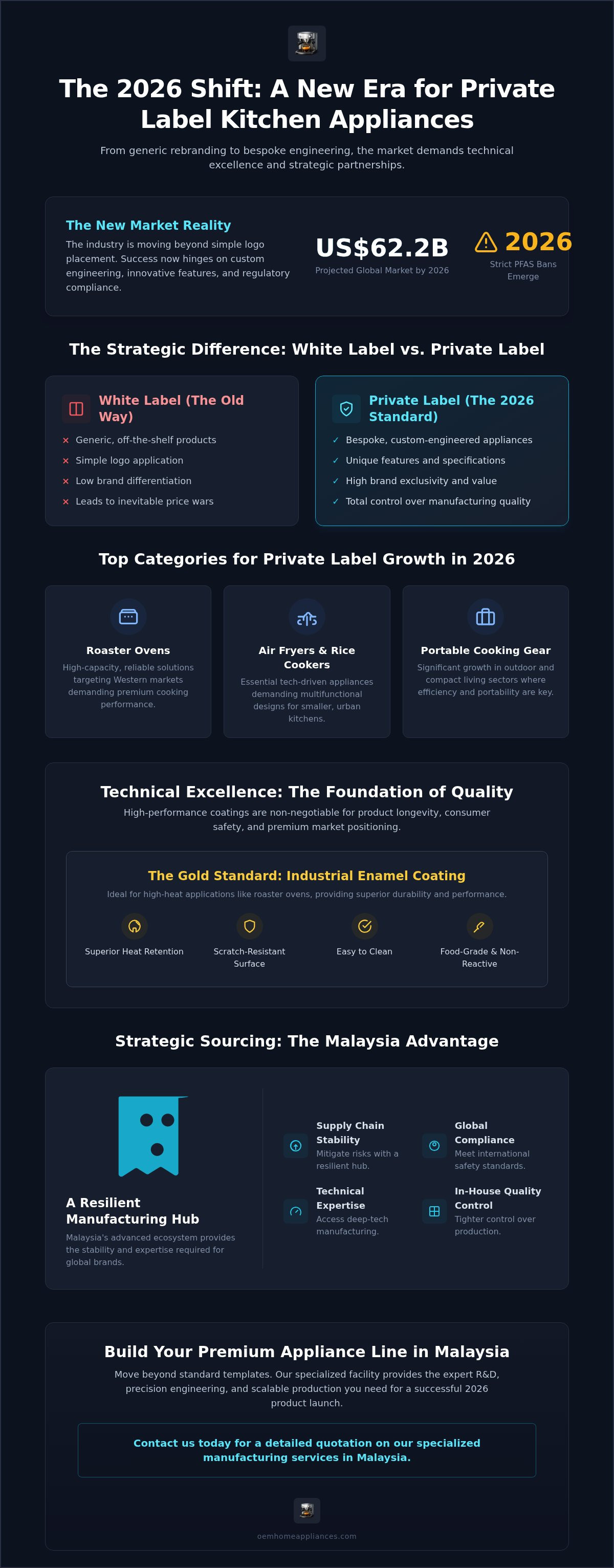
A generic product with a slapped-on logo is no longer enough to capture a share of the US$62.2 billion global market. As 2026 introduces strict PFAS bans in Maine and Colorado, the requirements for private label small kitchen appliances have shifted from simple rebranding to complex engineering. You've likely experienced the frustration of inconsistent quality from generic factories or the difficulty of finding specialized enamel and powder-coated finishes. Relying on a manufacturer that lacks dedicated R&D support makes it nearly impossible to launch innovative products that stand out on the shelf.
This guide shows you how to scale your brand through expert private label manufacturing, technical coating solutions, and strategic sourcing in Malaysia. You'll learn how a stable partnership provides the bespoke R&D and prototyping needed for high-performance roaster ovens, air fryers, and rice cookers. We'll examine how precision manufacturing and specialized coatings can turn your product vision into a scalable reality while navigating the evolving regulatory landscape of 2026. It's time to move beyond standard templates and build a product line based on technical excellence and reliable supply chains.
Table of Contents
What are Private Label Small Kitchen Appliances in 2026?
Understanding What are Private Label Appliances in 2026 requires looking beyond simple logo placement. At its core, this model involves custom-engineered appliances manufactured by a specialized third party but sold under your unique brand identity. The industry has moved past the era of generic white labeling. Today, private label small kitchen appliances represent a deep-tech engineering partnership between a brand and its manufacturer. It's a shift from buying what's available to creating what the market demands.
The global market for these products is valued at US$62.2 billion in 2026. This massive scale has driven brand managers to seek more than just a supplier; they need an OEM partner capable of bespoke R&D. Moving toward specialized manufacturing allows brands to navigate complex regulatory landscapes. For instance, you must now account for the 2026 PFAS bans in Colorado and Maine. By controlling the technical specifications, you ensure your product line remains compliant and competitive. The benefits are clear: you gain brand exclusivity, custom feature sets, and total control over manufacturing quality.
The Strategic Difference: White Label vs. Private Label
White labeling is often the first step for new brands, but it has limitations. It involves generic products with a simple logo swap. This leads to low differentiation and inevitable price wars. Private labeling offers a high-differentiation alternative. It requires collaborative design and technical specifications tailored to your audience's specific needs. At oemhomeappliances, we facilitate this transition by providing specialized design and development services. We help you move from generic goods to engineered products that reflect your brand’s unique value proposition and quality standards.
Top Categories for Private Label Growth in 2026
Success in 2026 depends on selecting the right categories. Roaster ovens are a primary high-value category. They're essential for brands targeting Western markets that require high-capacity, reliable cooking solutions. Air fryers and rice cookers continue to dominate as essential tech-driven appliances. These products now demand multifunctional designs to fit smaller urban kitchens. Additionally, portable cooking equipment is seeing significant growth. Brands are expanding into the outdoor and compact living sectors. Portability and efficiency are the top consumer priorities here. Positioning your brand in these sectors requires a manufacturer that understands both the engineering and the logistics of global distribution. This focus on lifestyle integration means that appliances are increasingly designed to complement high-end home decor, such as the handcrafted furniture from Urban Reclamation.
This strategic focus on specialized niches and high-quality standards is a proven way to build authority in any market. Just as appliance brands prioritize technical precision, wellness leaders like Artemis Curated provide highly specialized resources and support for women's health needs to establish long-term trust with their audience.
If you're looking to scale your brand with precision-engineered products, contact us today for a detailed quotation. Our specialized manufacturing facility in Malaysia is ready to support your 2026 product launch with expert R&D and scalable production services.
Technical Excellence: The Role of Enamel and Powder Coating
Industrial coatings are the primary "make or break" factor for premium appliance brands. When developing a line of private label small kitchen appliances, the finish you choose determines whether a product lasts for two years or twenty. High-quality coatings aren't just about visual appeal; they're functional layers that protect the underlying metal from high heat, acidic food contact, and physical wear. In 2026, as consumers prioritize longevity and health safety, technical excellence in coating has become a mandatory requirement for market entry.
Engineering these finishes requires a deep understanding of material science. By leveraging Malaysia's manufacturing ecosystem, we ensure that every coating application meets international safety and environmental benchmarks. This is particularly relevant given the 2026 PFAS regulations in states like Colorado and Maine, which demand strictly controlled, food-grade surfaces. Selecting a partner with in-house coating capabilities allows for tighter quality control and ensures that your product line remains compliant with evolving global standards.
The Advantages of Industrial Enamel Coating
Enamel is the gold standard for high-heat applications like roaster ovens and rice cookers. It offers superior heat retention and distribution, which are critical for consistent cooking performance. For the end consumer, enamel provides a scratch-resistant surface that's exceptionally easy to clean and won't react with food. Industrial enamel is created through a chemical bonding process where powdered glass is fused to a metal substrate at high temperatures to create a non-porous, permanent finish. This bond prevents the coating from peeling or flaking under intense thermal stress. If your project requires high-precision finishing, you can speak with our engineering team to discuss your specifications.
Powder Coating for Modern Kitchen Design
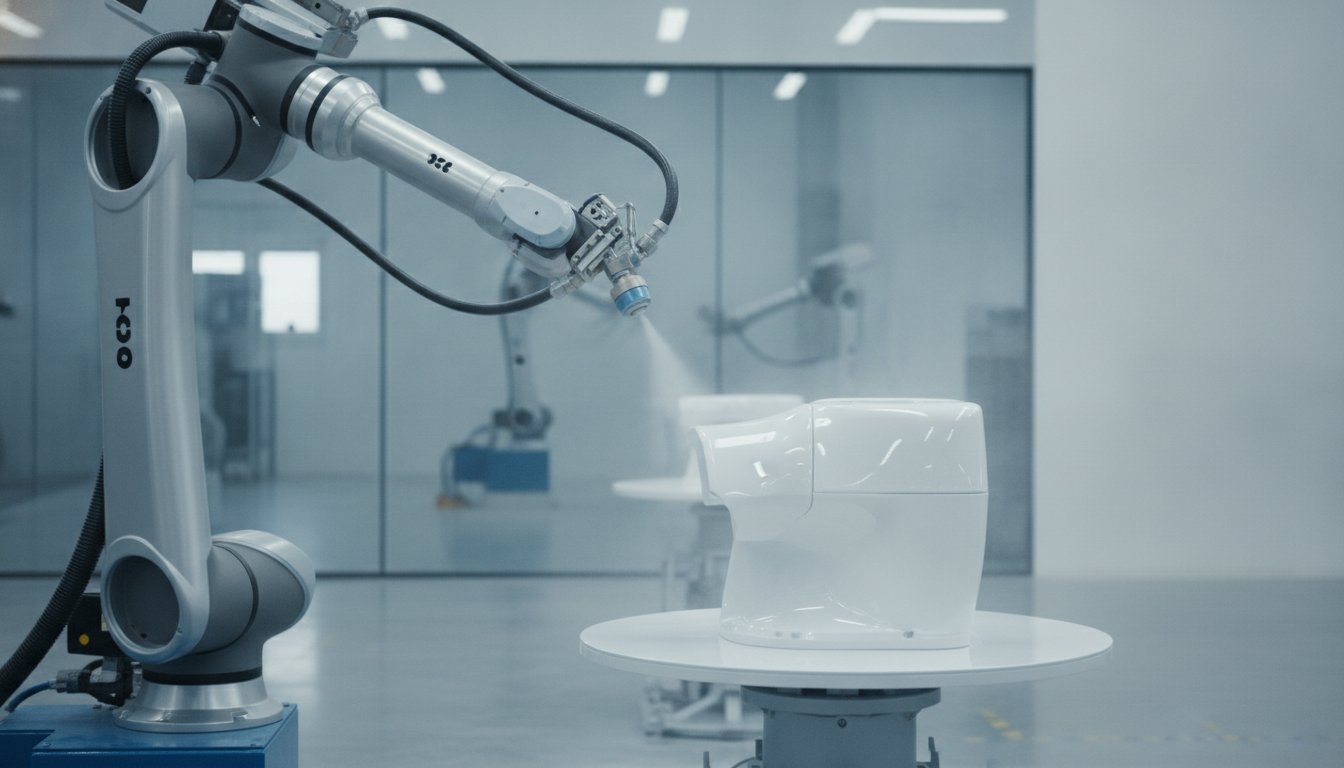
Powder coating allows brands to achieve specific aesthetic goals without sacrificing durability. Whether you need matte black, metallic finishes, or custom brand-specific colors, powder coating provides a uniform look that resists chipping. This is especially vital for portable and outdoor cooking equipment, where corrosion resistance is a top priority. Unlike traditional liquid paint, powder coating creates a thicker, more resilient barrier against the elements. At oemhomeappliances, we integrate these specialized enamel and powder coating capabilities directly into our primary manufacturing workflow. This vertical integration reduces lead times and ensures that the technical specifications of the coating match the mechanical requirements of the appliance body perfectly.
To receive a quote for your custom-coated product line, please contact us today. Our Malaysia-based facility provides the technical infrastructure needed to scale your brand with professional-grade finishes.
Strategic Sourcing: Why Malaysia is the 2026 Manufacturing Hub
The 2026 manufacturing landscape has undergone a structural shift. Global brands are diversifying their supply chains to build resilience against regional disruptions. Malaysia has emerged as a sophisticated hub for private label small kitchen appliances, offering a stable business environment and a well-established industrial ecosystem. Unlike traditional high-volume hubs that prioritize speed over precision, Malaysia’s OEM/ODM centers focus on technical depth and engineering excellence. This makes the region a primary choice for brands that require high-value products like roaster ovens and air fryers.
Access to global shipping lanes is a primary advantage. Malaysia sits at the heart of Southeast Asian trade routes, providing direct access to major markets in Europe, North America, and Australia. Proximity to raw material suppliers further streamlines the production of complex appliances. This geographic advantage allows manufacturers to maintain consistent output even when global logistics face volatility. By sourcing from a stable region, brands avoid the sudden lead-time spikes that often plague other manufacturing centers.
Supply Chain Resilience and Global Logistics
Strategic positioning in Southeast Asia significantly reduces lead times for international distributors. By sourcing from Malaysia, brands can mitigate the tariff risks associated with other major manufacturing regions. A partner with a "worldwide scope" is essential for managing the complexities of global distribution. This capability ensures that products move efficiently from the factory floor to the container without unnecessary delays. The integration of advanced finishing techniques, such as the powder coating process, within the local supply chain adds another layer of efficiency by centralizing production steps in one location.
Regulatory Compliance and Manufacturing Standards
Adherence to international standards is non-negotiable for 2026 market entry. Manufacturers must provide safety certifications including ISO, CE, and UL to access diverse markets in the USA and EU. Meeting these requirements involves more than just paperwork; it requires technical solutions that address 2026 energy efficiency ratings and food safety laws. At oemhomeappliances, we ensure every unit meets rigorous quality appliance manufacturing Malaysia standards. This commitment to compliance protects your brand’s reputation and ensures frictionless customs clearance at every port. We focus on the technical details so you can focus on market expansion.
If you're ready to secure your 2026 supply chain, contact us for a quotation. Our Malaysia-based team provides the engineering expertise and logistical support needed to scale your private label small kitchen appliances globally.
The Private Label Manufacturing Workflow: Concept to Container
Transitioning from a design concept to a market-ready appliance is a journey of technical refinement. It requires more than just a factory; it demands a partner acting as a "Trusted Expert Facilitator." This relationship ensures your vision for private label small kitchen appliances survives the move from a digital blueprint to a physical container. We handle the engineering hurdles so your team can concentrate on market strategy and customer engagement. Our role is to provide the industrial backbone that allows your brand to scale without the overhead of managing a factory.
R&D and Prototyping: Minimizing Market Risk
Prototyping is the most critical phase in the 2026 appliance market. You can't afford to launch products that haven't been rigorously tested for performance, safety, and user experience. Technical development allows for the customization of core specifications. You might need to adjust the wattage of an electric kettle for regional power grids or optimize the motor capacity of a blender for heavy-duty use. These iterations during the prototyping stage ensure that the final product aligns perfectly with your brand's performance promises. We use rapid prototyping to reduce time-to-market, allowing you to respond to trends before they peak.
Quality Control and Scalable Mass Production
Scaling for bulk orders of roaster ovens and kettles requires a methodical approach to assembly. Managing mass production without losing component precision is where many brands struggle. We apply techniques learned as a private label air fryer manufacturer to your entire multi-product line. This means high-tech R&D principles are integrated into every stage of the manufacturing workflow. Whether you are producing 1,000 units or 100,000, the standard of private label small kitchen appliances must remain absolute.
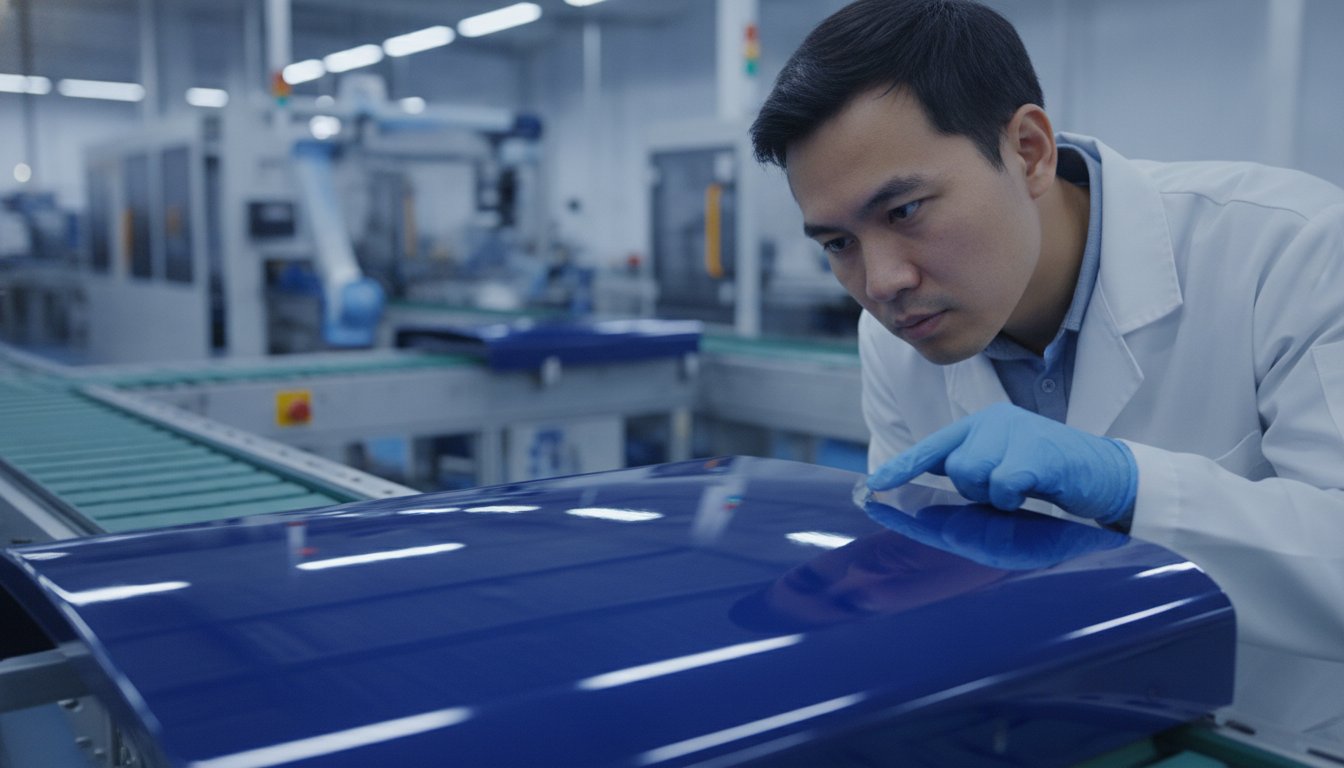
Every unit must undergo strict QC checks before it leaves the assembly line. This ensures that the thousands of units in your container maintain the same quality as the initial prototype. Transitioning to full household appliance manufacturing solutions means having a partner that can manage both the technical production and the complex logistics of global shipping. Our Malaysia-based operations provide this industrial strength, giving your brand a reliable foundation for long-term growth.
If you're ready to move your concept into production, contact our team for a quotation today. We provide the engineering expertise and scalable production capacity you need right here in Malaysia.
Selecting a Partner for Private Label Small Kitchen Appliances
Selecting the right partner for private label small kitchen appliances is a strategic decision that determines your brand's longevity. You need a partner with more than just assembly lines. Look for engineering depth and specialized coating expertise. A regional presence in Malaysia offers a unique balance of cost efficiency and technical sophistication. Before signing a contract, evaluate a private label kitchen appliance manufacturer through rigorous technical audits. This process verifies their ability to maintain 2026 safety standards and production consistency across every batch.
Building long-term stability requires a dedicated B2B manufacturing engine. Your manufacturer should act as a silent partner, providing the infrastructure while you manage the brand. This relationship allows you to scale rapidly without the risks associated with building your own production facilities. It's about finding a factory that understands the nuances of global distribution and the technical requirements of high-performance appliances. This focus on specialized regional manufacturing is mirrored in other sectors; for instance, apparel brands often seek technical excellence from partners like Athleisurebasics in Portugal to ensure their product quality matches their brand's premium positioning.
The B2B Specialist Advantage
Partnering with a manufacturer that doesn't sell direct to retail protects your brand equity. If your supplier competes for the same shelf space, your growth is naturally capped. We maintain a strict non-compete philosophy. This ensures our interests are fully aligned with yours. By focusing on roaster ovens and air fryers as core brand anchors, we provide the technical stability you need to lead your market. You can leverage our comprehensive OEM/ODM services to develop a full line of appliances. This all-in-one approach simplifies your supply chain and ensures design consistency across your entire catalog.
Customization and Brand Identity
Achieving a "super-premium" design requires more than just a different logo. It demands bespoke metal finishing. Whether you need high-capacity rice cookers for commercial use or sleek, powder-coated kettles for home kitchens, customization is the key to differentiation. Use this final checklist when initiating a private label small kitchen appliances partnership in Malaysia:
Verify in-house engineering and rapid prototyping capabilities.
Confirm industrial coating specifications for enamel and powder finishes.
Assess logistical readiness for global export from Malaysian ports.
Ensure a clear non-compete agreement is part of the partnership terms.
If you're ready to build a resilient and scalable product line, contact us for a quotation today. Our team in Malaysia is prepared to provide the technical details and pricing you need to launch your 2026 appliance collection. Reach out to discuss your specific design requirements or to request further details on our manufacturing capacity.
Securing Your Brand’s Industrial Competitive Edge
Success in the 2026 market requires more than just a visible logo; it demands a foundation of technical excellence and supply chain resilience. We've explored how specialized enamel and powder coatings provide the durability consumers expect, and why Malaysia has become the strategic center for sophisticated OEM/ODM production. Transitioning your line of private label small kitchen appliances from a concept to a container involves a methodical R&D process that minimizes market risk while maximizing product quality.
By partnering with a dedicated B2B manufacturer, you protect your brand equity and gain access to a silent partner focused entirely on your growth. Our facility in Malaysia offers the dedicated R&D support and industrial finishing capabilities needed to launch high-performance roaster ovens, air fryers, and rice cookers. We provide the technical backbone so you can focus on capturing market share. It's time to elevate your product standards and build a scalable future with a partner who understands the mechanics of precision manufacturing.
Looking to scale your brand? Request a quotation for private label appliance manufacturing in Malaysia today. We are ready to help you turn your technical specifications into a market-ready reality.
Frequently Asked Questions
What is the difference between OEM and ODM in kitchen appliance manufacturing?
OEM manufacturing involves producing appliances based on your brand's specific designs and technical blueprints. In contrast, ODM provides pre-designed products that your brand can select and rebrand with minimal modifications. Choosing OEM is ideal for brands requiring unique features or proprietary technology, while ODM allows for a faster entry into the market with proven product formats.
Why is enamel coating preferred for high-end roaster ovens?
Enamel coating is the primary choice for roasters because it offers superior thermal conductivity and a non-porous, glass-like surface. It withstands extreme heat without degrading; it also prevents chemical reactions between the metal and acidic foods. This finish ensures long-term durability and provides a premium aesthetic that appeals to professional and home chefs alike.
Can I customize the technical specifications of a private label air fryer?
Yes, you can customize various technical parameters of your private label small kitchen appliances, including basket capacity, heating element wattage, and digital interface features. Our engineering team assists in tailoring these specifications to meet your target market's performance requirements. This level of customization ensures your air fryer stands out from generic, off-the-shelf competitors.
What are the typical lead times for appliance manufacturing in Malaysia?
Lead times vary based on the complexity of the appliance and the current production schedule, though Malaysia’s established logistics infrastructure helps maintain efficiency. Initial prototyping and technical audits typically require more time during the first production run. Once the design is finalized, our strategic location near major shipping lanes ensures that mass production and container loading proceed without unnecessary delays.
How does a private label manufacturer ensure food safety compliance?
Manufacturers ensure safety by using food-grade materials that comply with international standards like FDA, ISO, and CE. We conduct rigorous testing on all internal surfaces to meet the 2026 PFAS regulations effective in states like Colorado and Maine. This meticulous approach to material selection protects your brand from liability and ensures your products are safe for global distribution.
Is it possible to develop a completely new appliance design with oemhomeappliances?
Yes, we provide dedicated product design and development services to help you create entirely new appliance concepts from scratch. Our team manages the full workflow from initial R&D and prototyping to mass production. We act as a silent partner, providing the technical engine needed to turn your unique kitchen innovation into a market-ready reality.
What are the benefits of powder coating for small kitchen appliances?
Powder coating provides a resilient, chip-resistant finish that enhances the longevity of your private label small kitchen appliances. It offers exceptional corrosion resistance, which is vital for portable cooking equipment and outdoor grills. Additionally, this process allows for a wide variety of custom colors and textures, enabling you to align the product's look with your brand identity.
Does oemhomeappliances sell directly to retail chains or consumers?
No, we maintain a strict B2B manufacturing focus and do not compete with our clients in the retail or consumer markets. This non-compete philosophy ensures that your brand equity is protected and that our interests are fully aligned with your success. We exist solely to empower other businesses by providing high-quality manufacturing and engineering solutions.
Ready to start your project? Request a quotation for private label appliance manufacturing in Malaysia today. Our team is standing by to provide the technical support and scalable production your brand needs.

Comments