The Evolution of Portable Cooking Equipment OEM: 2026 Manufacturing Trends
Updated: Jul 19
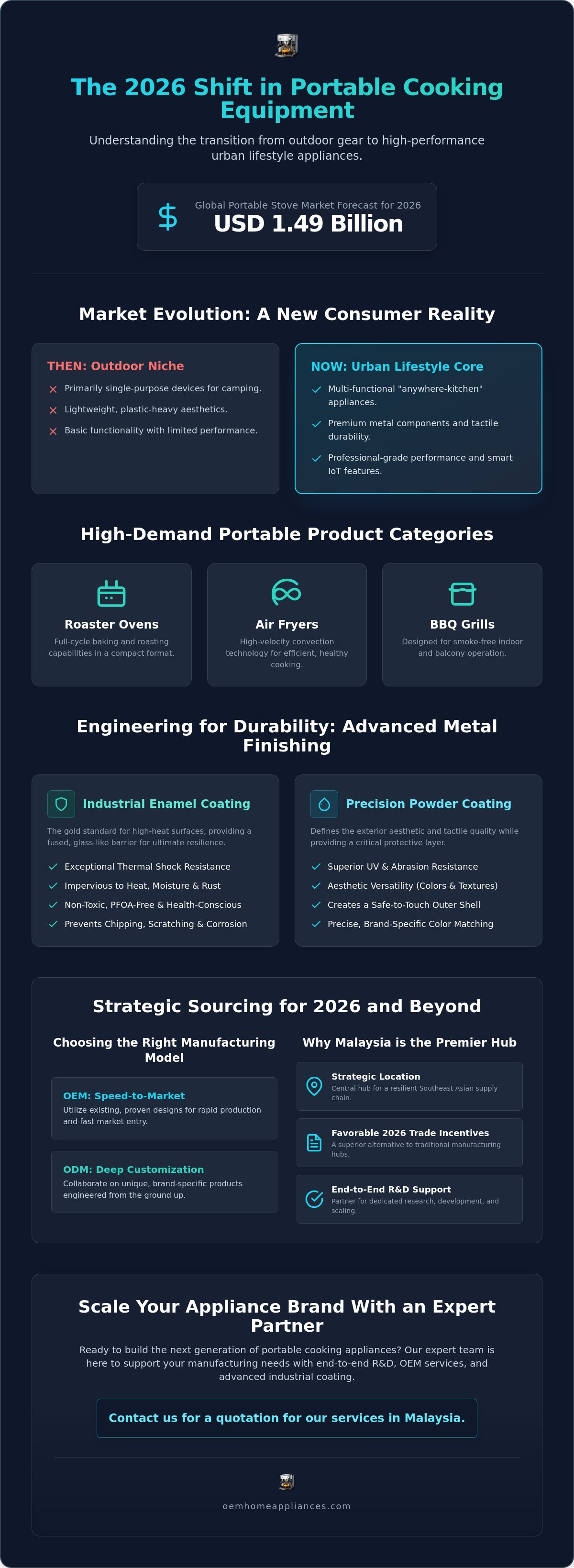
The global portable stove market is estimated to be USD 1.49 billion in 2026, signaling a massive shift in consumer behavior. This growth reflects a new reality where portable cooking equipment OEM services are essential for brands targeting the urban lifestyle segment. You likely recognize the difficulty of finding a manufacturing partner that can master both precision electronics and industrial-grade metal finishing while ensuring long-term product durability.
Maintaining a resilient supply chain is the top priority for global appliance brands entering the next decade. This article details the technical innovations and strategic market shifts driving the next generation of manufacturing. You'll gain a clear understanding of the requirements for premium portable appliances and why establishing a production base in Southeast Asia is the key to scaling your brand effectively.
Table of Contents
The Shifting Landscape of Portable Cooking Equipment OEM in 2026
The role of an Original Equipment Manufacturer (OEM) has transitioned from simple contract assembly into a high-stakes engineering partnership. In 2026, portable cooking equipment OEM strategies focus on delivering professional-grade performance within miniaturized footprints. This evolution is driven by the "anywhere-kitchen" movement, where consumers expect high-wattage functionality in devices that fit small urban apartments or mobile living spaces.
Success in this shifting market requires a deep understanding of core product categories that are currently dominating consumer interest. These include:
Roaster ovens capable of full-cycle baking and roasting.
Air fryers utilizing high-velocity convection in compact chassis.
BBQ grills designed for smoke-free indoor and balcony operation.
The Rise of Multi-Functional Portable Appliances
Modern consumers no longer accept single-purpose devices. The demand for roaster ovens that also steam and slow-cook has forced a radical change in product development. Engineering teams face the significant challenge of miniaturizing high-wattage heating elements while maintaining thermal safety. This technical hurdle is a primary reason why the global commercial cooking equipment market is projected to reach USD 40.73 billion in 2026, as brands invest heavily in versatile, space-saving technology.
Consumer Expectations: Aesthetics vs. Industrial Durability
Design trends in 2026 have moved decisively away from lightweight, plastic-heavy aesthetics. Buyers now associate premium value with metal components and tactile durability. To meet these expectations, brands must utilize industrial enamel coating services to ensure high-heat surfaces remain resilient and visually appealing. Leading OEM partners are now integrating smart IoT sensors into these portable formats. This allows for real-time temperature monitoring and mobile app connectivity without sacrificing the rugged build quality required for frequent transport.
Technical Innovations: Engineering Durability in Portable Formats
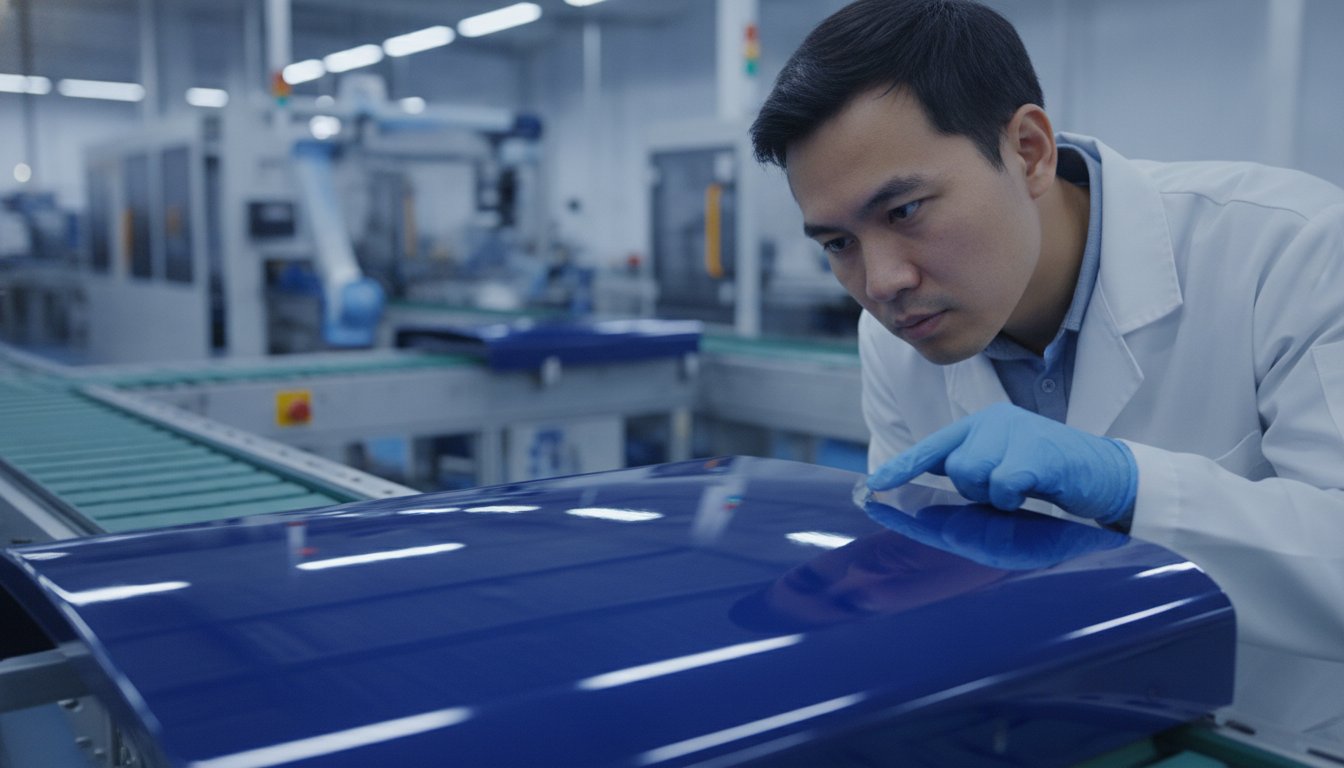
Durability in the 2026 market is no longer defined by the thickness of the steel alone. For a portable cooking equipment OEM, the focus has shifted toward surface integrity and thermal resilience. Portable units endure mechanical stress during transport and extreme temperature fluctuations during use. Without advanced metal finishing, even the most innovative design will fail to meet consumer expectations for longevity. Brands now prioritize finishes that resist scratching, chipping, and chemical corrosion from food acids.
The core of this engineering shift lies in specialized industrial enamel coating services. Unlike traditional wet paint, enamel provides a glass-like surface that fuses with the metal substrate at high temperatures. This creates a barrier that is nearly impervious to heat and moisture. It's particularly critical for high-heat components in roaster ovens and air fryers, where internal temperatures must be maintained with precision while protecting the underlying structure.
The Advantages of Enamel-Coated Components
Enamel is the gold standard for thermal shock resistance. When a cold liquid hits a hot BBQ grill surface, inferior coatings often crack or peel. Enamel maintains its bond, preventing rust from forming in the micro-fissures. This material is also naturally non-toxic and PFOA-free, aligning with the 2026 consumer demand for sustainable, health-conscious kitchenware. It doesn't off-gas at high temperatures, ensuring the flavor profile of the food remains untainted. If you're looking to upgrade your product specifications, consult with our technical team regarding material compatibility.
Precision in Powder Coating for Modern Aesthetics
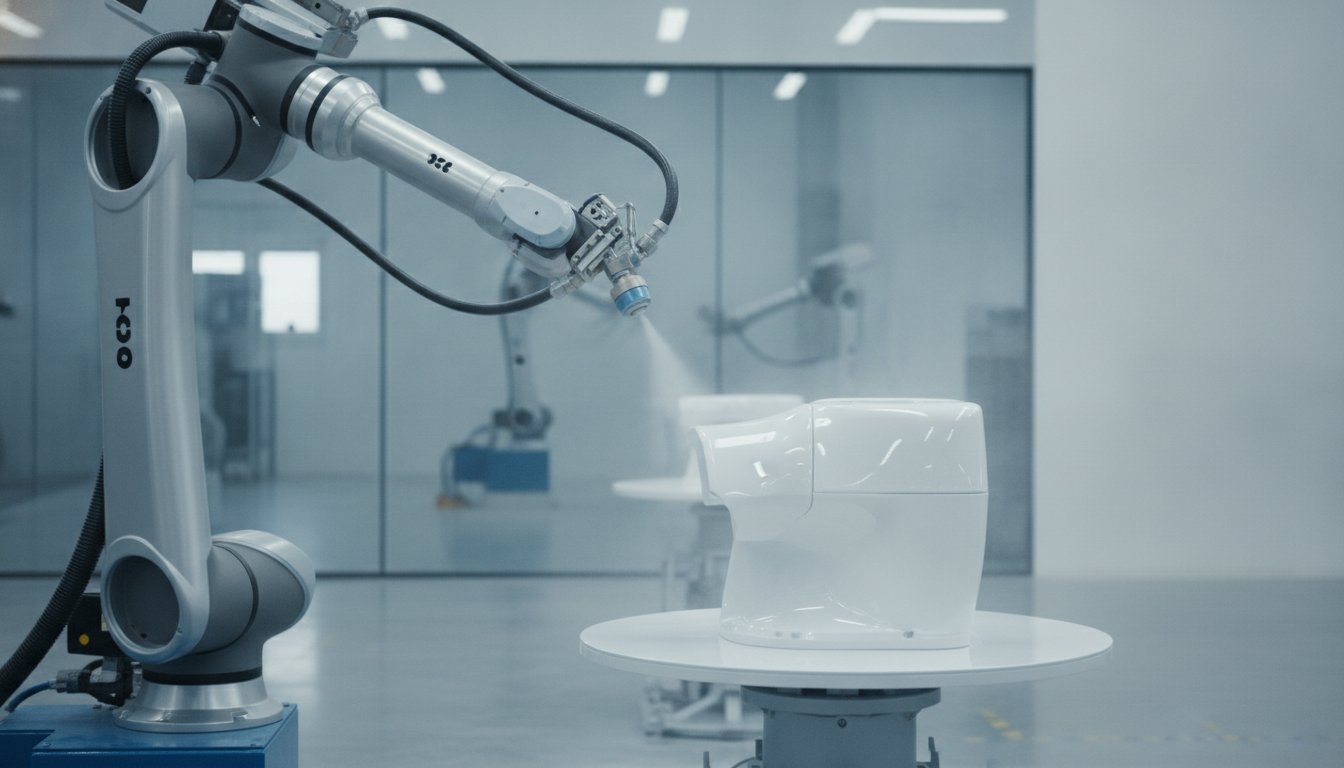
While enamel handles the heat, powder-coated metal components define the exterior's aesthetic and tactile quality. In 2026, powder coating is replacing traditional liquid paint because it offers superior resistance to UV exposure and outdoor abrasion. This process allows for exact brand-specific color matching and diverse textures, from matte charcoal to high-gloss finishes. It also serves as a critical protective layer for the exterior shells of portable appliances, ensuring the unit remains safe to touch even during peak operation. High-end manufacturing partners now integrate these finishes seamlessly with electronic control panels, maintaining a cohesive look while protecting sensitive internal components.
Selecting the right finish is as vital as explaining OEM vs. ODM models to your stakeholders. The choice between enamel and powder coating dictates the product's price point and market positioning. Advanced heat management systems now utilize multi-layered insulation and air-gap technology to keep exterior shells cool, meeting the latest safety standards for compact, high-wattage appliances.
Choosing the Right Model: OEM vs. ODM for Portable Cooking
Success in the appliance market depends on aligning your manufacturing model with your brand's R&D capacity. For most, the decision hinges on whether you have a proprietary design or need to leverage existing engineering. A portable cooking equipment OEM partner provides the infrastructure to build your unique vision from scratch. This model is ideal for brands that have identified a specific market gap and possess the technical specifications to fill it. Conversely, Original Design Manufacturing (ODM) allows you to select from a catalog of pre-vetted designs, significantly reducing the time from concept to shelf.
Selecting a private label kitchen appliance manufacturer is often the most efficient path for scaling a new product line. It bypasses the lengthy development phases associated with ground-up engineering. In 2026, the speed of consumer trends requires brands to be agile. By utilizing a partner's proven chassis and heating elements, you can focus your resources on marketing and distribution rather than reinventing the core mechanics of a roaster oven or air fryer.
Private Label Strategies for Rapid Market Entry
White-labeling allows you to test market appetite for products like compact BBQ grills with minimal risk. You don't have to invest in tooling or extensive R&D. Most private label frameworks offer significant customization. You can specify brand-exclusive colors, logos, and premium packaging to differentiate your offering. This approach often results in lower Minimum Order Quantities (MOQs), making it a viable strategy for regional brands or specialized retail lines looking to establish a presence without massive capital outlay. It's a pragmatic way to diversify your catalog while maintaining high quality standards.
Bespoke Development and Prototyping
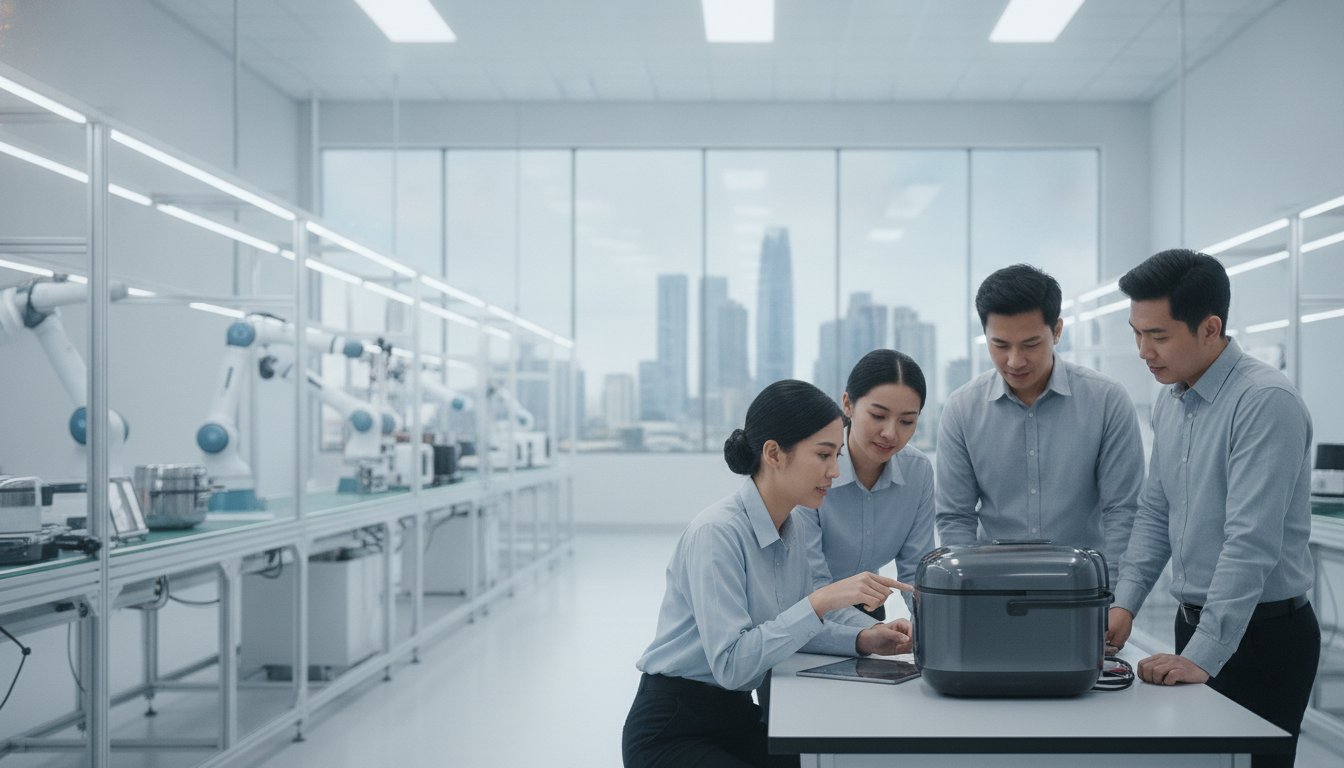
When your product requires a unique competitive advantage, such as a collapsible frame for ultra-portability, the portable cooking equipment OEM model is essential. This process begins with rigorous kitchen appliance prototyping to validate the engineering and safety of the unit. In 2026, prototyping involves advanced thermal simulation to ensure compact units handle high-wattage loads safely without overheating the exterior shell. Protecting your intellectual property is paramount during this phase. A professional partner ensures all R&D data remains confidential, providing a secure environment to develop hybrid fuel sources or proprietary smart sensors that set your brand apart from generic market entries.
Sourcing Strategy: Why 2026 Favour Malaysia as a Manufacturing Hub
Procurement strategies are undergoing a fundamental shift in 2026. Global brands are moving away from China-centric models to establish more resilient operations in Southeast Asia. Malaysia has emerged as the leading hub for this transition, currently ranking 12th globally for ease of doing business. The Regional Comprehensive Economic Partnership (RCEP) agreement is a primary driver of this trend. This trade pact eliminates tariffs on roughly 90% of goods within the region. It allows a portable cooking equipment OEM to source specialized components from RCEP member countries at significantly reduced costs, ensuring competitive pricing for the final product.
The logistics of quality appliance manufacturing Malaysia provides are designed for high-capacity global distribution. With exports reaching RM 1.45 trillion as of late 2025, the nation's infrastructure is built for industrial scale. The introduction of the Johor-Singapore Special Economic Zone (JS-SEZ) offers a 5% corporate tax incentive, further lowering the barrier to entry for brands seeking a stable, cost-effective production base. This fiscal environment allows manufacturers to reinvest in precision machinery and advanced R&D.
Supply Chain Resilience and Global Logistics
Malaysia’s port infrastructure ranks among the most efficient in the world, providing a critical advantage for high-volume appliance exports. This connectivity supports rapid distribution to North America, Europe, and the Middle East. By establishing a regional sourcing strategy, you reduce lead times and avoid the bottlenecks associated with traditional hubs. Mitigating the risks of global supply chain disruptions is easier when your manufacturing partner is located within a stable, business-friendly environment. Proximity to key shipping lanes ensures that your inventory levels remain consistent, even during periods of market volatility.
Quality Standards and Compliance
Compliance with international standards like UL, CE, and RoHS is essential for any global appliance brand. Malaysian manufacturers maintain high levels of technical expertise to meet these rigorous safety and environmental requirements. Factory audits for portable cooking gear focus on precision engineering and material integrity. Rigorous in-house testing remains a pillar of OEM air fryer production. This ensures that every unit meets thermal safety benchmarks and electronic reliability standards before leaving the facility. If you're looking to establish a more resilient supply chain, contact our team for a detailed quotation on your upcoming production requirements.
Scaling Your Brand with a Dedicated Manufacturing Partner
Transitioning from a single SKU to a comprehensive product line requires a portable cooking equipment OEM that acts as a strategic extension of your company. Scaling effectively means moving beyond one-off orders toward a long-term development roadmap. A dedicated partner ensures that as you expand from roaster ovens into air fryers or BBQ grills, the design language, build quality, and material integrity remain identical across the entire catalog. This consistency builds consumer trust and reinforces your brand's premium positioning in the 2026 market. To further enhance your brand's authority in the grilling niche, you can explore Big Eds Charcoal as an example of professional-grade fuel that complements high-performance hardware.
Beyond fuel, lifestyle brands can also look to high-end beverage merchants for cross-promotional ideas; for instance, you can visit Mosse and Mosse to learn about the various types of Port wine that could complement a premium outdoor dining experience.
A critical factor in this partnership is the absence of direct-to-retail competition. Many manufacturers operate their own private labels; this can lead to a conflict of interest during peak production periods. Choosing a partner that focuses exclusively on B2B services ensures their engineering resources are entirely dedicated to your success. This alignment is vital when leveraging technical appliance development to create proprietary features that set your brand apart. Building this relationship on transparent manufacturing workflows allows for better inventory forecasting and more resilient supply chain management.
Integrated Manufacturing Solutions
The most efficient scaling happens in all-in-one facilities. When a single factory handles metal fabrication, industrial coating, and final assembly, the risk of production delays drops significantly. You don't have to manage multiple subcontractors or worry about logistics between different finishing plants. This integration ensures perfect consistency. If your roaster oven features a specific powder-coated texture, your manufacturing partner can replicate that exact finish on a new coffee machine or kettle. Streamlining communication through a single point of contact reduces errors and accelerates your speed-to-market.
Future-Proofing Your Product Line
Looking toward 2027, the portable appliance sector will be defined by smart connectivity and extreme energy efficiency. R&D-focused OEMs are already prototyping units with integrated IoT sensors and induction-based heating elements. A stable manufacturing partnership allows you to integrate these advancements into your product roadmap early; this keeps you ahead of competitors who rely on off-the-shelf designs. By choosing a partner in a stable region like Malaysia, you protect your brand from the geopolitical volatility that often disrupts production in other hubs. Long-term stability is the foundation of innovation.
Securing Your Brand's Future in the 2026 Appliance Market
The transition toward high-performance, urban-centric appliances requires a manufacturing strategy that prioritizes industrial durability and supply chain stability. Success in this category depends on mastering technical finishes like enamel and powder coating while leveraging regional trade benefits within Southeast Asia. Relocating production to a stable hub like Malaysia allows you to mitigate global volatility and capitalize on significant tax incentives. Selecting a dedicated portable cooking equipment OEM is the most critical decision for brands looking to scale without the risk of direct-to-retail competition.
Your brand deserves a partner that combines technical R&D expertise with global export capacity. We specialize in high-heat enamel coating and precision powder-coated components, ensuring your appliances exceed consumer expectations for longevity. Looking for a reliable manufacturing partner in Malaysia? Contact oemhomeappliances today for a custom quotation on your portable cooking equipment needs. Our dedicated B2B services are designed to empower your brand's growth through transparent workflows and meticulous engineering. Let's build the next generation of kitchen innovation together.
Frequently Asked Questions
What is the typical MOQ for portable cooking equipment OEM?
Minimum Order Quantities (MOQs) are determined by the level of customization and the specific product category selected. Private label options using existing chassis typically offer lower MOQs, allowing brands to test new markets with reduced risk. Bespoke designs requiring unique tooling or specialized metal components usually necessitate higher volume commitments to offset initial engineering costs. Contact our team to discuss your specific project scale and production requirements.
How long does the prototyping phase take for a new roaster oven design?
The prototyping phase for a new roaster oven typically ranges from 8 to 12 weeks depending on the complexity of the internal electronics. This timeline includes initial CAD modeling, thermal simulation to ensure shell safety, and the creation of physical samples for functional testing. Using advanced simulation tools in 2026 helps us identify potential heat management issues early, which reduces the number of physical iterations required before final approval.
Can portable air fryers be customized for specific voltage requirements?
Yes, portable air fryers can be engineered with specific voltage and plug configurations to meet the electrical standards of any global market. We handle the technical adjustments for 110V, 220V, or 240V systems while maintaining consistent heating performance across different regions. This flexibility is essential for brands looking to establish a global footprint without managing multiple disparate supply chains for different geographic territories.
What are the benefits of enamel coating vs. non-stick for portable grills?
Enamel coating offers superior thermal shock resistance and industrial durability compared to traditional non-stick surfaces. It's a non-toxic, glass-like finish that doesn't off-gas at high temperatures, making it a safer choice for high-heat applications like BBQ grills. While non-stick coatings can degrade or peel over time, enamel provides a permanent bond with the metal substrate that resists scratching and chemical corrosion throughout the product's lifecycle.
How do I ensure my private label appliances meet international safety standards?
You ensure compliance by partnering with a manufacturer that maintains rigorous in-house testing protocols and adheres to international certifications like UL, CE, and RoHS. Every unit undergoes strict quality control checks for electrical safety and material integrity before leaving the facility. We provide the necessary documentation and factory audit reports to verify that your private label appliances meet the specific regulatory requirements of your target export markets.
Why is Malaysia considered a competitive alternative to China for appliance manufacturing?
Malaysia is a superior alternative due to its strategic participation in the RCEP agreement, which eliminates tariffs on approximately 90% of regional goods. The country offers a stable business environment and significant corporate tax incentives, such as the 5% rate in the Johor-Singapore Special Economic Zone. These factors, combined with a highly skilled workforce and world-class port infrastructure, make it an ideal hub for resilient and cost-effective appliance production.
What technical support is available during the product development phase?
Comprehensive technical support includes product design, engineering development, and material selection tailored to your brand's needs. As a dedicated portable cooking equipment OEM, we provide end-to-end R&D services to validate new features and optimize manufacturing efficiency. This partnership-oriented approach ensures that your product is not only innovative but also scalable and compliant with all relevant safety standards during the mass production phase.
Does the manufacturer handle shipping and global logistics?
Most professional manufacturers offer integrated logistics support to manage the complexities of global shipping and distribution. Malaysia's efficient port infrastructure allows for rapid export to major markets in North America, Europe, and the Middle East. We coordinate with shipping partners to ensure your inventory is handled correctly and delivered on schedule, reducing the administrative burden on your procurement team and streamlining your entire supply chain.
Comments