The OEM Appliance Partnership Model: A Strategic Guide for Brand Growth in 2026
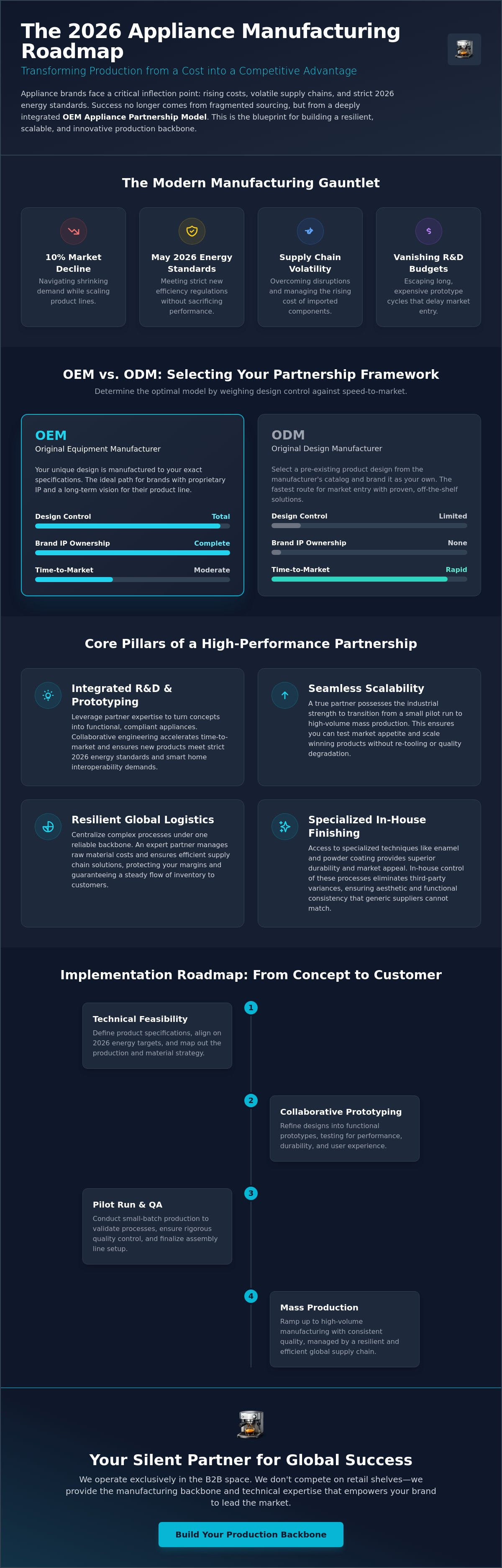
Why are some appliance brands scaling their product lines during a 10% market demand decline while others struggle to meet the strict new May 2026 energy standards? The difference isn't just a bigger budget; it's a smarter approach to production. You likely feel the pressure of rising import costs and the constant volatility of global supply chains. It's frustrating to watch R&D budgets vanish into prototype cycles that take too long to reach the shelf. This guide explains how a structured OEM appliance partnership model transforms kitchen appliance manufacturing from a simple transaction into a scalable competitive advantage.
Discover how to build a reliable production backbone that absorbs market shocks and significantly reduces your time-to-market for new air fryers, coffee machines, or blenders. We'll examine the strategic benefits of accessing specialized manufacturing like enamel coating and AI-driven design. You'll learn how to navigate the 2026 regulatory landscape while maintaining the flexibility to pivot as consumer demands for smart, interoperable appliances continue to evolve. This is your roadmap to becoming a silent, powerful leader in the modern kitchen category.
Key Takeaways
Learn how a structured OEM appliance partnership model transitions your production from a basic transaction into a long-term strategic asset.
Discover the impact of specialized finishing techniques, such as enamel and powder coating, on product longevity and market appeal.
Determine the optimal framework for your brand by weighing the design control of OEM against the speed of ODM solutions.
Master the implementation roadmap from initial technical feasibility to mass production to reduce your time-to-market for new appliance lines.
Understand the value of a dedicated manufacturing partner that prioritizes brand empowerment and global scalability without competing for your retail space.
Table of Contents
Defining the OEM Appliance Partnership Model
The 2026 kitchen appliance market demands more than a simple vendor relationship. A successful OEM appliance partnership model functions as a technical extension of your own company. While many people associate the term Original Equipment Manufacturer (OEM) with replacement parts or repair components, the strategic reality for brand growth involves whole-unit production and deep R&D integration. Established brands are moving away from fragmented, multi-factory sourcing. They've found that managing several different factories for various product lines creates quality consistency issues and supply chain headaches. Instead, they're seeking a Trusted Expert Facilitator who can handle the complexities of production while they focus on market expansion.
Manufacturing vs. Distribution Partnerships
Whole-unit production is fundamentally different from distributing spare parts. When you partner for complete manufacturing, you're entrusting your brand equity to the factory floor. Every air fryer, kettle, or coffee machine must meet exact specifications every time to maintain consumer trust. This level of consistency is impossible with generic factories that lack specialized oversight. We understand this responsibility. Unlike some providers who act as third-party branding agents or retail distributors, oemhomeappliances operates exclusively in the B2B space. We don't compete with our clients on retail shelves or through direct-to-consumer channels. This lack of conflict ensures our goals are perfectly aligned with your brand's success.
Key Components of the 2026 Partnership Framework
Modern partnerships require integrated R&D. You aren't just buying a finished product; you're collaborating on technical solutions. This includes meeting the strict energy efficiency standards taking effect in May 2026 and integrating smart-home interoperability. A robust OEM appliance partnership model also prioritizes scalability. You might start with a pilot run of a new portable cooking line to test market appetite. A true partner has the industrial strength to transition that pilot into high-volume mass production without a drop in quality.
Global logistics resilience is another non-negotiable pillar. With the 2026 market seeing significant price increases for imported appliances, your manufacturing partner must offer efficient supply chain solutions. This includes managing raw material costs for powder-coated metal components and ensuring specialized finishes like enamel coating are applied with precision. By centralizing these complex processes under one reliable backbone, you protect your margins and ensure a steady flow of inventory to your customers.
Core Pillars of a High-Performance Manufacturing Model
A high-performance OEM appliance partnership model relies on more than just assembly lines. It demands a foundation of technical expertise that translates into long-term product durability. Brands that succeed in 2026 prioritize partners who master the intersection of material science and functional design. This ensures that every unit, from a basic kettle to a complex coffee machine, performs reliably over thousands of cycles. Durability isn't a happy accident. It's the result of rigorous engineering and a deep understanding of how components interact under thermal and mechanical stress.
Specialized Metal Components and Coating
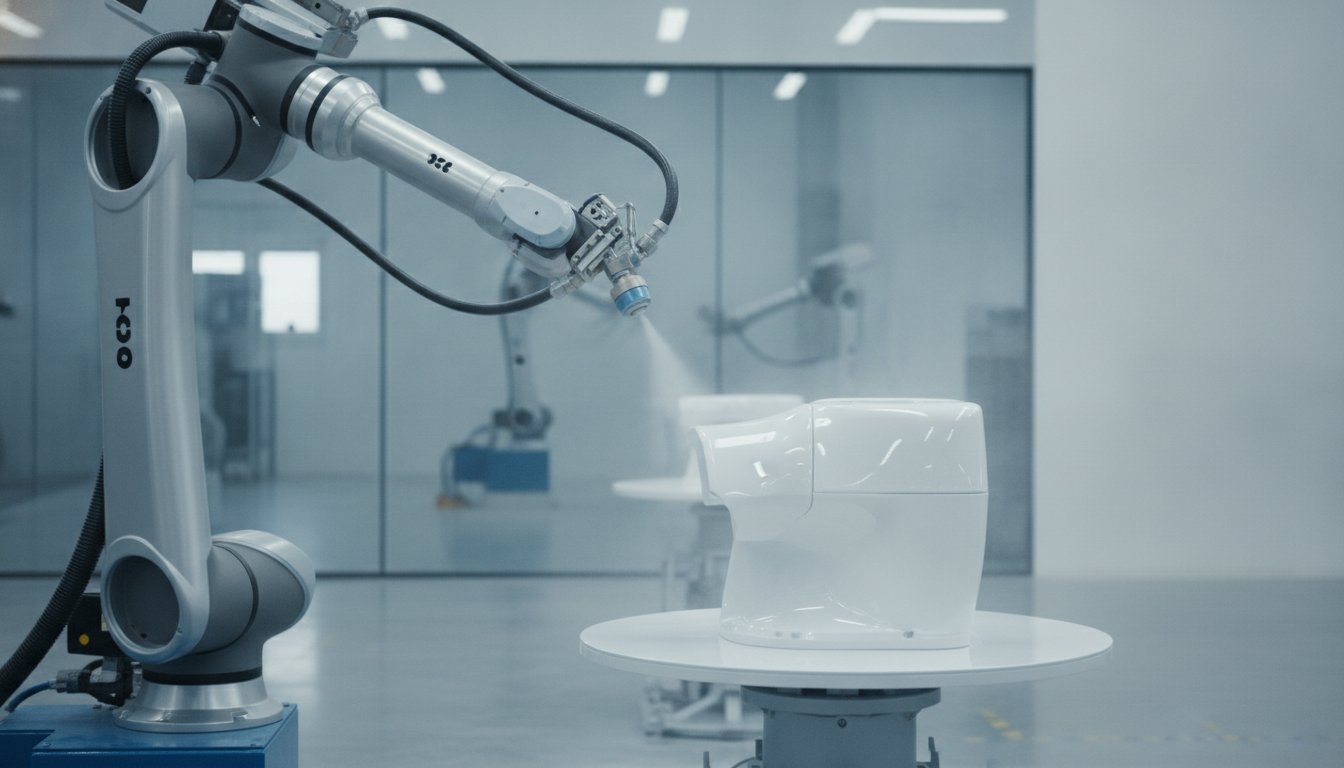
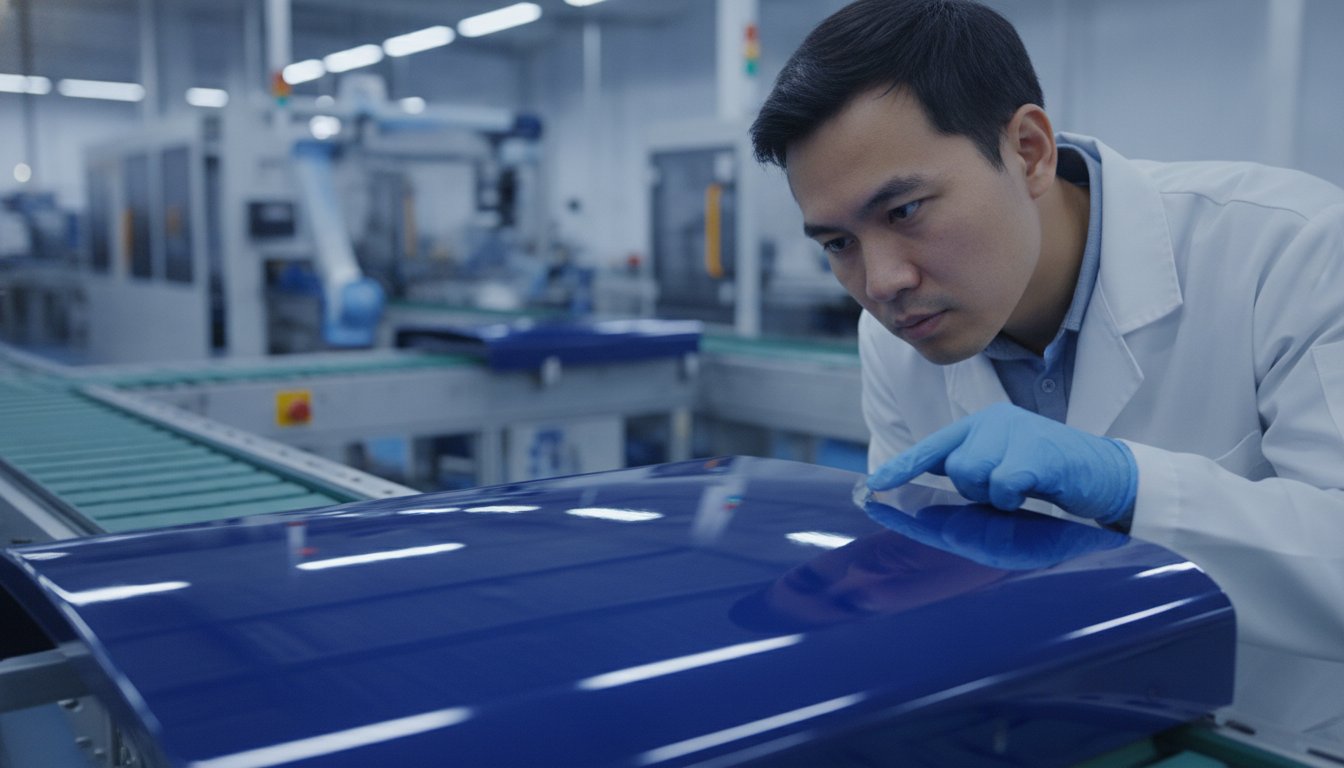
Enamel-coated products represent the gold standard for high-end kitchenware. This finish provides superior heat resistance and a non-reactive surface that professional-grade cooking requires. Integrating these specialized finishes into the standard production line eliminates the need for third-party coating houses, which often introduce quality variances. Similarly, powder-coated metal components offer essential protection against corrosion and wear in humid kitchen environments. By controlling these finishing processes in-house, we provide a level of aesthetic and functional consistency that generic suppliers can't match. You can explore our range of specialized coating solutions to see how these finishes elevate your product's perceived value.
R&D and Prototyping Capabilities
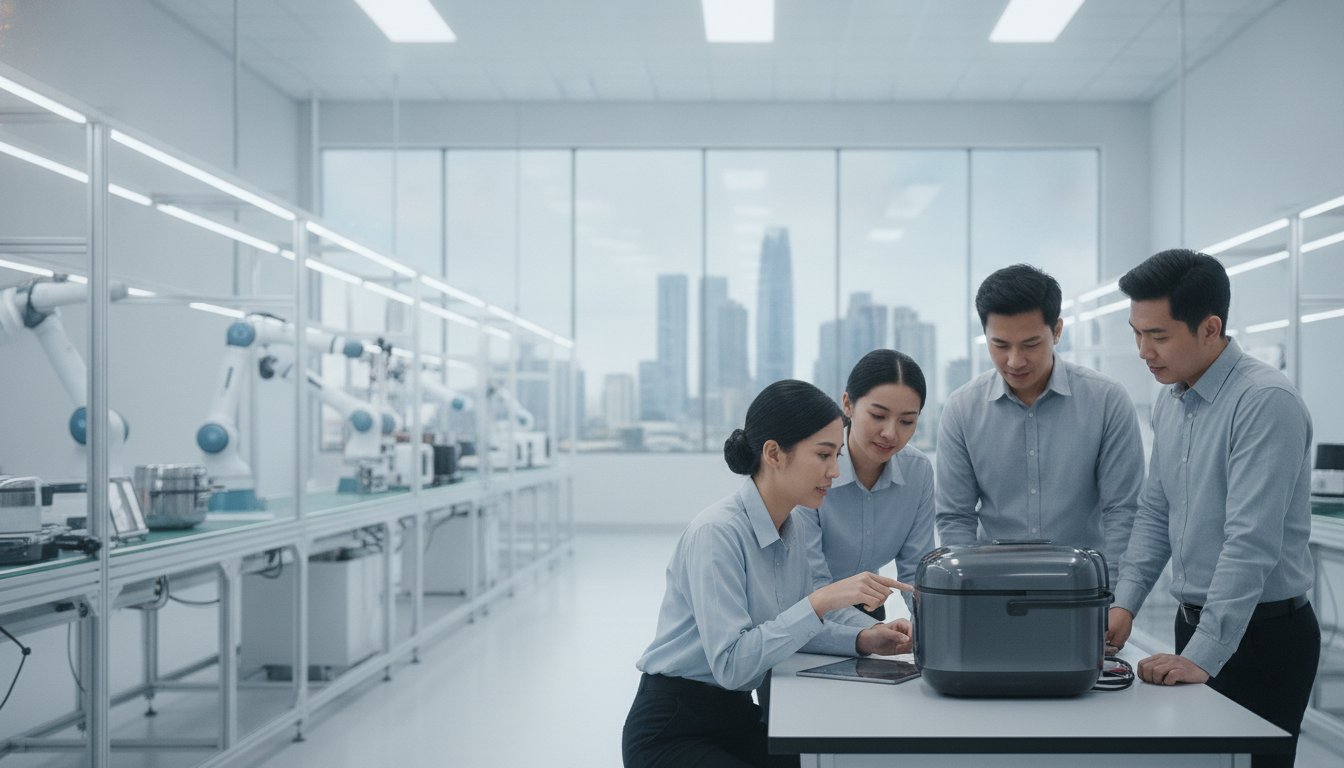
The lifecycle of kitchen appliance prototyping is where time-to-market is won or lost. Collaborative engineering allows brands to leverage manufacturer expertise for technical appliance development, turning conceptual designs into functional reality. This process involves rapid iterative cycles where technical solutions are shared and refined. To effectively Improve Collaboration With Their Suppliers, brands must integrate their design teams with the factory's R&D department. This synergy reduces the friction of design-for-manufacturing (DFM) adjustments, ensuring that mass production begins with a fully optimized product. It's a methodical approach that eliminates guesswork and prevents costly errors during the scale-up phase.
Confidentiality and IP protection are the final pillars. In a competitive market, your proprietary designs and unique features are your most valuable assets. A dedicated partner provides secure environments for development, ensuring that your innovations remain exclusive to your brand. Combined with strict quality assurance protocols that meet global standards, this framework creates a secure, high-performance production environment. It allows you to launch innovative air fryers or blenders with total confidence in both their performance and your intellectual property security.
OEM vs. ODM: Selecting the Right Partnership Framework
Selecting the right framework depends on your brand's maturity and specific product goals. While the terms are often used interchangeably, the technical distinctions between Original Equipment Manufacturing (OEM) and Original Design Manufacturing (ODM) dictate your level of market differentiation. An OEM appliance partnership model offers the highest level of customization. You provide the design specifications, and the manufacturer executes the production. This is the ideal choice for brands with proprietary technology or unique aesthetic requirements. Conversely, ODM allows you to leverage existing factory designs. You select a pre-developed product, such as a rice cooker or kettle, and apply your branding. This accelerates market entry but offers less protection against competitors selling similar units.
Established brands in 2026 often adopt hybrid models. They use OEM for "hero" products like high-performance air fryers where they own the intellectual property. Simultaneously, they utilize ODM for accessory products to round out their catalog quickly. This balanced OEM appliance partnership model ensures that R&D resources focus on high-margin innovations while maintaining a comprehensive product suite. It's a methodical way to scale without overextending your engineering team.
Control vs. Speed: The Trade-off
The primary trade-off involves control over proprietary designs. OEM models protect your unique engineering for roaster ovens and air fryers through custom tooling. While custom molds and dies require more lead time and upfront investment, they ensure your product isn't easily replicated. ODM models bypass these costs by using off-the-shelf designs. This is effective for testing new categories, but as a brand matures, transitioning from ODM to full OEM is often necessary to maintain a competitive edge. This shift allows you to refine technical specifications and improve unit durability based on direct consumer feedback.
Risk Mitigation in Partnership Selection
Risk management is built into a professional manufacturing framework. Vetting factory certifications is the first line of defense. You must ensure your partner holds valid ISO, UL, and CE certifications to meet global safety and quality standards. Ethical labor practices and environmental compliance are also non-negotiable in the 2026 regulatory environment. Beyond certifications, your partner's business model matters. A manufacturer that avoids direct-to-retail competition is a safer bet. They focus on empowering your brand rather than competing for your shelf space. This alignment ensures that your production backbone remains a silent, reliable partner in your long-term growth.
OEM: Best for proprietary designs and long-term brand differentiation.
ODM: Best for rapid market entry and testing new product categories.
Hybrid: Best for established brands looking to balance innovation with catalog depth.
Choosing the right path requires a clear understanding of your technical needs and market timing. Whether you need a bespoke coffee machine or a private-label blender, the goal is a frictionless transition from concept to consumer.
Implementation: From Prototyping to Mass Production
Implementation is where strategy becomes reality. A structured OEM appliance partnership model follows a precise five-step roadmap to ensure your product hits the market without technical flaws or logistical delays. This methodical progression transforms a concept into a shelf-ready appliance through a series of verified checkpoints. It's a process designed to eliminate the guesswork often found in generic manufacturing setups.
Step 1: Initial consultation and technical feasibility assessment. We analyze your design to identify potential manufacturing hurdles before they become expensive problems.
Step 2: Rapid prototyping and iterative design refinement. We build functional models to test real-world performance and aesthetic appeal.
Step 3: Tooling and pilot production runs. Custom molds are created; a small batch is produced to verify the assembly line's accuracy.
Step 4: Quality control auditing and final mass production. Each unit undergoes rigorous testing against your brand's specific standards.
Step 5: Ongoing supply chain management and iterative improvements. We monitor production data to find ways to increase efficiency and reduce waste over time.
The Critical Role of Prototyping
A fail-fast prototyping model saves thousands in mass production costs. It's much easier to adjust a design when it's still in the 3D-printing or CNC-machining stage. For example, testing thermal efficiency in rice cookers and coffee machines is essential to prevent future warranty claims. We measure heat distribution and temperature stability to ensure consistent results for the end-user. Portable cooking equipment also requires intensive user experience (UX) testing. We evaluate handle ergonomics, weight distribution, and control panel responsiveness to guarantee the device is intuitive and safe for the consumer.
Scaling to High-Volume Production
Once the pilot batch passes all inspections, the model manages large scale appliance production across multiple SKU lines. Maintaining consistency in enamel coating across 10,000 units requires precise atmospheric control and automated application systems. This industrial strength ensures that the first unit off the line is identical to the last. We then coordinate global logistics to ensure your inventory moves from our facility to your distribution hubs on schedule. If you're ready to move from concept to consumer, contact our technical team for a feasibility assessment.
The oemhomeappliances Advantage: A Model for Brand Success
Choosing the right production backbone determines whether your brand leads the market or merely follows it. The OEM appliance partnership model we provide is built on a foundation of industrial strength and strategic alignment. As part of the Keiteq parent brand, we offer the stability and global manufacturing reach required to navigate the complexities of 2026 supply chains. This corporate readiness ensures that our partners have access to elite manufacturing resources without the volatility often associated with smaller, less established factories. We function as a silent engine, providing the technical precision you need to scale your product lines with total confidence.
Our specialized focus remains narrow and deep. We excel in the production of roaster ovens, air fryers, and rice cookers. By concentrating our expertise on these core categories, we've mastered the nuances of their thermal efficiency and mechanical durability. This focus extends to our commitment to enamel and powder-coated excellence. We don't outsource these critical finishing steps. By maintaining in-house control over specialized coatings, we ensure that every unit meets the high aesthetic and functional standards your customers expect from a premium brand.
A Partner-First Approach
We operate with a clear boundary: we are a dedicated manufacturer, not a retail competitor. Our refusal to sell direct-to-retail ensures your brand's protection. We don't compete for your shelf space or your customers. Instead, we provide bespoke technical solutions tailored to the specific needs of established kitchenware brands. This partnership-oriented mindset has allowed us to scale production for leading global partners, acting as a dependable backbone for their international expansion. When you work with us, you gain a partner that is fully invested in your brand's growth and market differentiation.
Ready to Scale Your Appliance Line?
Initiating a consultation for your next product line is a frictionless process. We start by understanding your specific brand requirements and technical goals. Whether you need to integrate new AI-driven features or ensure compliance with the latest energy regulations, we customize our partnership model to fit your unique roadmap. Our team is ready to provide the technical feasibility assessments and rapid prototyping needed to move your designs from the drawing board to the mass production line. Precision, scalability, and reliability are the pillars of our service. Contact oemhomeappliances to discuss your OEM manufacturing requirements and discover how a structured partnership can transform your production into a scalable competitive advantage.
Future-Proof Your Appliance Portfolio
Building a resilient appliance brand in 2026 depends on transitioning from simple transactions to deep technical integration. You now understand how a structured OEM appliance partnership model reduces time-to-market and secures your proprietary designs. By leveraging specialized R&D and advanced finishing techniques, you can navigate regulatory changes while maintaining the quality consistency your brand requires for long-term growth. Moving from fragmented sourcing to a dedicated production backbone ensures your product lines remain scalable and efficient.
Stability is the core of our approach. We offer the industrial strength of the Keiteq brand alongside a zero direct-to-retail competition policy that protects your market position. Our expertise in specialized enamel and powder-coated finishing ensures your air fryers, rice cookers, and roaster ovens stand out for their durability and performance. Partner with a dedicated OEM manufacturer—contact oemhomeappliances today to discuss your technical specifications. We're ready to provide the reliable backbone your brand needs to scale successfully.
Frequently Asked Questions
What is the difference between an OEM and an ODM partnership?
The primary difference lies in design ownership and customization depth. In an OEM model, you provide the technical specifications and proprietary designs, which we then manufacture. An ODM model involves selecting pre-developed factory designs for faster market entry. Choosing an OEM appliance partnership model is better for brands that require unique features and long-term market differentiation through custom engineering.
Does oemhomeappliances sell directly to retail chains?
No, we don't sell directly to retail chains or consumers. We operate exclusively as a B2B service provider to protect our clients' market positions. This policy ensures there is zero competition between our manufacturing operations and your retail distribution. Our focus remains entirely on empowering your brand through reliable production and technical support.
What types of kitchen appliances are included in your partnership model?
Our production capabilities focus on high-demand kitchen categories. We manufacture roaster ovens, rice cookers, air fryers, blenders, kettles, and coffee machines. Additionally, our model includes BBQ grills and portable cooking equipment. We also provide specialized services for powder-coated metal components and enamel-coated products to ensure high-end finishing across these categories.
How do you handle intellectual property and custom design protection?
Intellectual property security is a cornerstone of our OEM appliance partnership model. We use secure development environments and strict non-disclosure agreements to safeguard your proprietary information. Custom tooling and molds are maintained in secure facilities and used exclusively for your brand's production runs. This methodical approach prevents design leakage and protects your competitive advantage.
What are the benefits of enamel coating for kitchen appliances?
Enamel coating offers superior heat resistance and a non-reactive surface, which is essential for professional-grade roaster ovens. It provides a durable, glass-like finish that resists rust and chemical leaching over time. This specialized finish improves the appliance's lifespan and perceived value, making it a preferred choice for brands targeting the premium kitchenware market.
How long is the typical lead time from prototyping to mass production?
Lead times depend on the technical complexity of the appliance and the level of customization required. The process generally spans several months, covering initial feasibility, iterative prototyping, and custom tooling creation. We prioritize a fail-fast prototyping phase to identify issues early, which ultimately saves time and reduces costs during the final mass production scale-up.
Can you handle high-volume production for global brands?
Yes, we have the industrial strength and scalability to support global brands with high-volume requirements. Our facilities are designed to manage large SKU lines while maintaining rigorous quality standards. We coordinate closely on global logistics to ensure that high-volume orders of air fryers or coffee machines reach your distribution hubs on a predictable schedule.
What certifications do your manufacturing facilities hold?
Our manufacturing facilities hold essential global certifications, including ISO, UL, and CE. These certifications verify that our production processes and finished appliances meet strict international safety and quality standards. This compliance is critical for brands looking to export products into diverse global markets while ensuring consumer safety and regulatory adherence.
Comments