The Strategic Supply Chain for Kitchen Brands: A 2026 Manufacturing Guide
Updated: Jul 19
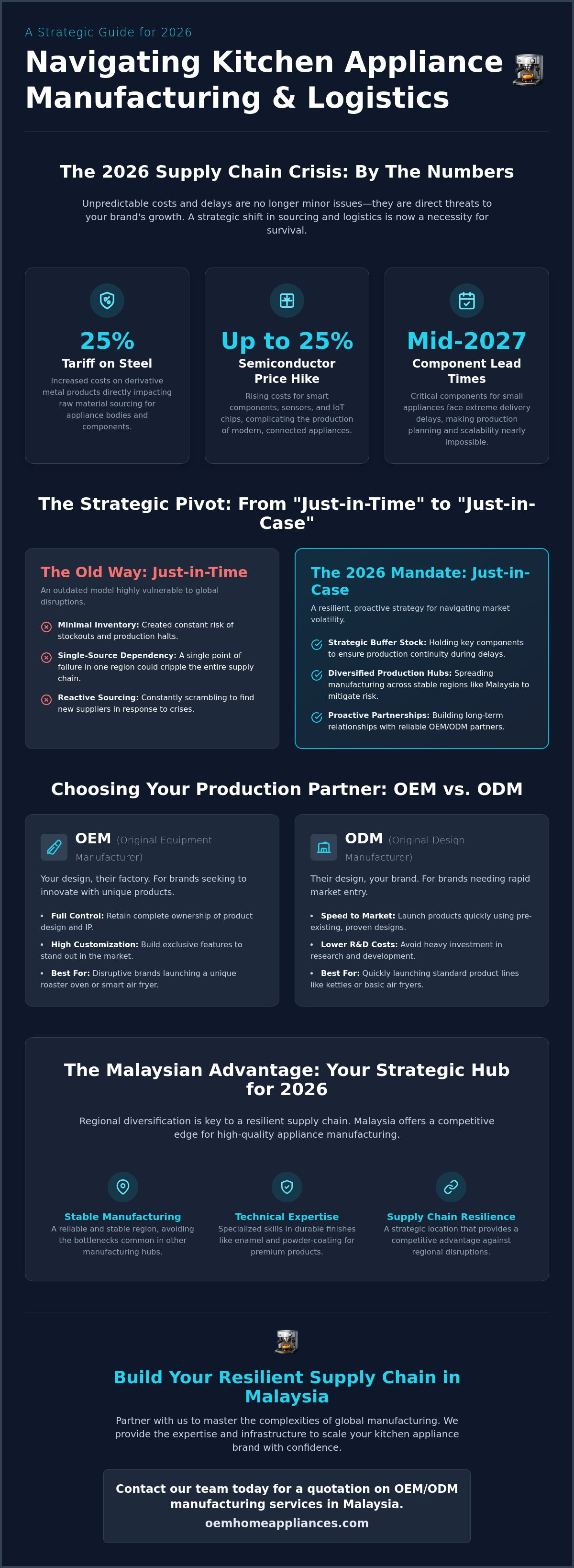
In 2026, a kitchen brand’s survival no longer depends on marketing brilliance. It depends entirely on the resilience of its kitchen appliance manufacturing logistics. You've likely felt the sharp impact of the 25% tariff on steel derivative products or the frustration of semiconductor price hikes reaching 25% this July. These unpredictable lead times for small appliances and rising costs for raw materials like enamel aren't just minor inconveniences. They're direct threats to your brand's scalability and bottom line. When delivery lead times for critical components stretch into mid-2027, your choice of production partner becomes your most important business decision.
We know that finding a reliable OEM partner in a stable region like Malaysia is now a strategic necessity rather than a luxury. This guide promises to help you master the complexities of global manufacturing so you can scale your brand with total confidence. We'll provide a clear framework for OEM/ODM selection and show you how to reduce supply chain bottlenecks. You'll learn how to achieve scalable production for roaster ovens and air fryers while maintaining the high standards your customers expect. It's time to move from reactive sourcing to a proactive manufacturing strategy.
Table of Contents
What is a Supply Chain for Kitchen Brands?
Successful kitchen brands don't just sell products; they manage complex industrial ecosystems. An appliance supply chain encompasses every stage from initial R&D and product design to final delivery at the customer’s door. Unlike digital products, this lifecycle involves heavy industrial processes and physical constraints. It requires precise coordination between raw material sourcing, component manufacturing, and final assembly. Understanding What is a Supply Chain? helps clarify how these moving parts interact to form a cohesive business model. Partnering with a specialized provider for manufacturing services ensures your brand remains resilient against market volatility.
Key stakeholders in this process include your OEM partners, material suppliers, and specialized logistics providers. Kitchen brands face unique hurdles compared to general consumer electronics because of the durability and safety standards required for heat-generating devices. A faulty air fryer isn't just a software bug; it's a physical liability. This elevates the importance of robust kitchen appliance manufacturing logistics in your daily operations. You must manage the flow of everything from bulk steel and enamel powders to delicate circuit boards and heating elements.
The Hardware vs. Software Supply Chain
Physical manufacturing demands significant capital and long lead times. You can't "patch" a poorly cast roaster oven housing once it's in a shipping container. Specialised tooling for products like roaster ovens and air fryers requires months of preparation and testing before mass production begins. The Appliance Supply Chain is the integrated network of design, manufacturing, and distribution of cooking hardware. Every design change necessitates physical adjustments to production lines. This makes flexibility a core requirement for any OEM partnership in the current market.
Why 2026 Demands a Strategic Shift
The global trade environment of 2026 has forced a move away from "Just-in-Time" inventory models. With derivative metal products facing a 25% tariff as of early 2026, and semiconductor lead times for smart components extending into mid-2027, brands must adopt a "Just-in-Case" strategy. This means holding more buffer stock and diversifying production hubs to avoid regional bottlenecks. The push for smart, energy-efficient appliances adds layers of complexity to kitchen appliance manufacturing logistics. Manufacturers now source high-end sensors and IoT chips alongside traditional steel components, all while navigating a 10% to 25% price hike in semiconductor costs announced in July 2026.
Core Components of Appliance Manufacturing Logistics
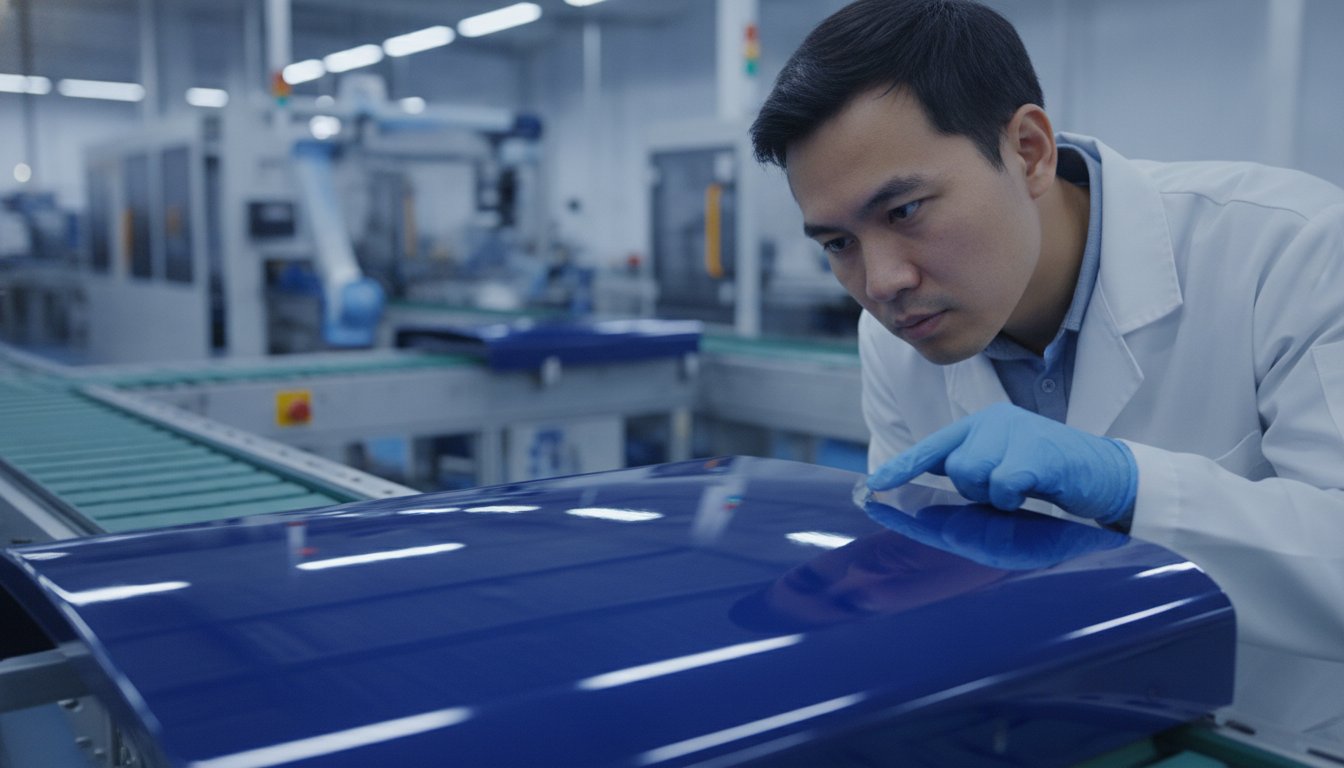
High-volume production of items like rice cookers and kettles requires a methodical approach to kitchen appliance manufacturing logistics. It isn't enough to secure a supplier; you must manage technical specifications across thousands of units with total precision. Aligning your strategy with global home appliance manufacturing trends reveals that leading brands prioritize factory-level quality control (QC) to mitigate the risks of mass recalls. Reliable supply chains rely on more than just shipping speed. They require technical mastery at the manufacturing source to ensure every unit meets safety and performance benchmarks.
OEM vs. ODM: Which Model Fits Your Brand?
Choosing the right private label kitchen appliance manufacturer is your first strategic hurdle in 2026. Private label manufacturing allows for rapid market entry using proven, existing designs. This is ideal for brands that need to launch a kettle or air fryer line quickly without heavy R&D costs. If you want to disrupt the market with a unique value proposition, bespoke R&D services offer the customization needed for exclusive product features. Your choice depends on your capital availability and how quickly you need to respond to consumer trends.
Technical Integrity: Enamel and Powder Coating
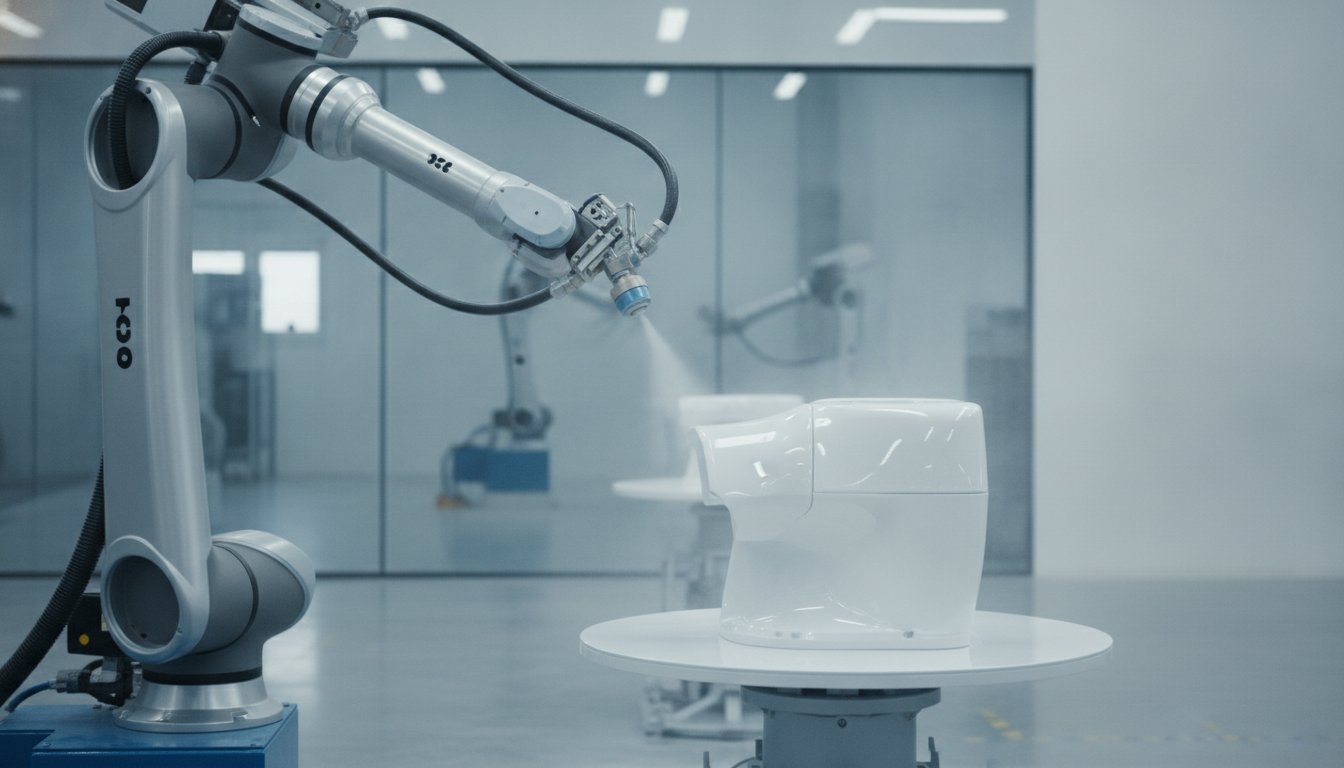
Premium roaster ovens often rely on enamel-coated components for superior durability and heat resistance. These finishes aren't just aesthetic choices; they protect the metal substrate and extend the product's functional lifespan. Powder-coating serves a similar role for BBQ grills and portable cookers, providing a resilient barrier against outdoor elements and corrosion. Poor finishing leads to high return rates, which directly inflate your supply chain costs. Precision in these technical details ensures your brand reputation remains intact while reducing the logistical burden of processing returns and replacements.
Inventory management for high-demand appliances requires real-time data and strategic buffer stocks. You don't want capital tied up in slow-moving stock, but you can't afford stockouts during peak seasons. Effective kitchen appliance manufacturing logistics involve rigorous factory audits and batch testing to prevent defective units from entering your distribution network. With semiconductor price increases of 10% to 25% hitting the market in July 2026, inventory planning for smart rice cookers and kettles now requires earlier capital allocation. Reliable QC ensures that these expensive components aren't wasted on defective housings. If you're looking to stabilize your production and manage these costs effectively, you might speak with a manufacturing consultant about optimizing your Malaysian supply chain.
Common Supply Chain Challenges for Kitchenware Brands
Managing a diverse portfolio of air fryers, blenders, and coffee machines creates significant pressure on kitchen appliance manufacturing logistics. Brands often fall victim to the "Bullwhip Effect," where small fluctuations in consumer demand lead to massive inventory imbalances at the factory level. If you overreact to a holiday surge, you risk being stuck with excess capital in warehouses. Conversely, underestimating demand leads to stockouts that hand your market share to competitors. Balancing these SKUs requires a data-driven approach to production scheduling and a deep understanding of your factory’s capacity constraints.
Many brands also fall into the "Cheap vs. Value" trap. Sourcing from the lowest-cost factory often results in hidden expenses that erode your margins. Low-cost facilities frequently suffer from higher defect rates, poor enamel finishing, and unreliable communication. These issues manifest as high return rates and expensive air-freight costs when you're forced to replace defective stock quickly. Choosing a partner based on technical value and regional stability ensures your long-term profitability remains protected.
The Reality of Lead Times in 2026
Shipping delays continue to disrupt seasonal product launches in 2026. With delivery lead times for critical semiconductor components now extending into mid-2027, your production window is narrower than ever. You can't wait until the third quarter to finalize your holiday inventory. Brands that succeed today are those that secure their production slots at least nine to twelve months in advance. To understand the engineering precision required to stay on schedule, you should review our technical guide to OEM air fryer production, which details how quality control prevents mid-cycle delays.
Tariffs and Trade Barriers
The trade landscape of 2026 is defined by aggressive enforcement and shifting duty rates. Importing finished goods has become increasingly expensive due to the 10% global tariff under Section 122 and the 25% tariff on derivative metal products. These policies make it difficult for brands to maintain competitive pricing if they source from regions under heavy trade scrutiny. Strategic sourcing now requires a move toward stable manufacturing hubs that offer favorable trade status.
Adapting to these challenges requires more than just changing suppliers. It demands a complete overhaul of how you view kitchen appliance manufacturing logistics. By focusing on regional stability and technical integrity, you can navigate the volatility of 2026 and build a brand that thrives despite global trade shifts.
Optimizing Your Supply Chain: Best Practices for 2026
Resilience in 2026 requires moving beyond single-source reliance. The "China Plus One" model has shifted from a suggestion to a requirement for brands managing complex kitchen appliance manufacturing logistics. Diversifying your production hubs ensures that a single regional disruption doesn't paralyze your entire business. Malaysia stands out as a primary beneficiary of this shift, offering a mature industrial base and favorable trade terms that help you bypass the aggressive 25% tariffs seen in other regions. It's about building a buffer against volatility while maintaining the precision your product line demands.
Transactional sourcing is dead. You need a partner who acts as a dedicated backbone for your brand. This involves using unified data platforms to gain real-time visibility into production milestones. By integrating ERP systems, you bridge the gap between your headquarters and the factory floor. This connectivity ensures you aren't surprised by delays and can adjust your marketing efforts based on actual manufacturing progress. High-performing brands treat their OEM as a strategic extension of their own team rather than a simple vendor.
To establish this level of integration and ensure professional oversight at every stage, you can visit Buying Office Asia for specialized on-the-ground sourcing and procurement support.
The Malaysia Advantage for Appliance Brands
Malaysia provides a stable regulatory environment and world-class shipping infrastructure. It's the ideal location for a high capacity rice cooker factory. Unlike other regional hubs, Malaysia offers deep expertise in technical finishes like enamel and powder coating. This ensures your products meet premium standards without the geopolitical risks associated with other territories. The region’s commitment to industrial growth makes it a reliable anchor for your SE Asian manufacturing strategy.
Technology and Demand Forecasting
Data is your best defense against market volatility. AI and predictive analytics allow brands to anticipate shifts in consumer behavior for portable cooking equipment OEM. Digital twins and advanced factory planning reduce prototyping times, allowing you to iterate faster and hit market windows with surgical precision. This technological edge is vital when new DOE energy standards, such as the 15% reduction in power consumption for refrigeration, set a high bar for innovation. Efficient kitchen appliance manufacturing logistics rely on this technical integration to reduce waste and accelerate time-to-market.
Sustainability is also a core pillar of a modern supply chain. With the 2026 transition to induction cooking technology and stricter emissions standards, your manufacturing process must adapt. Eco-friendly packaging and energy-efficient production lines reduce your carbon footprint and satisfy growing consumer demand for responsible brands. Implementing these changes now protects you from future regulatory penalties and enhances your brand’s marketability. Ready to optimize your production? Contact our team in Malaysia to discuss your 2026 manufacturing roadmap.
Partnering with oemhomeappliances for Supply Chain Excellence
Choosing a manufacturing partner is about more than just finding a factory. It’s about securing a dependable backbone for your brand’s growth. We operate as a dedicated B2B service provider in Malaysia, specializing in the entire product lifecycle from initial design and development to high-volume bulk production. Our kitchen appliance manufacturing logistics are designed to shield your brand from the volatility of the 2026 market. We don't compete with our clients. Instead, we act as a flexible engine that empowers your brand to expand its product lines with precision and speed.
Our commitment to technical excellence is visible in our specialized finishing capabilities. We provide industry-leading expertise in enamel-coated products and powder-coated metal components. These finishes are essential for the durability of premium roaster ovens and BBQ grills. By maintaining high standards at the source, we help you reduce return rates and lower your overall supply chain costs. You gain the industrial strength of a seasoned manufacturer while maintaining the agility of a boutique brand. It's a partnership built on stability and long-term trust.
Tailored Solutions for Diverse Product Lines
We provide custom manufacturing for a wide range of kitchen hardware, including air fryers, blenders, and coffee machines. Our OEM/ODM services allow you to scale your operations without the massive overhead of managing your own facilities. We understand the nuances of kitchenware production, from thermal safety requirements to aesthetic consistency across different SKUs. This deep category expertise ensures your products aren't just manufactured; they're engineered for market success. You focus on your brand, and we handle the industrial execution.
Secure Your 2026 Production Line
Malaysia is the strategic choice for brands looking to stabilize their 2026 supply chain. With global effective US tariff rates reaching an average of 11.8% in April 2026, sourcing from a stable region with reliable trade status is critical. We invite you to begin the consultation process for your next product launch today. Our team is ready to help you navigate the complexities of kitchen appliance manufacturing logistics to ensure your inventory is ready when your customers are. Reliability isn't just a goal in a volatile market; it's your most valuable asset.
Take the next step in optimizing your production and securing your brand's future. We encourage you to reach out for a detailed quotation or to contact our Malaysia office for further details on our manufacturing capabilities. Our specialists are prepared to provide the pricing and technical specifications you need to move forward. Let us help you build a resilient, high-quality product line that stands out in the competitive 2026 landscape.
Secure Your Brand's Competitive Edge in 2026
The 2026 manufacturing environment requires a transition from reactive sourcing to strategic foresight. Managing the complexities of kitchen appliance manufacturing logistics involves more than just overseeing shipments; it requires a technical partner who understands the high stakes of appliance durability and global compliance. By diversifying your production into a stable hub like Malaysia and prioritizing specialized enamel coating expertise, you protect your brand from the 25% tariffs on metal derivatives and rising component costs.
A dedicated B2B partnership model ensures your interests are always the priority. You don't have to worry about competing with your manufacturer. Instead, you gain a silent, powerful engine that drives your scalability and precision. It's time to build a supply chain that acts as a frontline advantage rather than a back-office burden.
We invite you to Request a Quotation for Your Malaysia-Based Appliance Manufacturing Needs to see how our expertise can stabilize your production. Let's work together to bring your next product line to market with total confidence and industrial strength.
Frequently Asked Questions
What are the biggest supply chain risks for kitchen brands in 2026?
Geopolitical volatility, semiconductor shortages, and rising material costs are the primary risks this year. Specifically, semiconductor price hikes of 10% to 25% in July 2026 and lead times extending into mid-2027 create significant production bottlenecks. Brands must also manage the 25% Section 232 tariffs on metal derivatives. These factors require a shift toward regionalization and earlier capital allocation to maintain consistent inventory levels.
How can I reduce lead times for custom roaster oven orders?
Secure your production slots at least nine to twelve months in advance to bypass current industrial delays. Utilizing a manufacturer with in-house technical finishing, like enamel coating, prevents the need for third-party transport between production stages. This integration streamlines your kitchen appliance manufacturing logistics by keeping the entire hardware lifecycle under one roof. Early design finalization and long-term component contracts also mitigate the impact of extended semiconductor delivery times.
Is Malaysia a better manufacturing hub than China for kitchen appliances?
Malaysia offers a more stable trade environment for brands targeting Western markets in 2026. While China remains a manufacturing powerhouse, Malaysia provides a critical hedge against aggressive tariffs and geopolitical tensions. Brands sourcing from Malaysia benefit from established industrial infrastructure and specialized expertise in enamel-coated products. This regional focus helps maintain competitive pricing despite the 10% global tariff currently in effect under Section 122.
What is the difference between OEM and ODM in appliance manufacturing?
OEM involves manufacturing a product based on your brand's specific designs, while ODM provides pre-designed products for private labeling. OEM is ideal for brands requiring bespoke R&D and unique product features. ODM allows for a faster market entry with lower development costs. Both models require a partner that manages technical quality control to ensure the final hardware meets safety standards and performance benchmarks.
How do tariffs affect the cost of private label kitchen appliances?
Tariffs directly increase the landed cost of goods, with metal-heavy appliances currently facing duties as high as 50% for certain products. As of April 2026, the average effective US tariff rate reached 11.8%. These costs force brands to either raise retail prices or absorb the margin hit. Strategic sourcing from regions with favorable trade status is a proven method to mitigate these financial pressures on your kitchen appliance manufacturing logistics.
Why is enamel coating important for the appliance supply chain?
Enamel coating provides the heat resistance and durability necessary for high-performance roaster ovens and portable cooking equipment. Beyond aesthetics, it protects the metal substrate from corrosion, extending the product's functional lifespan. From a supply chain perspective, superior finishing reduces return rates and associated logistics costs. Relying on a manufacturer with specialized enamel expertise ensures consistent quality across large production batches without the risk of mid-cycle defects.
Can a small kitchen brand compete with major labels through a strategic supply chain?
Small brands can compete effectively by leveraging a flexible and scalable manufacturing partner. By outsourcing production to an expert facilitator, smaller brands gain access to industrial-grade technology without the capital expenditure of owning a factory. A strategic supply chain allows you to focus on marketing and design while your partner manages the complexities of production. This model levels the playing field against major labels with massive internal departments.
What should I look for in a reliable appliance manufacturing partner?
Look for technical expertise, a B2B-only model, and regional stability. A reliable partner should offer specialized solutions like enamel coating and powder-coated metal components in-house to ensure quality control. It's also vital to select a manufacturer that doesn't compete with your brand through direct-to-retail sales. Meticulous execution and global readiness are the hallmarks of a partner that can truly empower your brand's growth in a volatile market.
Ready to optimize your production and secure your 2026 inventory? We encourage you to reach out for a detailed quotation or to contact our team in Malaysia for further details on our manufacturing capabilities. Our specialists are prepared to provide the technical specifications and pricing you need to scale your brand with confidence.

Comments